
Four checks catch most crude fakes in about thirty seconds, card in hand or from a seller's photo: the price against real completed sales, the back beside a genuine card, the dark core in the cut edge, and the bottom line against a genuine copy of the same card. None is a verdict on its own and none proves a card genuine, because genuine cards vary by era, print and language and good fakes pass a test or two. When two checks fail against the right reference, treat the card as fake; when a card still leaves you unsure, ask an experienced card shop, and have a valuable one authenticated before you pay.
The 30-second check
- The price. Look up what that exact card and print has sold for recently. A price far below proves nothing by itself, but it tells you how hard to look at the rest.
- The back. On the blue back every language but Japanese uses, the navy border is a distinct blue from the swirl, the area above and right of the Poké Ball is dappled, and the logo letters carry a fine checkered pattern. Fakes tend to flatten, blur or bleed at least one of the three.
- The cut edge. A genuine card shows a faint dark band inside the white. A fake on plain stock is white all the way through.
- The bottom line. Number, rarity symbol, regulation mark and set code must match the genuine card. An older mark on a newer set can be a genuine reprint; a card sold as a 1999 print that carries a regulation mark is not one.
Passing all four proves less: the best fakes pass them, so the eight checks below go further.
What each check can tell you
A strong sign settles a card once a second check agrees; the others only add weight.
| Check | Genuine card | Warning sign | What it tells you |
|---|---|---|---|
| Price | Close to recent real sales of that print | Far below them, or just under an authentication threshold | Sets the odds, nothing more |
| Back | Same colors, dappling and logo pattern as a genuine back of that language | Flat, pale or purplish blue, blurred logo, a metallic gold or chrome back | Strong sign |
| Cut edge | Faint dark band inside the white | White throughout, a line too sharp, extra layers | Strong sign |
| Bottom line | Number, mark and set code of the genuine card | A mark, code or layout that print never had | Strong sign, once reprints and Classic Collections are ruled out |
| Print and text | Sharp dot pattern, typeface, spacing and line breaks of the genuine card | Blur under a loupe, wide uneven gaps, words pushed to the next line, typos | Strong sign |
| Energy symbols | Same size and position as on the genuine card, orb by orb | Swollen past the orb, off center | Strong sign |
| HP and damage | The genuine card's printed values | Values the genuine card does not print | Strong sign |
| Holo and texture | The treatment of that rarity and print | Flat sparkle, wrong pattern, printed texture | Strong sign, against the same card only |
| Light test | As dark as a genuine card of the same era, under the same lamp | Glows like paper next to it | First screen only |
| Size and weight | 63 x 88 mm; weight varies by era and language | Undersized | Weak: jumbo cards are official, weight settles nothing |
| Rip test | Dark core in the tear | No core | Destroys the card; the cut edge shows the same |
On their own, these prove nothing: gloss, feel or smell, weight, a smooth card of a rarity that is smooth anyway, text in another language, a certification number that exists, and a pack that looked sealed.
The eight checks, in order
Your reference is a genuine copy of the same card, rarity, print and language: a card you own, or the scan on its page in our catalog, in the language printed on yours.
1. The price
Use completed sales of that exact card and print, not asking prices. Some marketplaces authenticate cards sold above a set price, so a price just under that line, on a card whose real copies sell well above it, deserves a second look.
| Card | Raw | PSA 10 |
|---|---|---|
| Charizard ex 199/165 (151) | $328 (27 sales) | $1,447 (30 sales) |
| Umbreon VMAX 215/203 (Evolving Skies) | $2,130 (6 sales) | $3,870 (11 sales) |
| Charizard 4/102, Base Set Unlimited | $209 (87 sales) | no recent price |
| Charizard 4/102, Base Set 1st Edition | $8,906 (14 sales) | no recent price |
| Charizard 4/102, 30th Celebration Classic Collection, gold border | $194 (180 sales) | no recent price |
As of September 23, 2026, medians of real completed sales in US dollars. The three 4/102 Charizards are all genuine: the print matters as much as the card.
2. The back
Many counterfeits fail on the back. Every current language except Japanese uses the same blue back, and apart from a few special cards, such as the Ancient Mew movie promo and World Championships decks, every English card since 1999 has carried it, only its shades of blue drifting. Japanese cards have their own gold-bordered back, described in our guide to the Japanese card back.
Look where fakes fail: the dappling above and right of the Poké Ball, light blue over dark, flattened into one tone; the navy border bleeding into the swirl; the logo letters printed without their checkered pattern, and a blurred ™ beside them; a blue that runs pale, gray or purplish. No genuine paper card has a metallic gold or chrome back, and only two old promos, Trade Please and Ancient Mew, have a holofoil one.
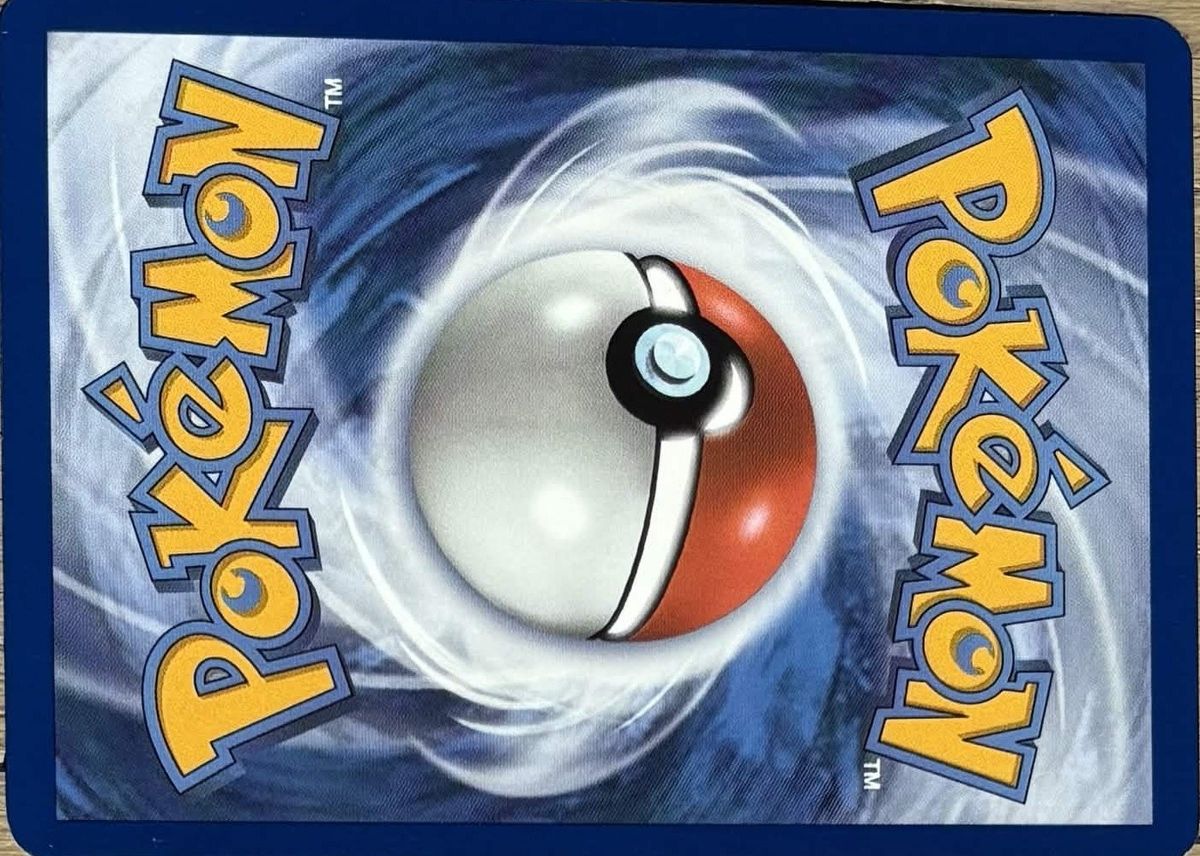 GenuineNavy border, crisp swirl
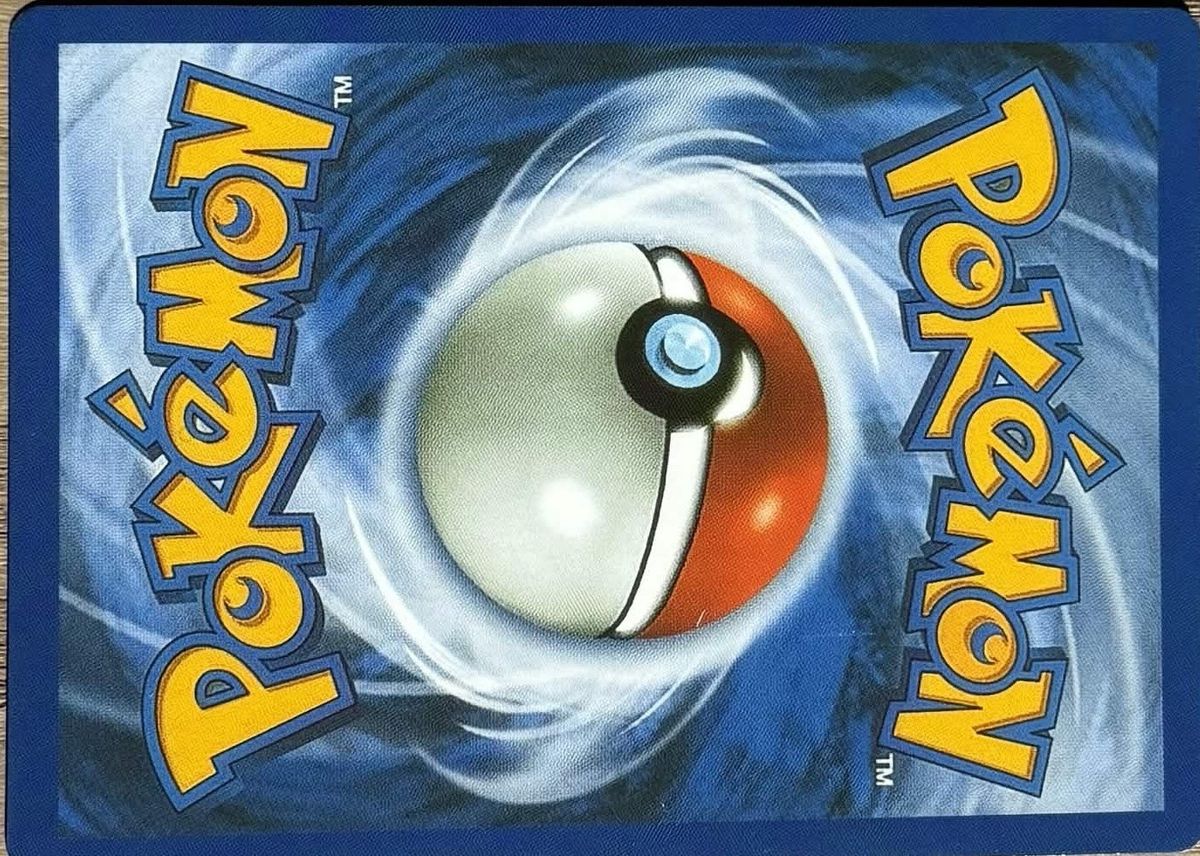 FakeLighter, grayer border, softer swirl
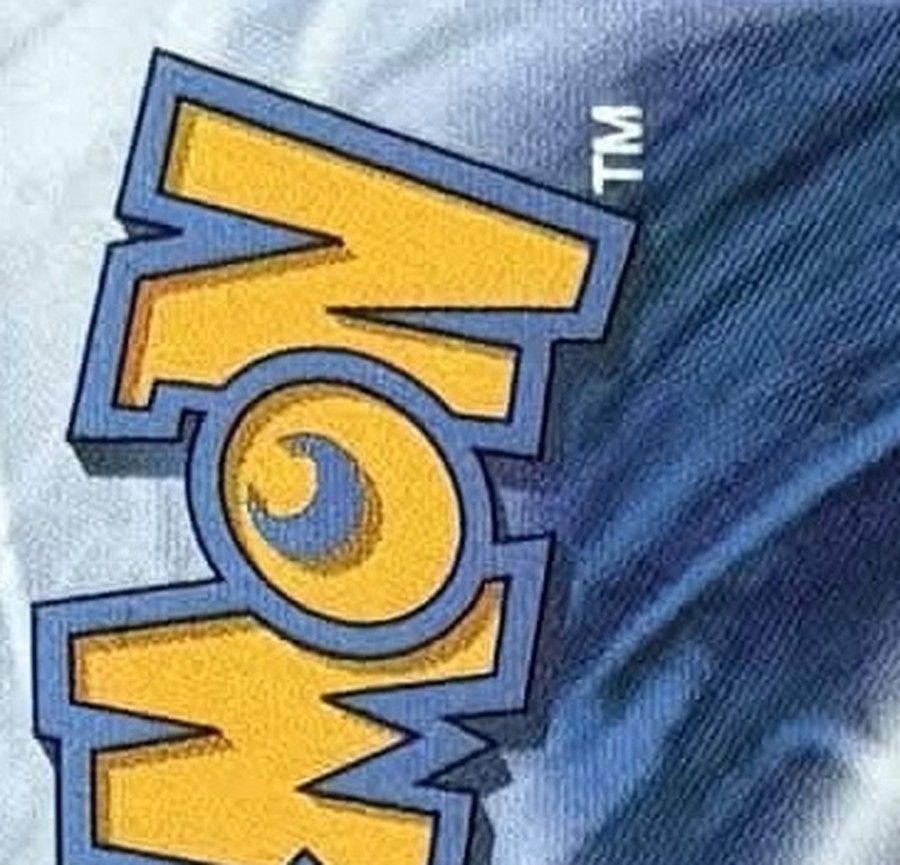 Genuine, logo lettersA fine checkered pattern inside the letters, the TM crisp
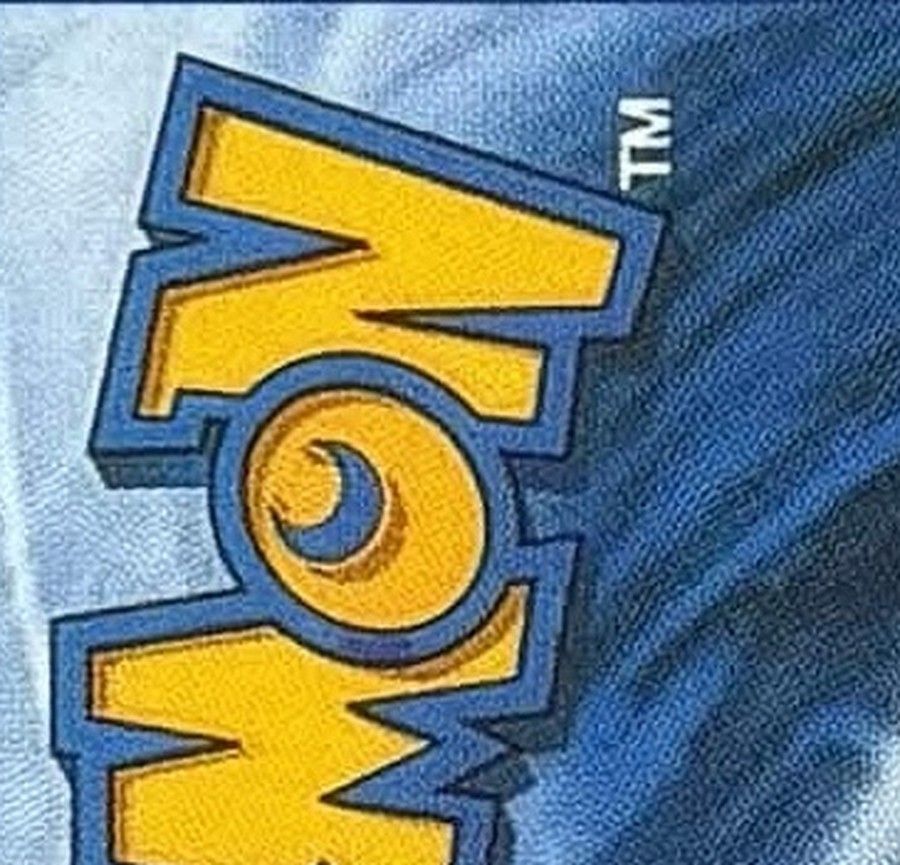 Fake, logo lettersPrinted flat, no pattern, the TM soft
 Genuine, swirl above the Poké BallSharp edges between light and dark blue
 Fake, swirl above the Poké BallSofter and blurrier
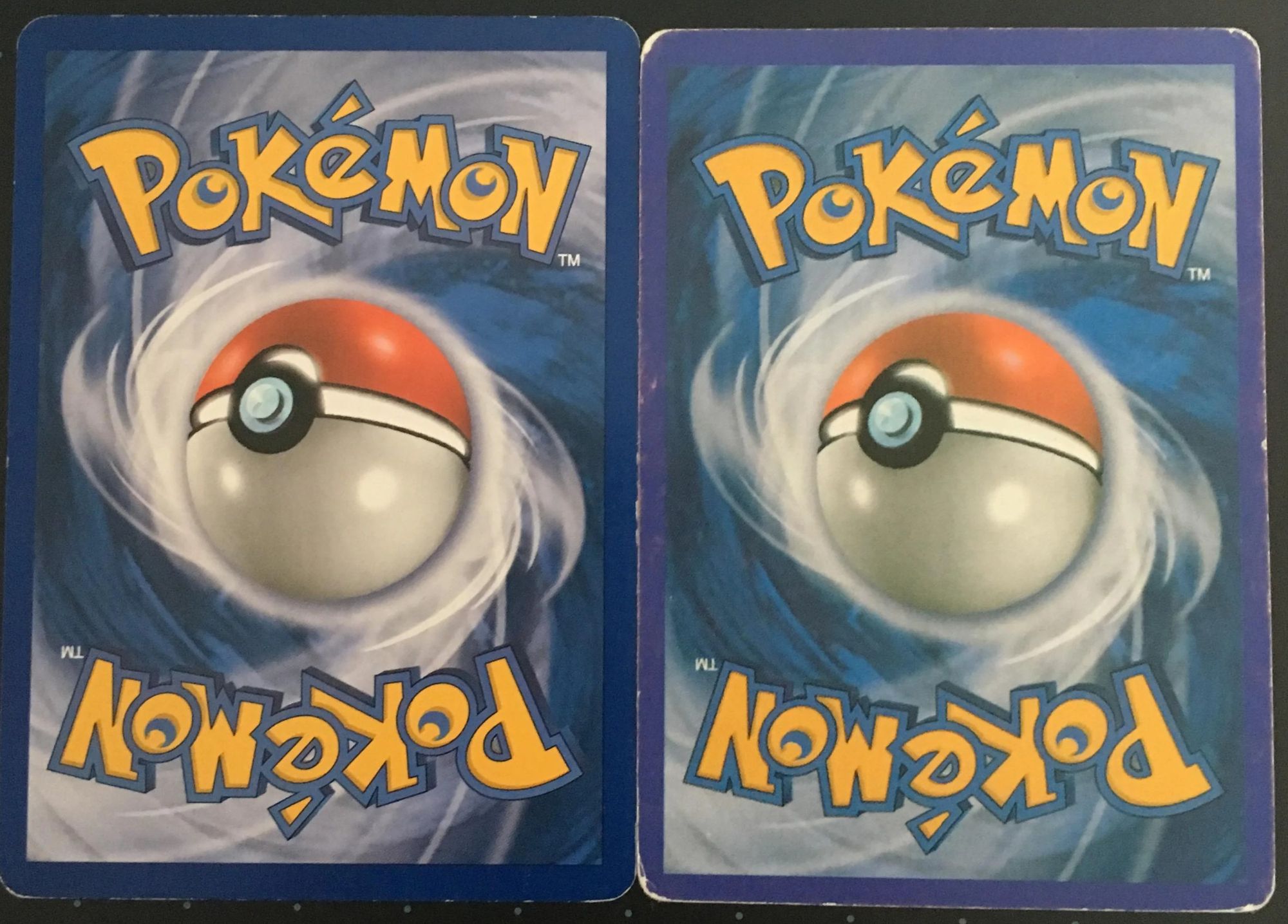 A second fake from another printer: pale lilac border and flat swirl, genuine on the left. Photo: u/solocien via JustInBasil.
3. The cut edge
This is the rip test without the ripping. A genuine card is two white sheets around a thin dark layer, which gives it its snap and blocks light; the cut edge shows that layer as a faint, slightly fibrous dark band, sometimes blue-gray on Japanese cards. A fake on single-ply stock is white all the way through, a printed line looks too sharp and even, and a fake front glued onto a genuine card shows extra layers and a thicker card.
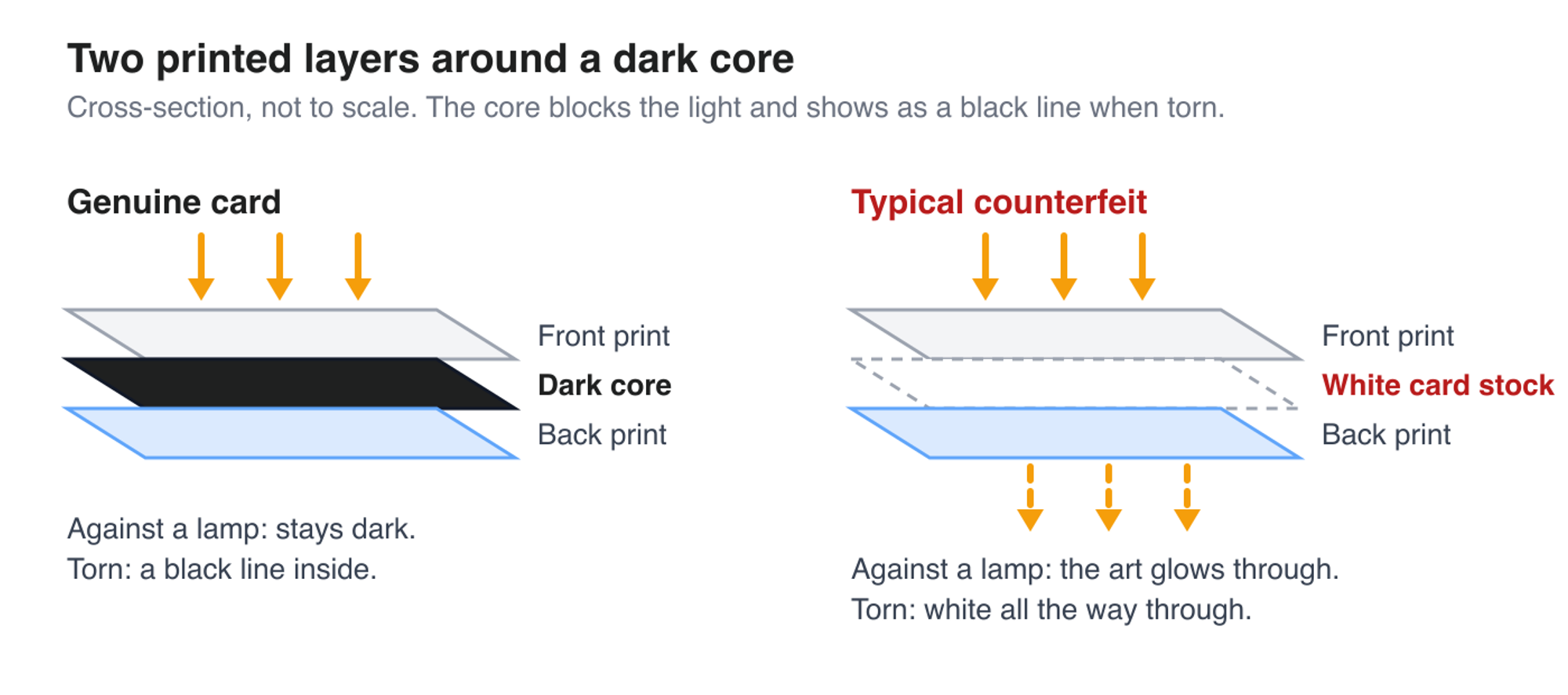 What the cut edge shows you, and what the rip test destroys a card to show you.
4. The bottom line
The bottom of a card carries its collector number, its rarity symbol and, on recent cards, a boxed regulation mark and a set code; our rarity guide shows every symbol. The number must exist in that set on that card, in the set's own format: 4/102 on vintage cards, 001/198 on modern ones, SWSH050 or SVP EN 085 on promos, TG01/TG30 on subsets. On English prints, the layout also dates the card:
| Bottom of an English card | When |
|---|---|
| Number and rarity symbol at the bottom right, no regulation mark | 1999 to 2016 |
| Number and symbol at the bottom left, no regulation mark | February 2017 to 2019 (Sun & Moon) |
| Regulation mark D in a box | From November 2019 (first Sword & Shield promos) |
| Mark E | From February 2021 (Shining Fates) |
| Mark F | From February 2022 (Brilliant Stars) |
| Mark G, with a set code beside it | From January 2023 (first Scarlet & Violet promos) |
| Mark H | From March 2024 (Temporal Forces) |
| Mark I | From March 2025 (Journey Together) |
| Mark J | From January 30, 2026 (Ascended Heroes) |
Three kinds of genuine card break the table:
- Reprints can keep an older mark: Judge in Destined Rivals (May 2025) carries G beside the set code DRI while most of the set carries I. A mark newer than its set, or any mark on a card sold as a 1999 print, is not found on a genuine copy of that print.
- The Classic Collections of Celebrations (2021) and 30th Celebration (2026) reprint older cards with their original layout, number and mark (or lack of one), plus a 25 or 30 anniversary logo on the art: the Charizard reads 4/102 at the bottom right with no mark; the 2026 Arceus VSTAR keeps its F. The 30 reprints of 2026 have gold borders and come out of 30th Celebration packs, on sale since September 16, 2026. The cards of the Pokémon TCG Classic box (2023) carry no regulation mark.
- Japanese cards printed a set code long before English ones (DP1 in 2006, BW1 in 2010) and have carried a regulation mark since December 2016, so the table does not apply to them.
 Ethan's Pinsir 001: mark I, set code DRI
 Misty's Lapras 050: mark I, set code DRI
 Medicham 100: mark I, set code DRI
 Squawkabilly 160: mark I, set code DRI
 Arven's Sandwich 161: mark I, set code DRI
 Cynthia's Power Weight 162: mark I, set code DRI
 Sacred Ash 168: mark I, set code DRI
 Team Rocket's Archer 170: mark I, set code DRI
 Judge 167, a reprint: mark G, set code DRI
 English cards, 1999 to 2016: number and rarity symbol at the bottom right, no regulation mark. The 99 in this copyright line marks a 1st Edition or Shadowless print.
 February 2017 to 2019: the number and symbol move to the bottom left.
 Regulation mark F, first seen in February 2022.
 Mark G with the set code SVI: English set codes start with Scarlet & Violet in 2023.
 Mark J with the set code POR, from Perfect Order (March 2026). J first appeared two months earlier, on Ascended Heroes.
5. The print and the text
- Print under a loupe. Genuine cards are offset printed, so magnification shows a regular, sharp dot rosette and crisp small type; fakes printed from scans often blur. Compare the pattern with a genuine card, because a rosette alone proves nothing.
- The accent. A genuine card prints the word Pokémon with its accent every time, down to the copyright line of modern cards. A dropped accent is a strong sign of a fake, unless the card is a documented error.
- Spacing and line breaks. Fake spacing is often wide and uneven, and a spacing error pushes a word onto the next line: compare where each line breaks with the genuine card.
- HP and damage. Compare them with the genuine card: the fake Arcanine below prints 13000 HP where the real one prints 130. An absurd number alone is not proof: Ishihara-GX, a 2018 card given to guests of a private party, prints 350 HP, and some oversized promos print 300 or even 1000 HP.
- "2nd Edition". No genuine card carries that stamp. Most English sets up to Neo Destiny (2002), the last with 1st Edition prints, came in 1st Edition and Unlimited, and Base Set also had Shadowless and ©1999-2000 runs; our 1st Edition and Shadowless guide covers them.
- Leftover text. The art is swapped, the rest is not: a Mewtwo with Zapdos text, a Hitmonchan printed as a Stage 1 evolving from Togepi.
- The copyright line. It changes with the print, so compare it with the genuine card's (table below). This tiny text is where a scanned fake blurs first.
| Copyright line | |
|---|---|
| Base Set 1st Edition and Shadowless | ©1995, 96, 98, 99 Nintendo, Creatures, GAMEFREAK. ©1999 Wizards. |
| Base Set Unlimited | ©1995, 96, 98 Nintendo, Creatures, GAMEFREAK. ©1999 Wizards. |
| Base Set, fourth print | Same as Unlimited, but ©1999-2000 Wizards. |
| Classic Collection Charizard 4/102 (2021 and 2026) | ©1995, 96, 98 Nintendo, Creatures, GAMEFREAK. (no Wizards line) |
| Sword & Shield onward | ©, the year, then Pokémon / Nintendo / Creatures / GAME FREAK |
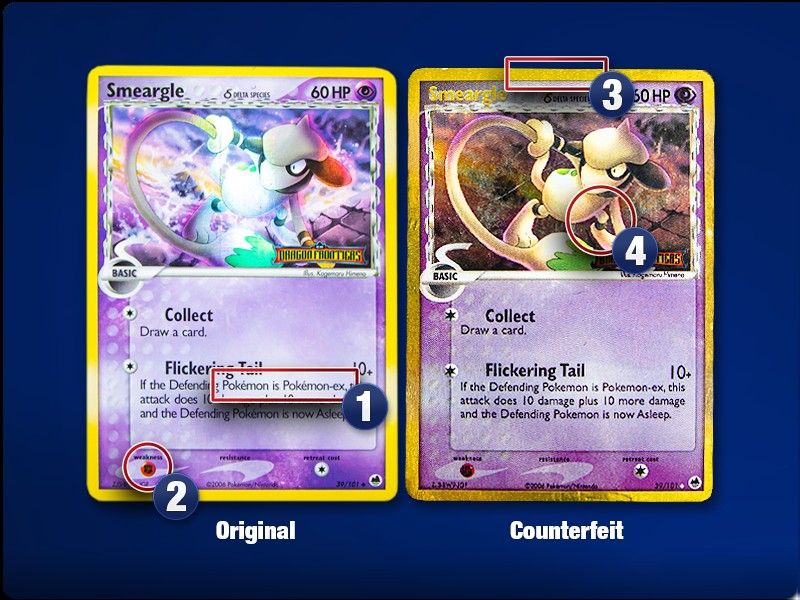 Missing accentSmeargle, original left and counterfeit right: the fake drops the accent on Pokémon in the attack text, and its weakness symbol overflows the orb
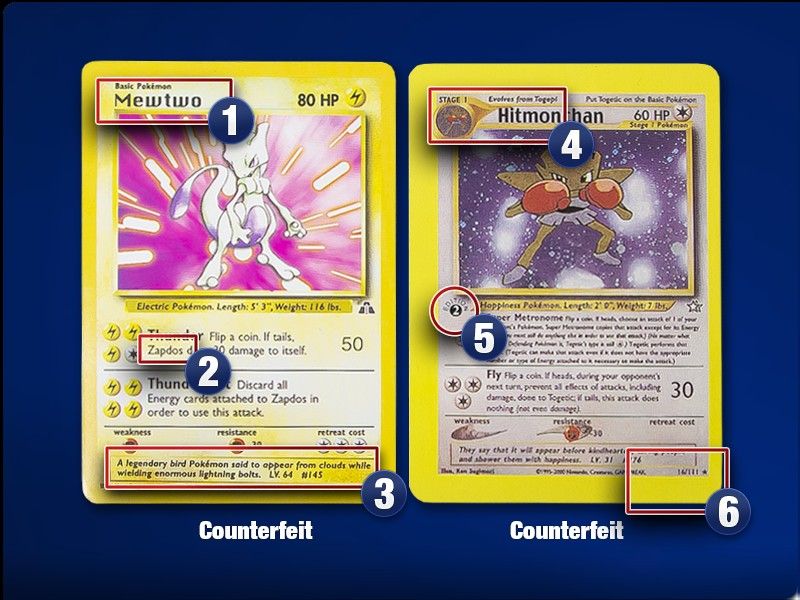 Leftover text and a 2nd Edition stampTwo counterfeits: a Mewtwo carrying Zapdos text, and a Hitmonchan with a 2nd Edition stamp, which does not exist
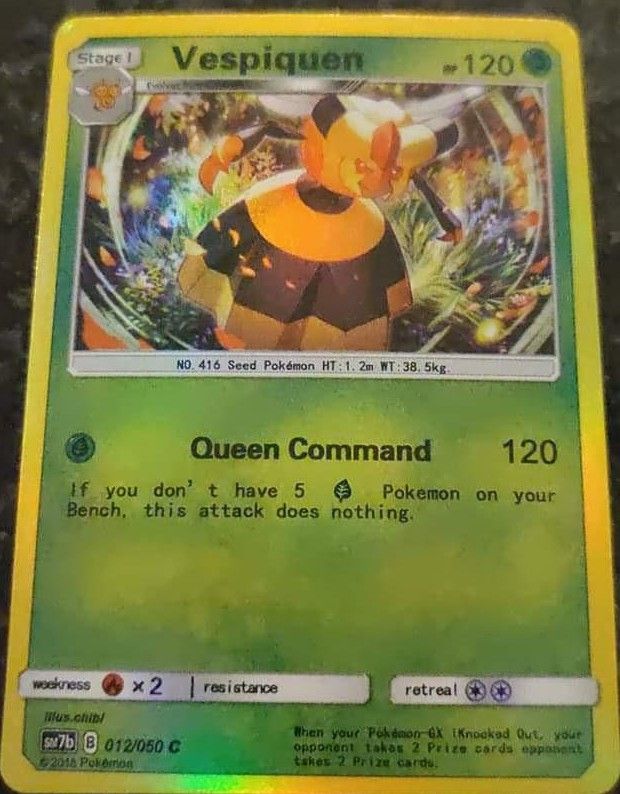 Wrong typeface and spacingFake Vespiquen: wide, almost monospaced letters, a detached apostrophe, and weekness and retreal in the bottom labels
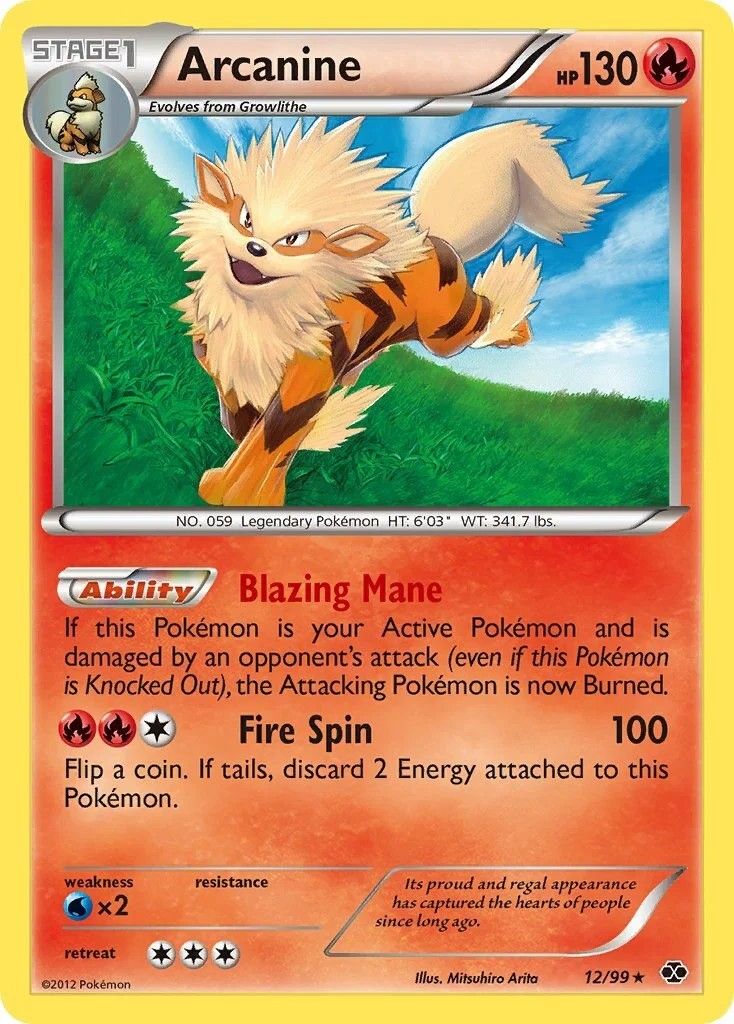 Genuine Arcanine, 130 HPRetreat cost of two
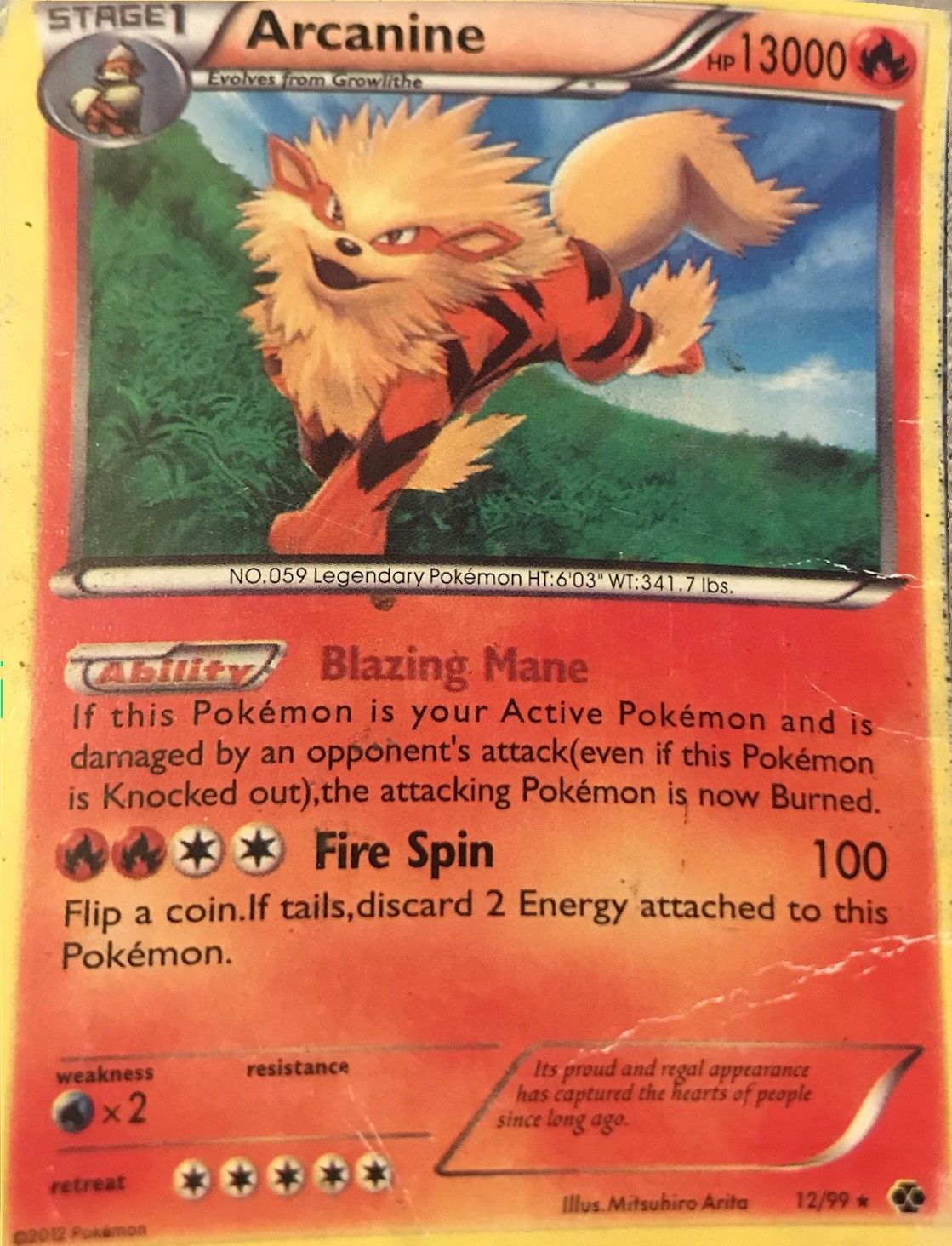 Fake Arcanine, 13000 HPSame artwork, impossible stats, five-Energy retreat cost, creased stock
6. The energy symbols
Small, repeated and geometric, they are what bad reproduction handles worst. A genuine card does not use one size: attack-cost orbs are larger than the weakness, resistance and retreat orbs, and symbols inside the text smaller still. Compare each one with the same spot on the genuine card: fakes swell the symbol past its orb, set it off center, or vary orbs that should match.
7. Holo and texture
Texture follows the rarity and the print treatment, not the artwork. Full-art Ultra Rares, Special Illustration Rares and gold Hyper Rares carry relief, and so do some cards that are not full art (Tera ex, VMAX and VSTAR among them) and the Poké Ball and Master Ball reverse holos of Prismatic Evolutions; commons, uncommons, ordinary holos, regular reverse holos, Scarlet & Violet ex other than Tera ex, non-full-art GX and ordinary Illustration Rares are smooth. A smooth card is a problem only when that exact card should be textured, and graders even recognize a factory Missing Texture error. Our holo patterns guide shows each era's foil.
The real failures: no holo where there should be one, foil across the whole card on a rarity that only foils the art, the wrong pattern, and a flat sparkle that lights up at once instead of traveling. Genuine texture is pressed in and its ridges change with the picture under a finger; fakes often print it, which does nothing to the reflection.
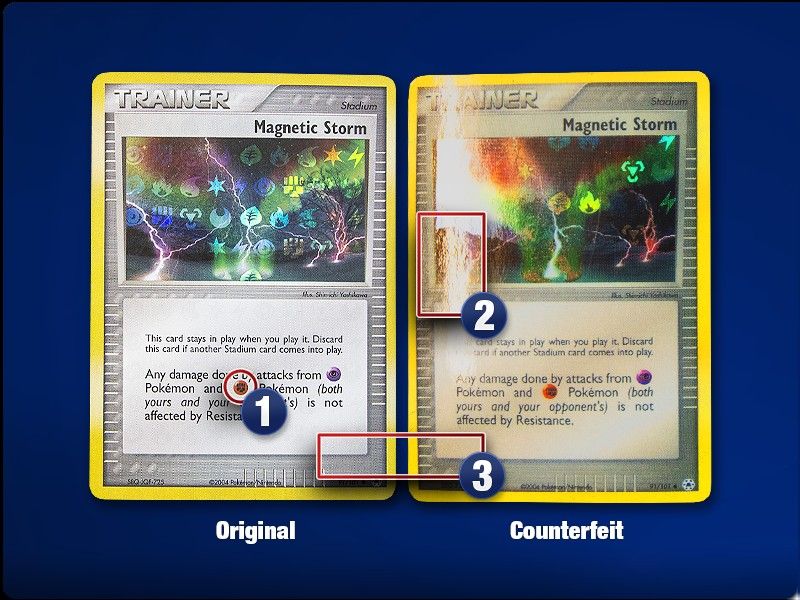 Energy symbolsMagnetic Storm, original left and counterfeit right: on the fake the inline symbol swells to fill its orb and sits off center
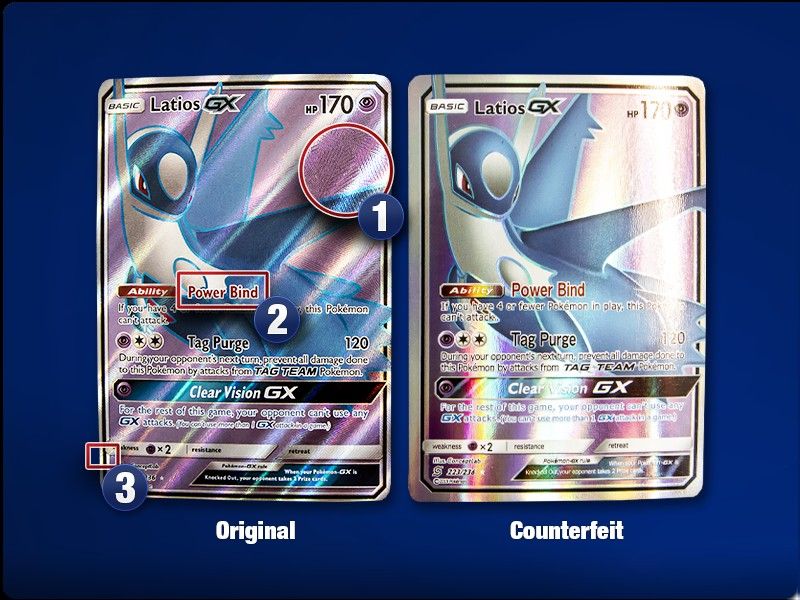 TextureFull-art Latios GX, original left and counterfeit right: the real full art has a raised relief, the fake a smooth flat sheen and blurred text
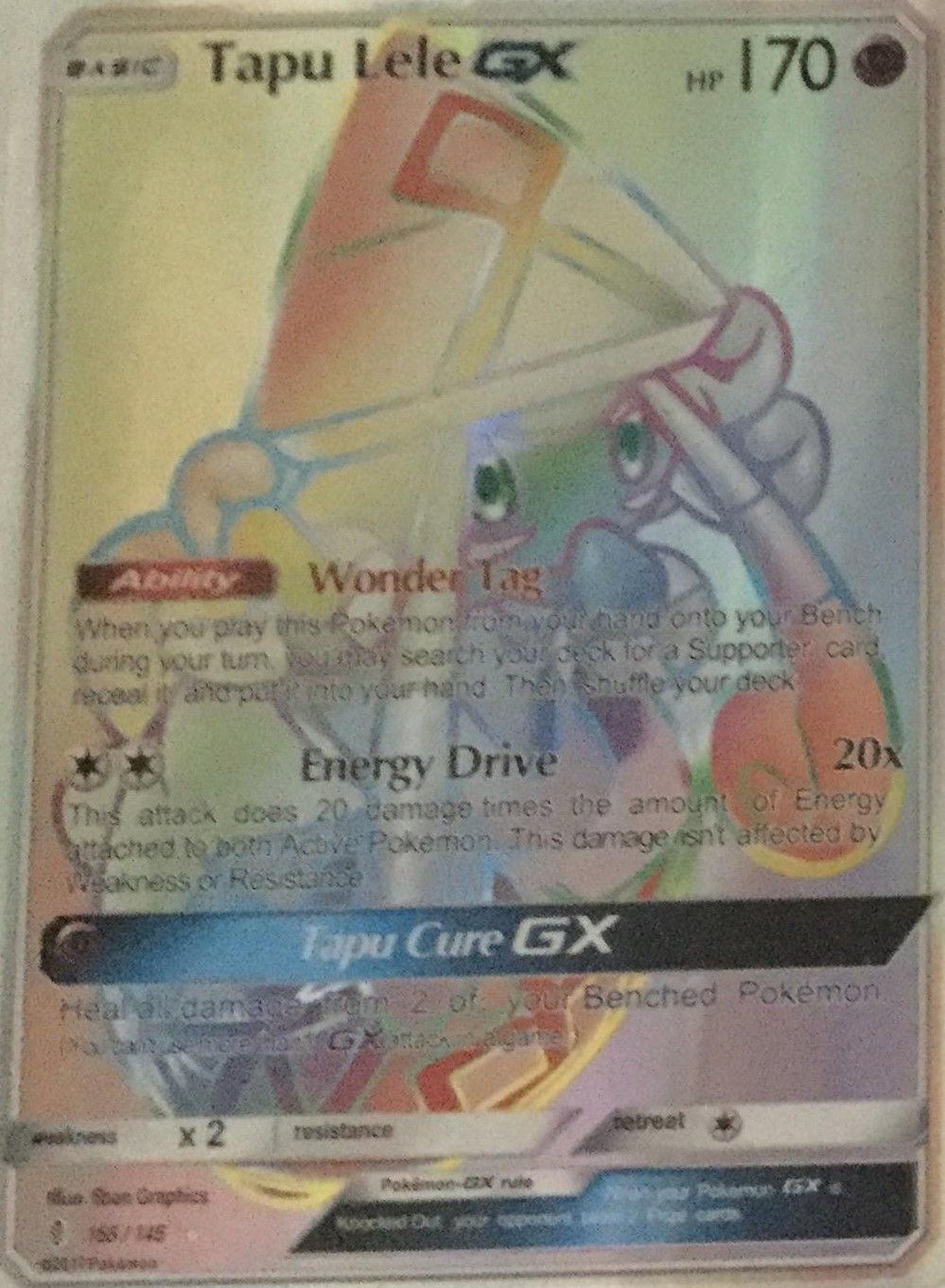 The whole card sparklesFake Tapu Lele GX rainbow rare: a uniform pastel sheen everywhere, no relief, text washed out
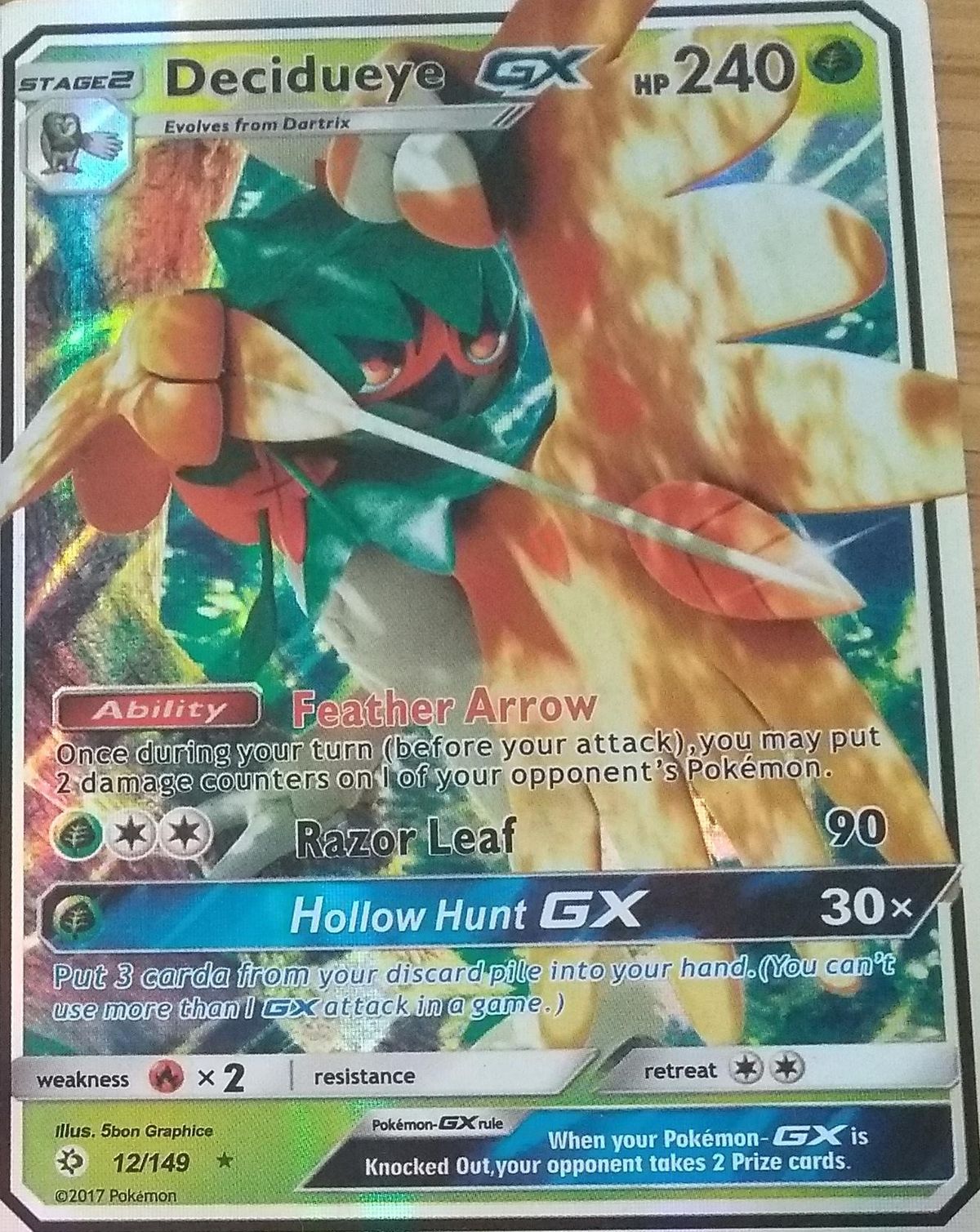 Fake Decidueye GXA fabric weave runs through the whole print, artwork included
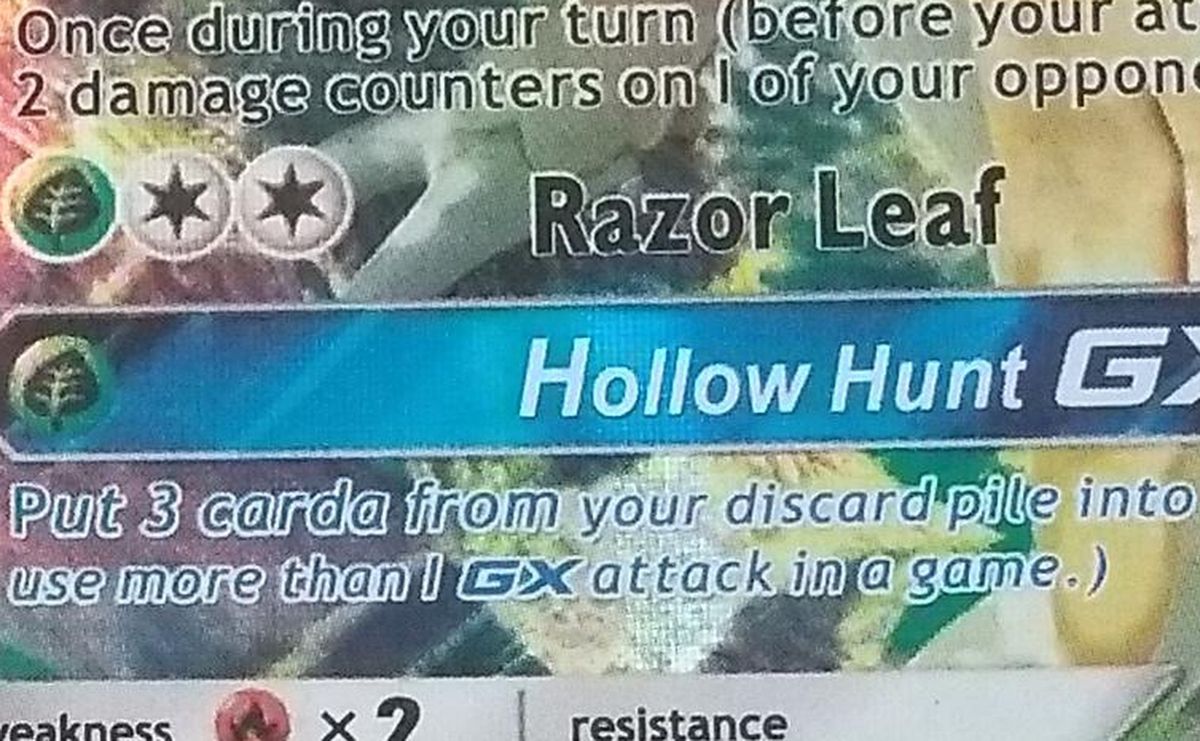 Its attack text, zoomedThe weave in the ink, and Put 3 carda where the real card says cards
8. The light test
Hold the card and a genuine card of the same era, rarity and foil under the same lamp: one that glows like paper while its reference stays dark is probably missing its core. The publisher suggests it as a first check, and that is all it is: stock has changed many times since 1999, some genuine cards let light through, and coated fakes and metal cards block it.
Two fakes on our desk
Primal Groudon EX 86/160 and Primal Kyogre EX 55/160 from Primal Clash (February 2015), both counterfeit. Flat in daylight they pass: every printed detail, down to the XY layout, is copied correctly. Genuine copies sold for $35.76 (5 sales) and $25.24 (18 sales) raw as of September 23, 2026.
Tilt them and one thin, hard-edged rainbow line runs the full height and slides across the whole face, text included. A genuine Primal EX is foil all over too, but its shine is broad and soft, bends with the art and the text boxes, and shifts the colors of the art wherever the light reaches.
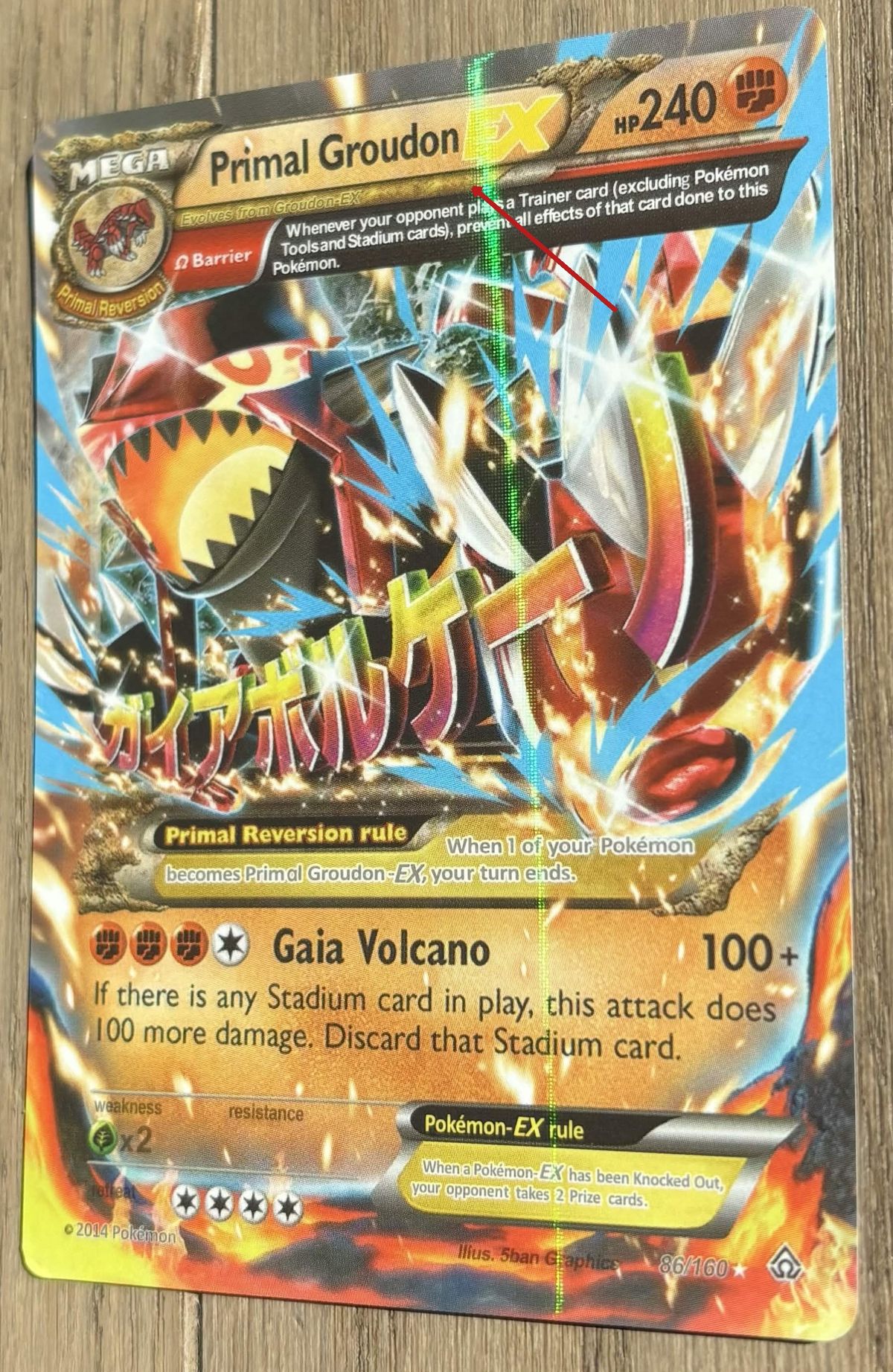 Primal Groudon EX, tiltedUnder window light, one thin, hard-edged rainbow line runs the full height, through the rules text and the attack box
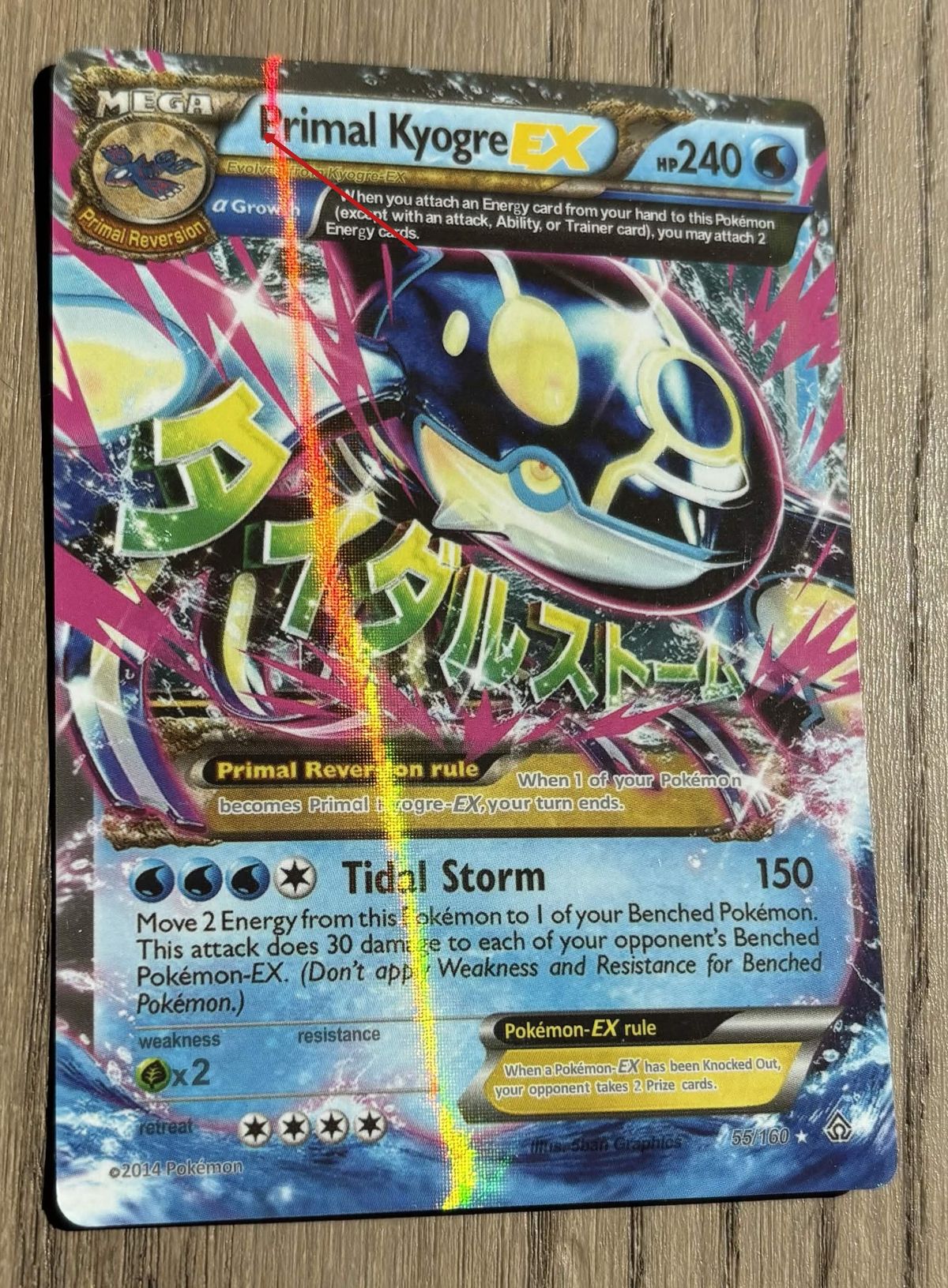 Primal Kyogre EX, tiltedThe same line on the second card: it slides across the face as the card tilts, text included
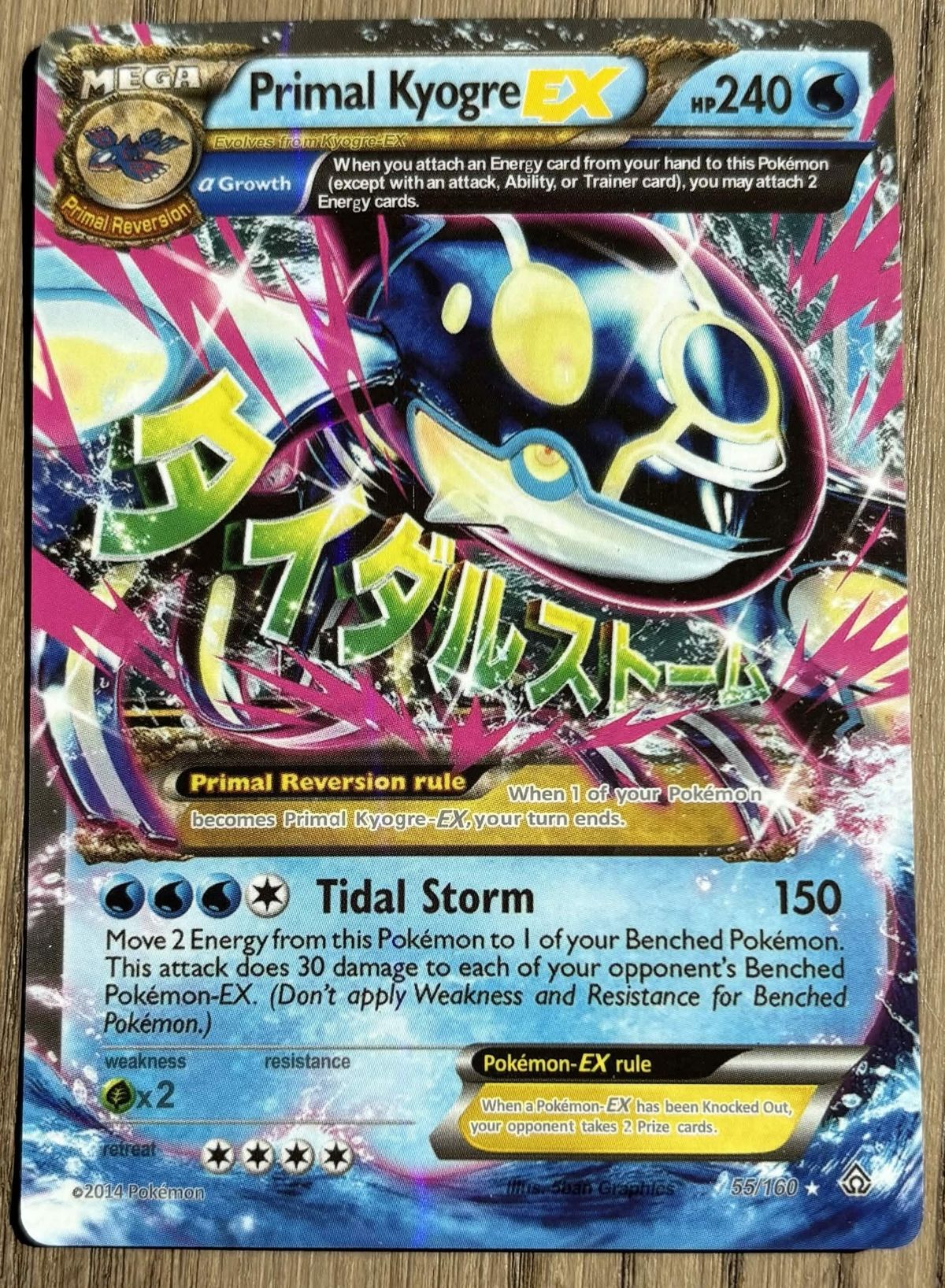 Primal Kyogre EX, flatFlat and in daylight it passes at a glance: numbers, text, HP and symbols are all copied correctly
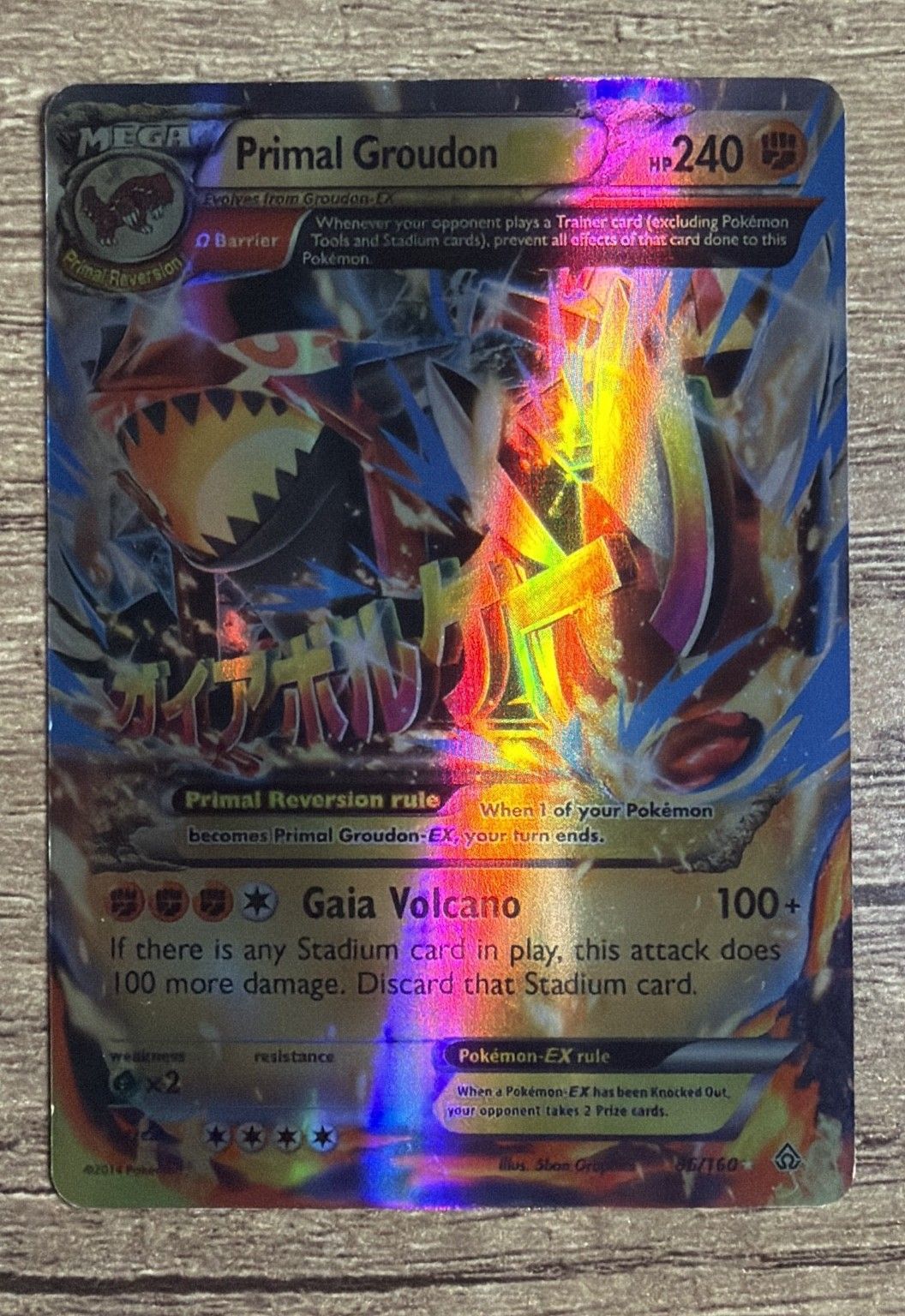 Genuine Primal Groudon EX, under a lampA broad, soft rainbow sweep, and the colors of the art shift everywhere the light reachesFake Primal Groudon EX, window lightOne thin, hard-edged line; the rest of the face keeps its printed colors
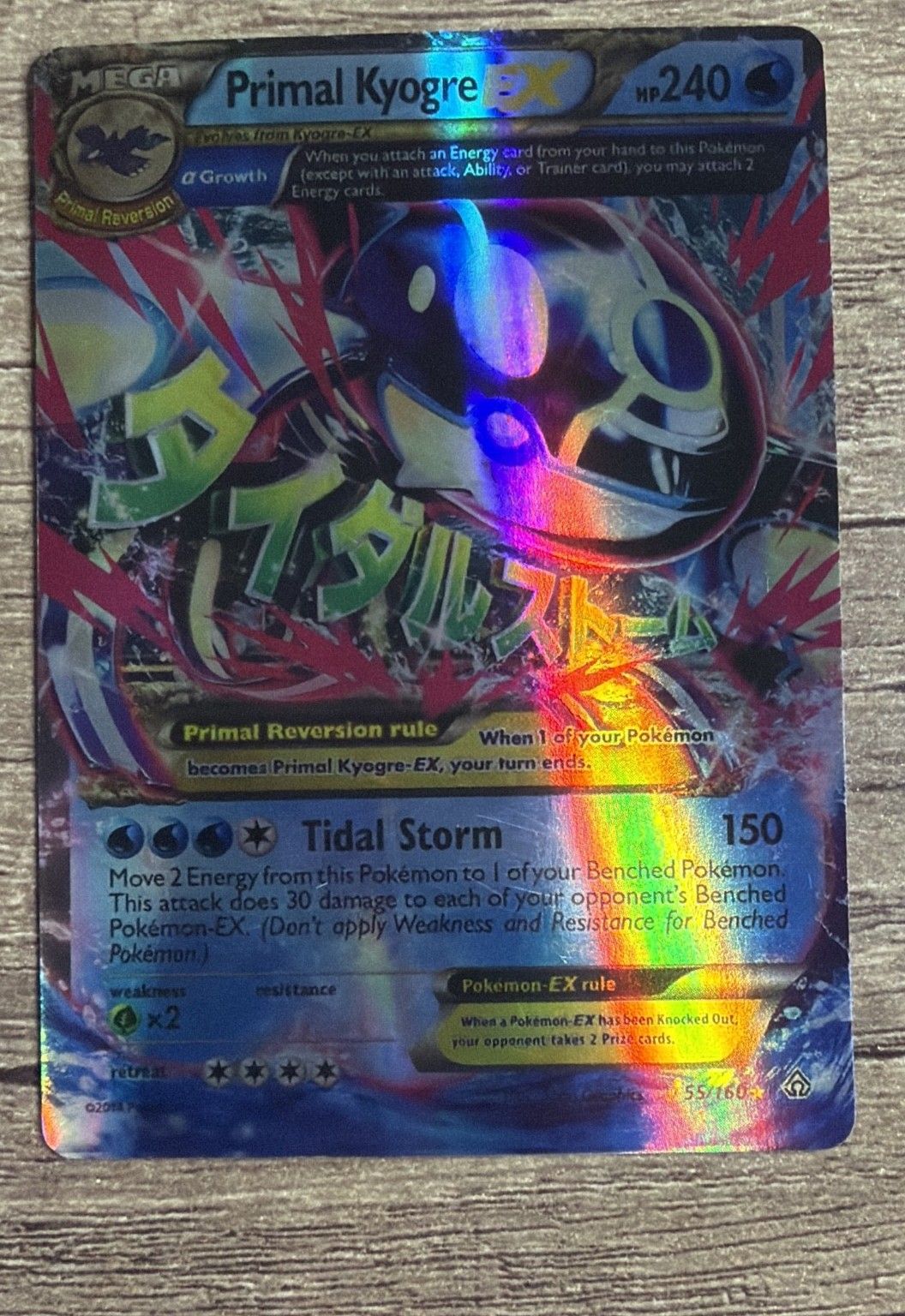 Genuine Primal Kyogre EX, under a lampSame broad sweep, bending with the art and the boxesFake Primal Kyogre EX, window lightSame thin line as on the Groudon, flat print around it


Two tests to skip
Size, thickness and weight
A card measures 63 x 88 mm (about 2.5 x 3.5 inches) and roughly a third of a millimeter thick, and published thickness figures disagree (see our card dimensions guide). Weight settles nothing: a counterfeit Japanese Reshiram ex caught at grading in 2026 weighed 2.51 g, thicker and coreless, against 1.59 g for the genuine card, itself lighter than the 1.8 to 2.0 g measured on modern English cards. Jumbo cards are official, and a slightly off-center cut is normal.
The rip test
Obsolete as well as destructive: the cut edge shows the same core on an intact card.
Your card is not in English
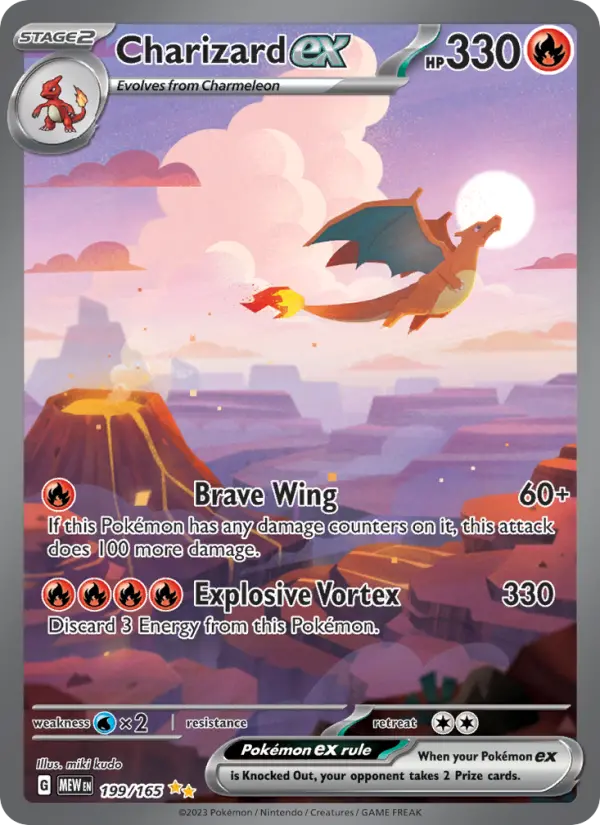
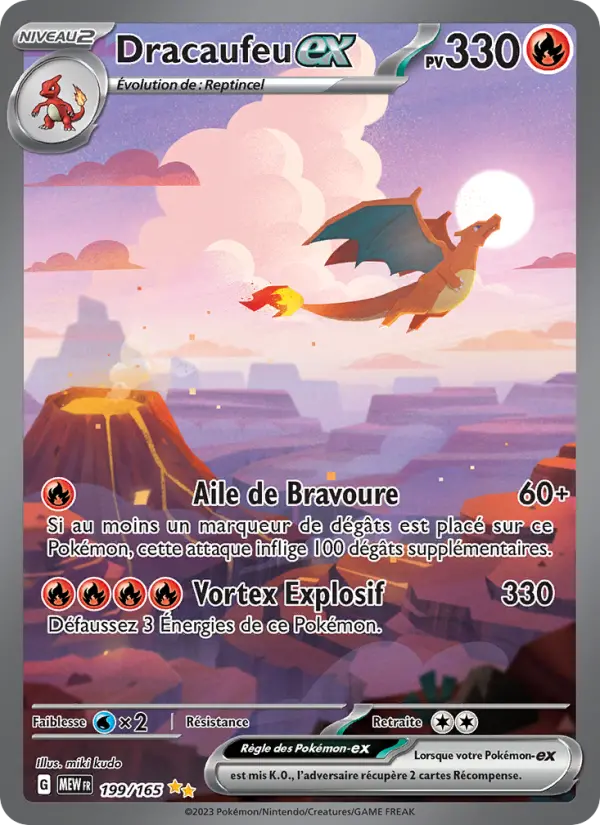
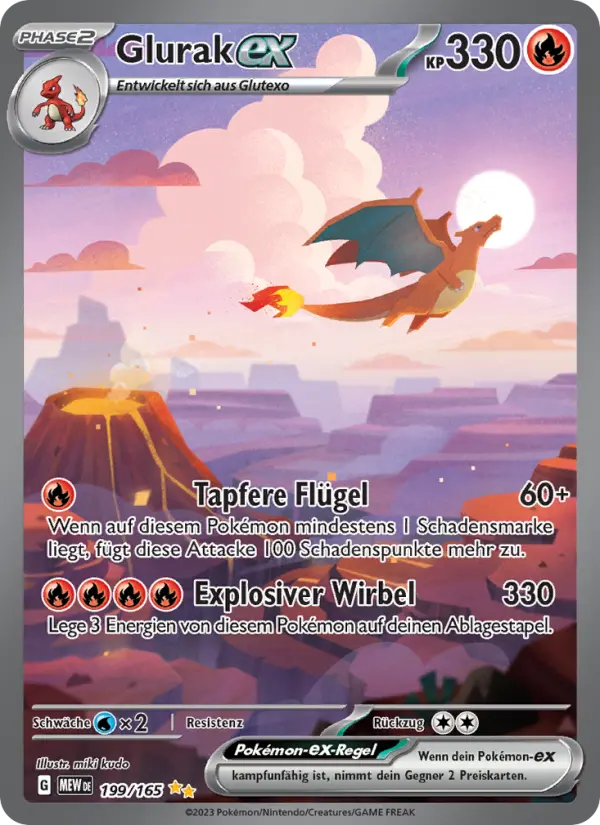
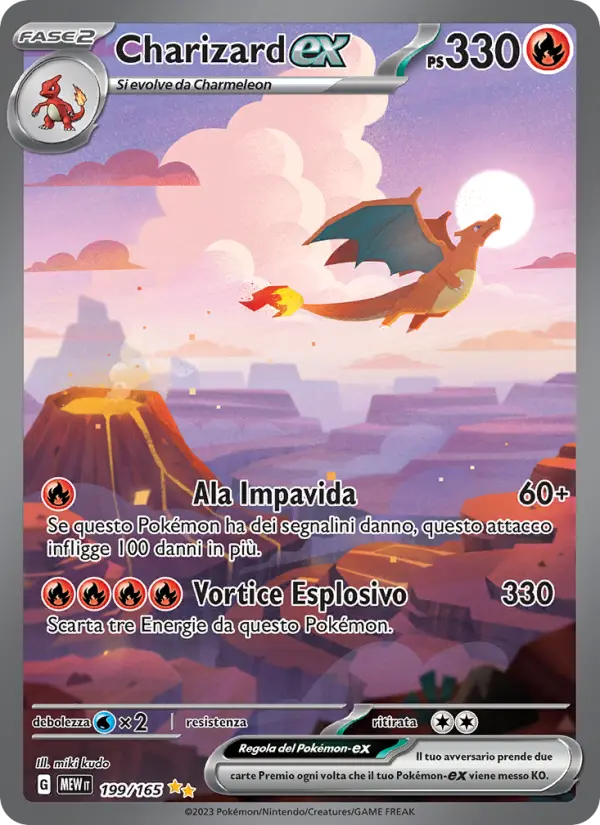
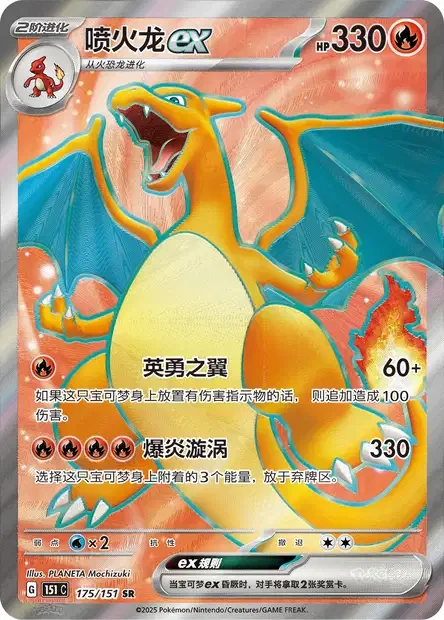
It is a real card with its own text, and an English scan is the wrong reference. The 151 Charizard ex is 199/165 in English, French, German and Italian, 201/165 in Japanese and 175 in Simplified Chinese; the text is reset, so lines break elsewhere, and the set code carries a language suffix.
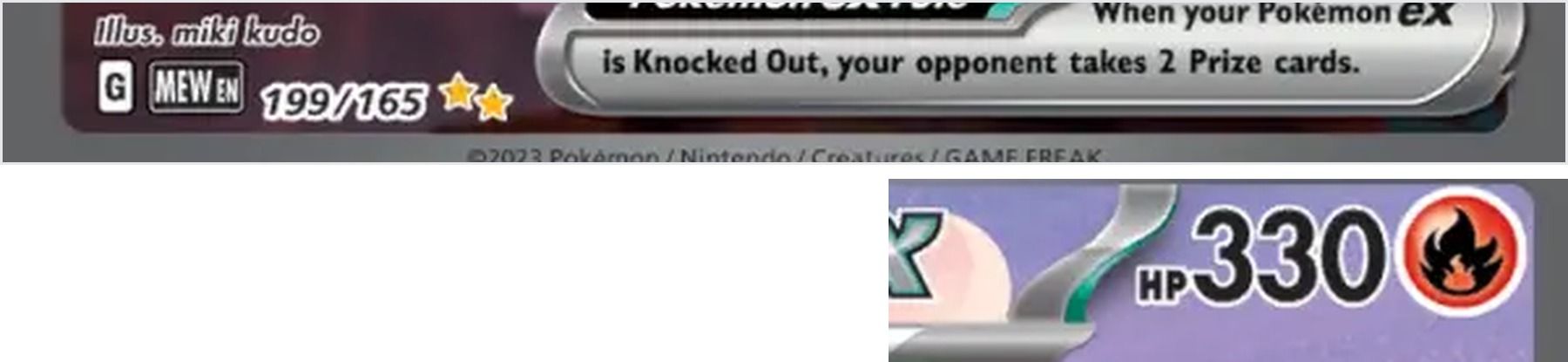 English 199/165
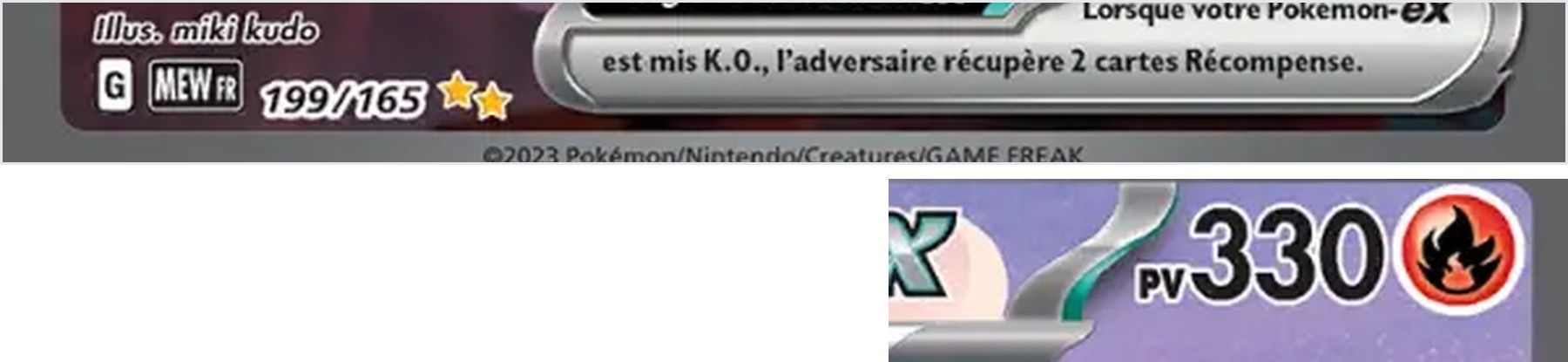 French 199/165
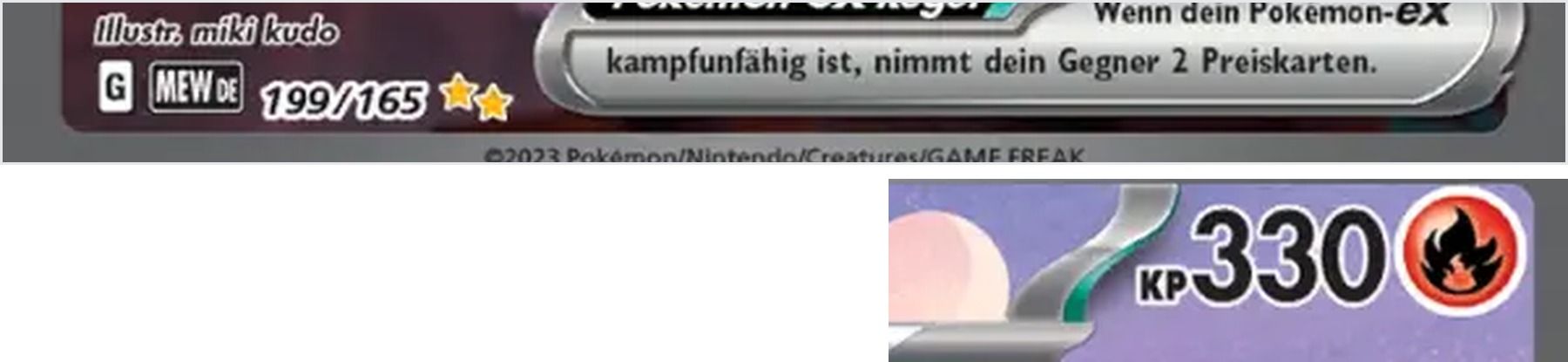 German 199/165
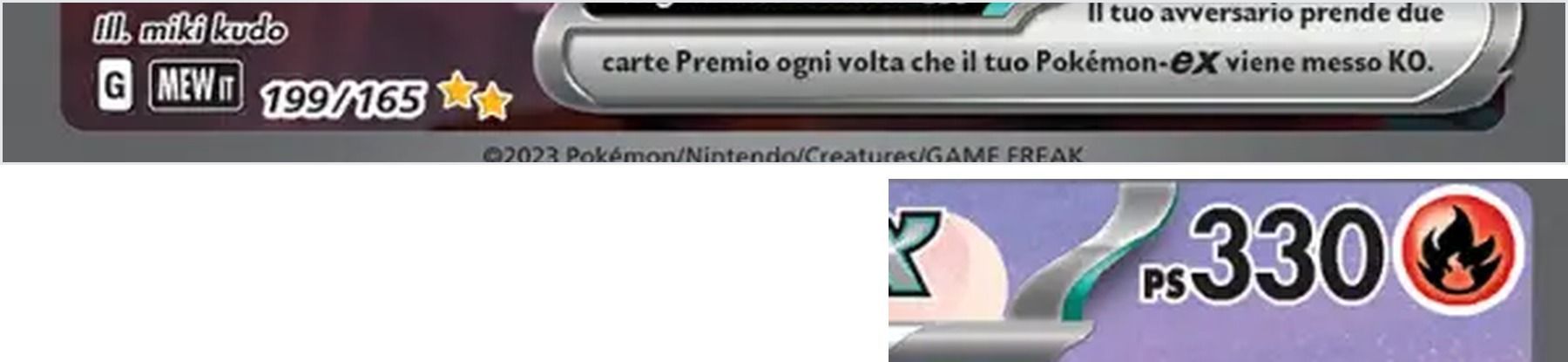 Italian 199/165
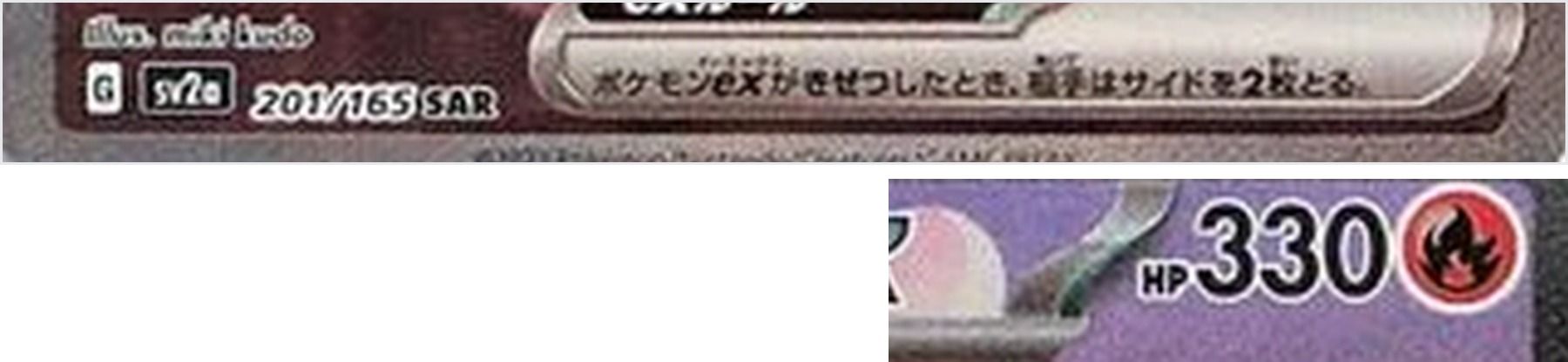 Japanese 201/165
Japanese cards differ the most: a gold-bordered back with seven colored orbs, a core that can look blue-gray, their own bottom-line timeline (see check 4), packs with no code card and usually no Energy (30th CELEBRATION packs carry one), and boxes in plain film that most Pokémon Centers in Japan remove at checkout, so the English sealed-product tells below do not apply. Korean, Chinese, Thai and Indonesian prints use the blue back (Korean cards of 2004 had the Japanese one) and are built from Japanese sets: compare them in their own language too.
One Italian trap: Italian keeps the English species names, so an Italian Pikachu reads Pikachu, but it translates Trainers and Energy, so an Italian Trainer with an English name is the suspicious case.

Sealed packs and boxes
Counterfeit sealed packs exist and can be hard to tell from real ones, so a card from a pack that looked sealed is not proven genuine. Start with the packaging:
- Packs are heat-crimped at both ends and heat-sealed down the back, never glued: glue on a crimp or seam is the strongest sign of a reseal. Contents vary: a Scarlet & Violet or Mega Evolution pack holds 10 cards, an Energy and a code card; a 30th Celebration pack, 5 foil cards, a foil Energy and a code card.
- Modern English booster boxes have a single sealing seam, packs standing front to back rather than left to right, and film printed with a Poké Ball and Pokémon watermark; on fake film the ® beside the word Pokémon is often missing.
- Warning signs on any box: Pokémon USA, Inc. on a product released after 2009, when that company became The Pokémon Company International; a Nintendo logo on the front of a current box; a promise of chase cards in every pack.
Elite Trainer Boxes, blisters and tins are faked too: compare the print, the film and the wrappers with a genuine copy of the same product. Reseals have their own tells, covered in resealed Pokémon packs.
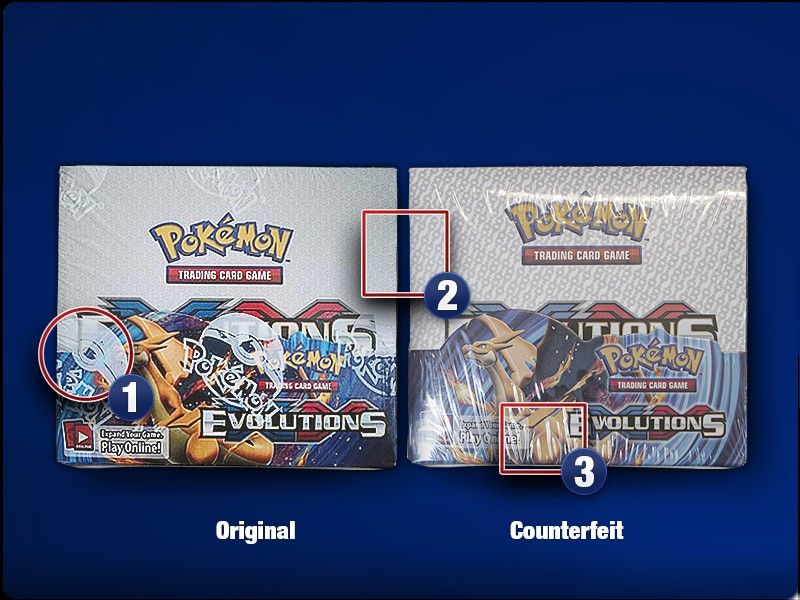 Original box left, counterfeit rightXY Evolutions: the watermark on the film is missing on the fake, and its packs sit left to right instead of front to back
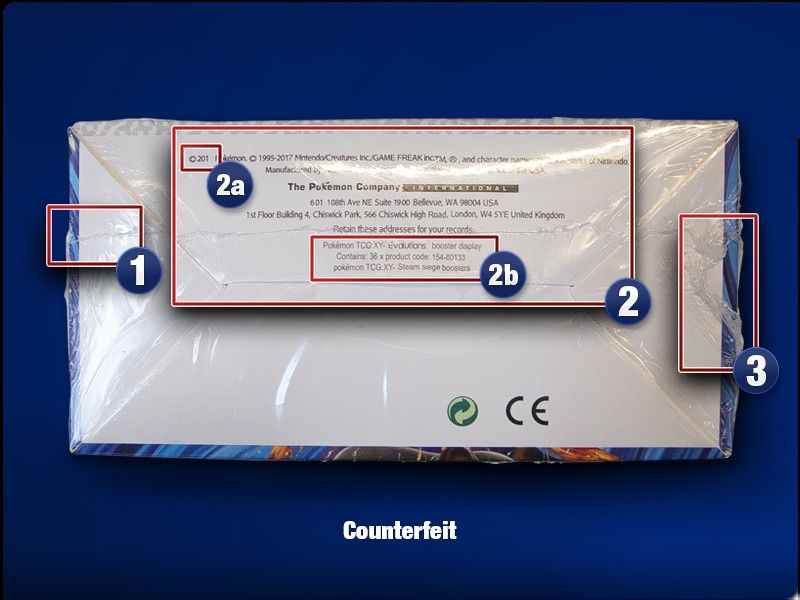 Underside of the counterfeitThe legal text names two different sets on one box and drops the accent
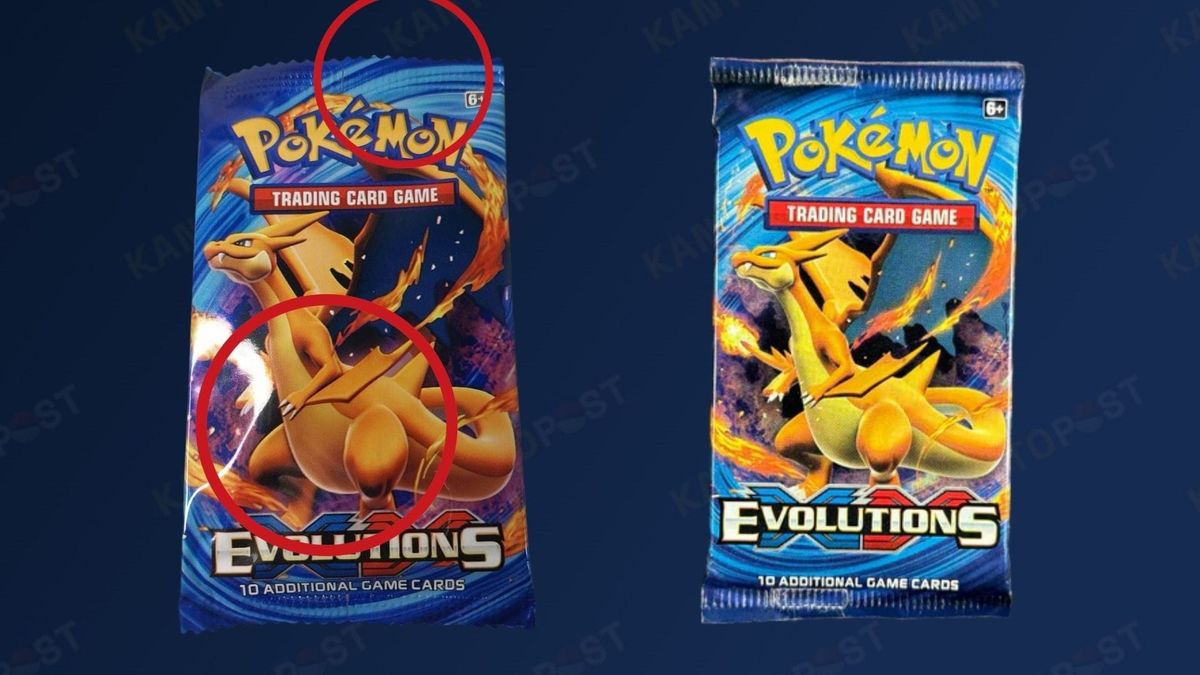 Fake left, real rightXY Evolutions: colors, logo and crimp all differ once the two are side by side
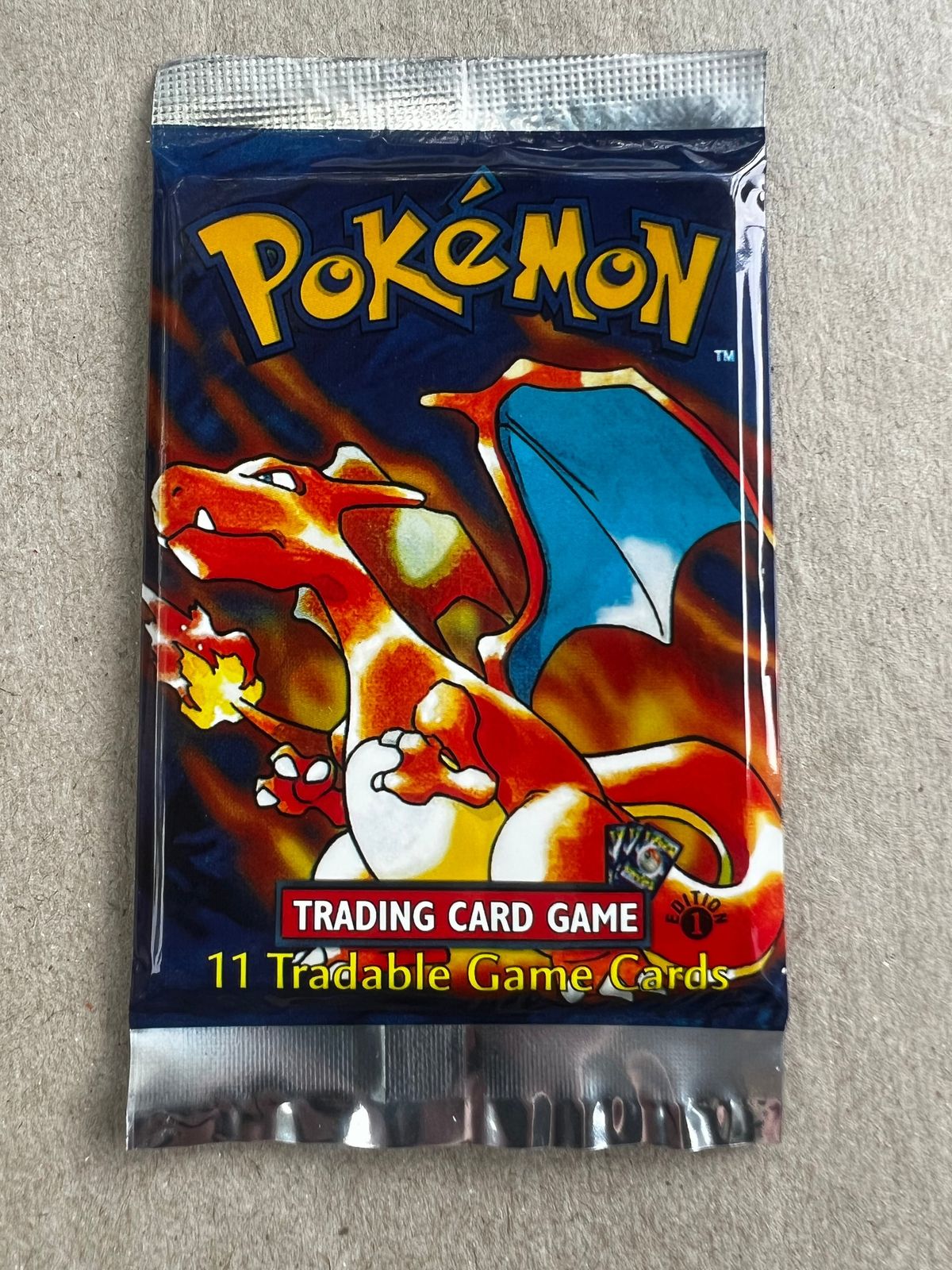 Counterfeit 1st Edition Base Set packJudged fake unanimously by collectors: wrong foil, wrong print, wrong crimp
Graded cards: when the plastic is the fake
Look the certification number up with the grading company, then compare its record with the card in front of you. A number that exists proves little: fake slabs reuse real numbers taken from public listings.
Photos settle it where the record has them, but PSA has imaged every card it grades, at every service level, only since December 2022, so a missing photo on an older slab is normal. Check instead that the label's year, set, card, number and grade match the record exactly, compare the label and case with a genuine slab of the same period, and run the checks above through the plastic. Warning signs: a label off center or in the wrong typeface, a printed rather than embedded hologram, a seam that looks glued, a card tilted inside, a grade that ignores visible flaws.
PSA, BGS and CGC authenticate before they grade, so a slab whose label and record check out carries that authentication, usually with a guarantee. More on labels and tiers in what a Pokémon slab is.
Who is being faked in 2026
Not only the grails. Counterfeit Pokémon cards submitted to PSA rose 125% in 2025 over 2024; Charizard was the most counterfeited subject of all, and Pikachu the third, after Michael Jordan. The four fastest-growing Pokémon targets sell raw for tens or hundreds of dollars:
| Card | Set | Counterfeits at PSA, 2025 vs 2024 | Raw, September 23, 2026 |
|---|---|---|---|
| M Gengar EX 35/119 | Phantom Forces (2014) | up 656% | $51.29 (23 sales) |
| Lugia EX 134/135, full art | Plasma Storm (2013) | up 640% | $297 (12 sales) |
| M Rayquaza EX 105/108 | Roaring Skies (2015) | up 520% | $241 (25 sales) |
| Charizard ex 199/165 | 151 (2023) | up 480% | $328 (27 sales) |
By volume, six of the ten cards PSA saw counterfeited most in 2025 were Pokémon, shown below. Even the 2025 Japanese McDonald's Pikachu gets faked: PSA graded more than 285,000 genuine copies that year and still received 51 fakes; our guide to McDonald's Pokémon cards shows how to check them.
 M Charizard EX#108
 M Charizard EX#69
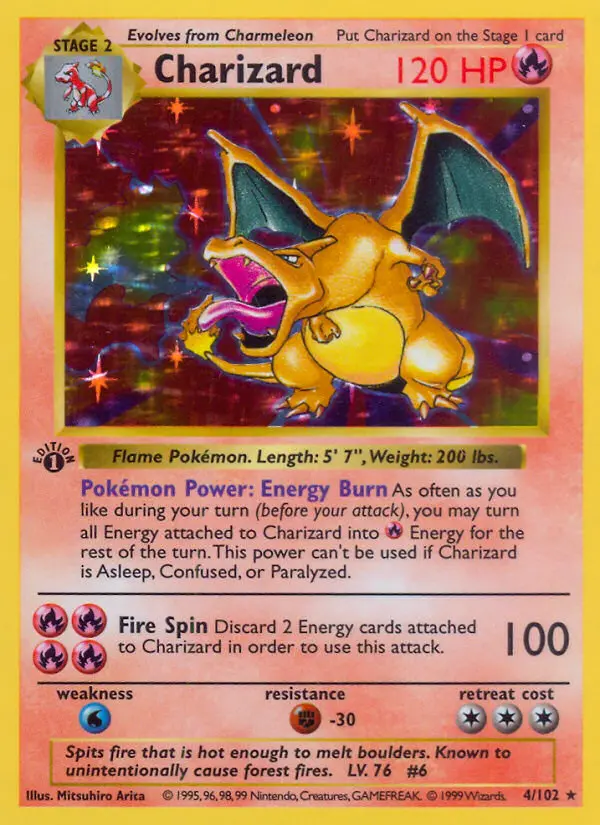 Charizard (1st Edition)#4
 Pikachu with Grey Felt Hat#085
 M Charizard EX#12
 Latias & Latios GX#170
You bought a fake
Document everything first: listings get edited and accounts disappear.
- Photograph the card: front, back, edges and texture, in good light.
- Screenshot everything: the listing, the seller's profile, every message.
- Contact the seller, then open a claim with the platform's buyer protection before its deadline.
- Report the seller, so the next buyer is spared.
Keep a slab intact, since cracking it destroys your evidence, and do not resell a card you know is fake.
FAQ
Can I tell a fake from the seller's photos alone?
Often: the back, the bottom line, the spacing and the energy symbols all read from a good photo, and a seller who will not show the back has told you something. A photo can rule a card out, never in: our Primal Clash fakes pass flat and show their rainbow line only when tilted.
Does a black light detect fake Pokémon cards?
Only against a genuine reference. A counterfeit Japanese Reshiram ex caught at grading in 2026 lit up all over under UV, while the genuine card glowed only on its text and design; other eras and regions react differently, so UV supports a verdict and never delivers one.
Are gold Pokémon cards fake?
Not necessarily: gold Hyper Rares and older gold secret rares, the holo rares of EX Delta Species (2005) with their holofoil border, the gold-bordered Classic Collection reprints of 30th Celebration (2026) and a few metal cards are official; flexible gold "foil" cards sold by the dozen are replicas. Check the card against its set list first; our guide to gold Pokémon cards covers every kind.
Are fake Pokémon cards illegal?
Buying one unknowingly is not a crime, and you are the victim. Knowingly selling one as genuine is fraud.


