
Yes, gold Pokémon cards can be real. The Pokémon Company makes genuine gold cards for booster packs (the Hyper Rares of Scarlet & Violet, the Mega Hyper Rares since September 2025 and older gold secret rares), along with gold-bordered reprints, gold promos and six metal cards. The flexible gold "foil" cards sold online by the dozen are not official: they are unlicensed replicas, worth nothing to a collector.
The fastest tell is the back: a flexible card with a metallic gold or chrome back is a replica, because no genuine paper card has one. The table below tells you which kind of gold card you are holding, and the steps after it tell you whether it is genuine.
Which gold card do you have?
| Kind | Years | How to recognize it | Where it came from |
|---|---|---|---|
| Hyper Rare | 2023 to 2025 | Gold card, three gold stars beside a number above the set total (247/191) | Scarlet & Violet booster packs |
| Mega Hyper Rare | Since September 2025 | All-gold Mega Evolution Pokémon ex, one four-pointed gold star outlined in black (188/132) | Mega Evolution-era booster packs, one or two per set through Pitch Black |
| Gold secret rare | 2012 to early 2023 | Gold Pokémon, Trainer or Energy card, or a gold-bordered Mega EX, with one white star, usually numbered above the set total (114/113) | Booster packs, Dark Explorers to Crown Zenith |
| Gold Star | 2004 to 2007 | Pokémon in its shiny colors, a gold star after its name and after the number (107/107) | EX-era booster packs, POP Series 5 |
| Classic Collection reprint | 2026 | Gold border, a "30" Pikachu logo on the art, the original card's number and rarity symbol (4/102) | 30th Celebration packs and Ultra-Premium Collections |
| Delta Species holo | 2005 | Holofoil on the yellow border, "δ Delta Species" beside the name | EX Delta Species booster packs |
| Gold promo | Various | Gold-finish card with the star-shaped PROMO symbol instead of a rarity symbol (Pikachu V SWSH145) | Premium boxes, such as the Celebrations Ultra-Premium Collection |
| Metal card | 2021 to 2024 | Rigid metal; six in English (listed below) | Ultra-Premium Collections |
| Burger King card | 1999 | 23-karat gold-plated metal, Pokédex text instead of attacks | Burger King, sold with a meal |
| Pure gold Pikachu | 2016 and 2018 | 11 grams of pure gold, a replica of the 1996 Japanese Pikachu | Sold online in Japan |
| Replica | Any year | Flexible; often a metallic or black back, invented attacks and no set symbol | Bundles sold online |
Japanese gold cards print letters instead of stars: UR on Scarlet & Violet-era gold cards, MUR on the Mega ones. A gold card that fits none of these rows deserves suspicion.
How to check a gold card, step by step
Turn it over. Genuine English cards have the blue back, apart from a few special cards, and Japanese cards their own design. No genuine paper card has a metallic gold or chrome back, and only two old promos, Trade Please and Ancient Mew, have a holofoil one. Official gold pieces with a metal back, such as the six metal cards, the 1999 Burger King cards and the pure gold Pikachu, are rigid.
Feel it. A genuine paper card is stiff, flexes and springs back, and measures 63 by 88 mm (card dimensions); replicas are often thin plastic or foil, and a metal replica is obvious in the hand next to a paper card. Genuine Hyper Rares and Mega Hyper Rares are textured, with fine ridges that follow the drawing, but textured proxies are sold too, so texture confirms nothing on its own.
Read the bottom line. Find the number, the rarity symbol and, on cards since 2023, the three-letter set code. They must agree with the table: three gold stars on a Scarlet & Violet gold card, the four-pointed star on a Mega Evolution one, one white star on a 2012 to 2023 gold card. One or two five-pointed gold stars mark an Illustration Rare or a Special Illustration Rare, which are full-art cards, not gold ones. Our rarity guide shows the current symbols up close.
Look the card up. Search the set's card list for that number. A genuine gold card appears there under the same number and name; fakes invent gold versions of popular cards that were never printed in gold, or put a real number on the wrong Pokémon.
Check the numbers on the face. HP, damage and attack text must match the real printing of that card. A gold Charizard with 10,000 HP is a replica: the highest HP ever printed is 1,000, on six oversized promos (the HP records).
Compare, then decide. No single test proves a card genuine or fake: each one compares your card with a genuine copy of the same card, and a verdict needs several to agree. The light test, the print under a loupe and the rest of the method are in our guide to spotting fake Pokémon cards. For a card worth hundreds of dollars, let a grading or authentication service decide.
Gold cards from booster packs
Sellers often call them all "gold rares". Officially, the gold tier was Hyper Rare in the Scarlet & Violet sets (2023 to 2025) and has been Mega Hyper Rare since Mega Evolution (September 26, 2025); earlier gold cards were Secret Rares, a name for a number above the set total, not for a color. Gold secret rares began with Item cards in Dark Explorers (May 2012); whole golden Pokémon followed with Reshiram 114/113 and Zekrom 115/113 in Legendary Treasures (November 2013), and gold-bordered Mega EX from Flashfire (May 2014) on. Crown Zenith (January 2023) closed that run.
As of September 23, 2026, every Mega Hyper Rare is a Mega Evolution Pokémon ex: eight in English, from Mega Lucario ex and Mega Gardevoir ex in Mega Evolution to Mega Darkrai ex in Pitch Black (July 17, 2026). 30th Celebration (September 16, 2026) has no Hyper Rares; its gold cards are the Classic Collection reprints below. In Scarlet & Violet and Mega Evolution packs, a gold card takes the place of the second reverse holo.
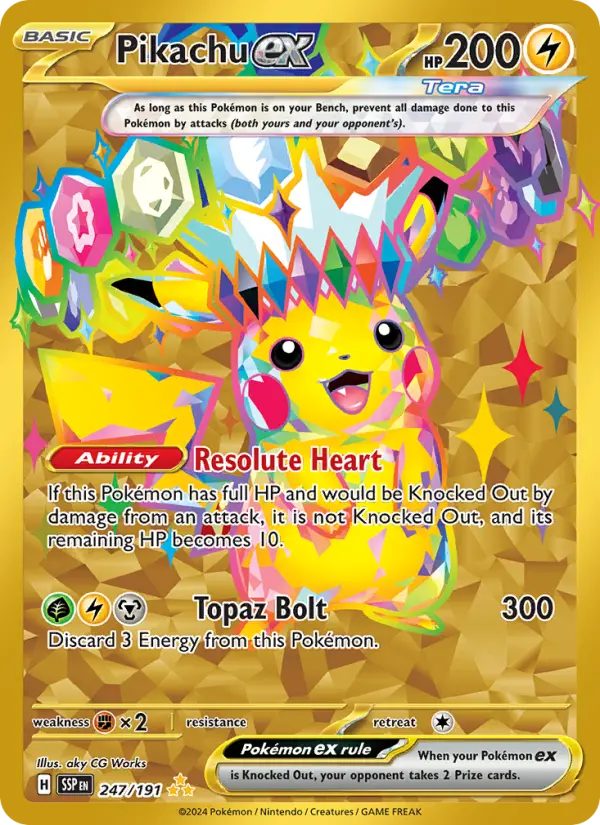 Pikachu ex#247
 Mew ex#205
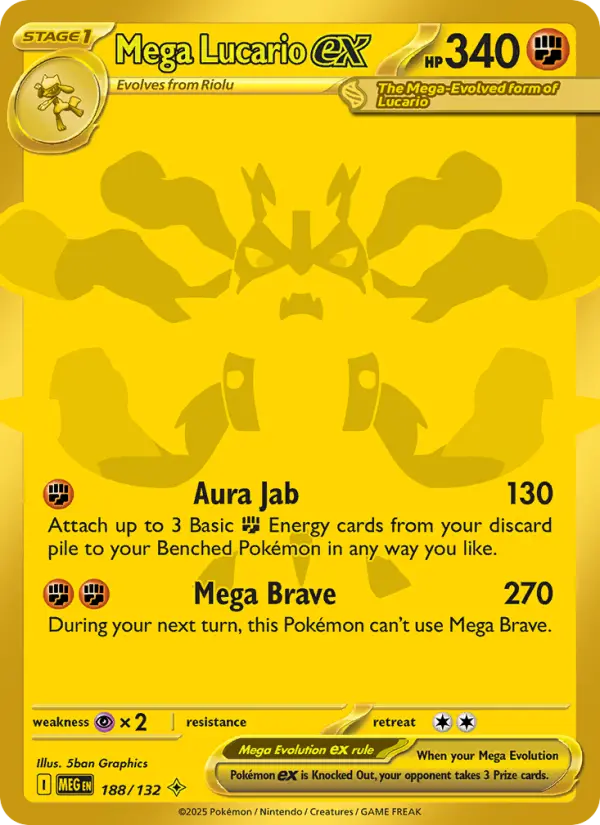 Mega Lucario ex#188
 Mega Darkrai ex#120
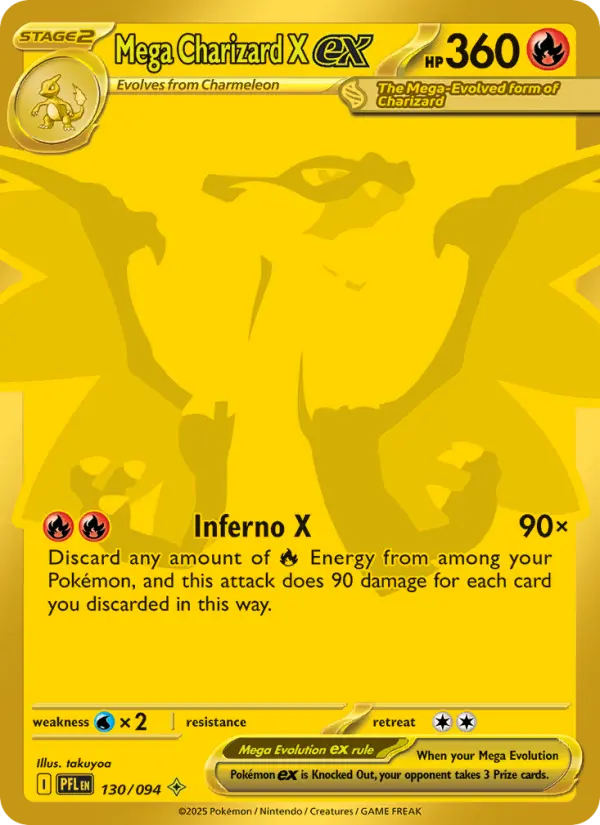 Mega Charizard X ex#130
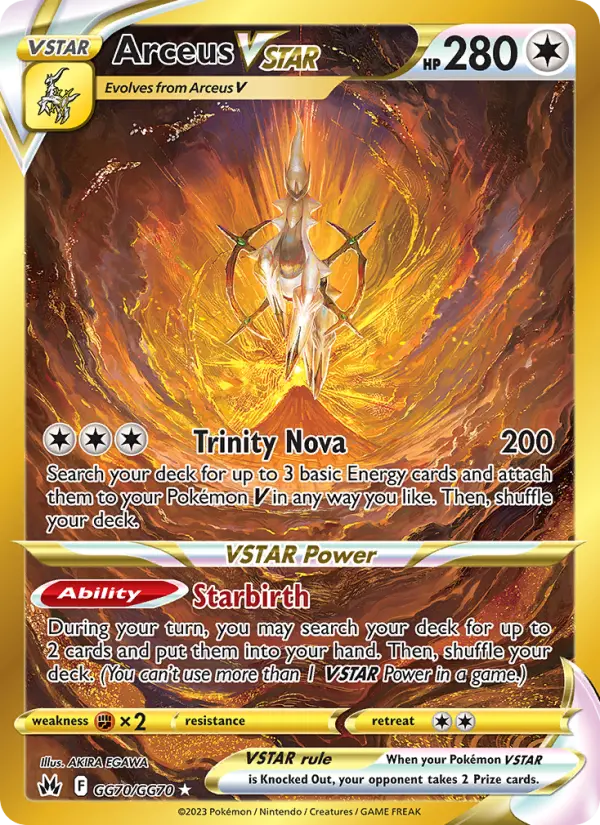 Arceus VSTARGG70
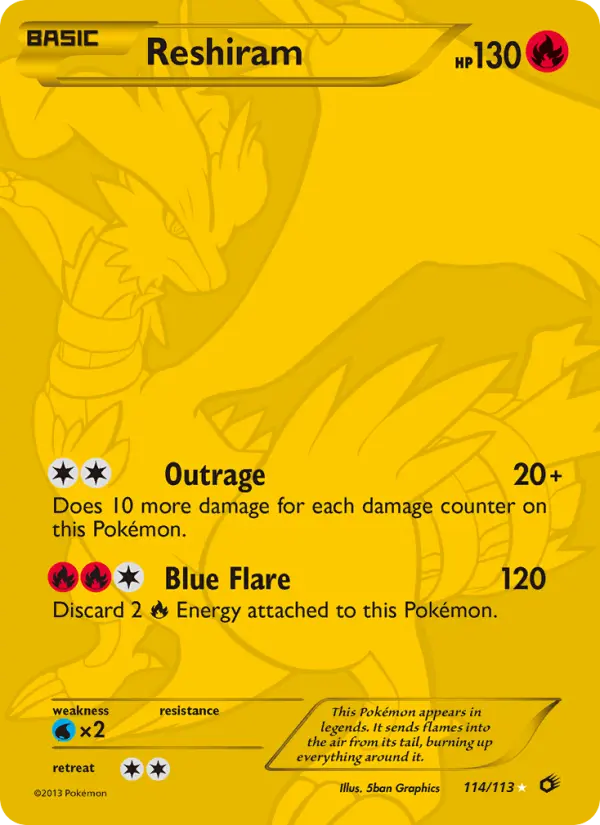 Reshiram#114
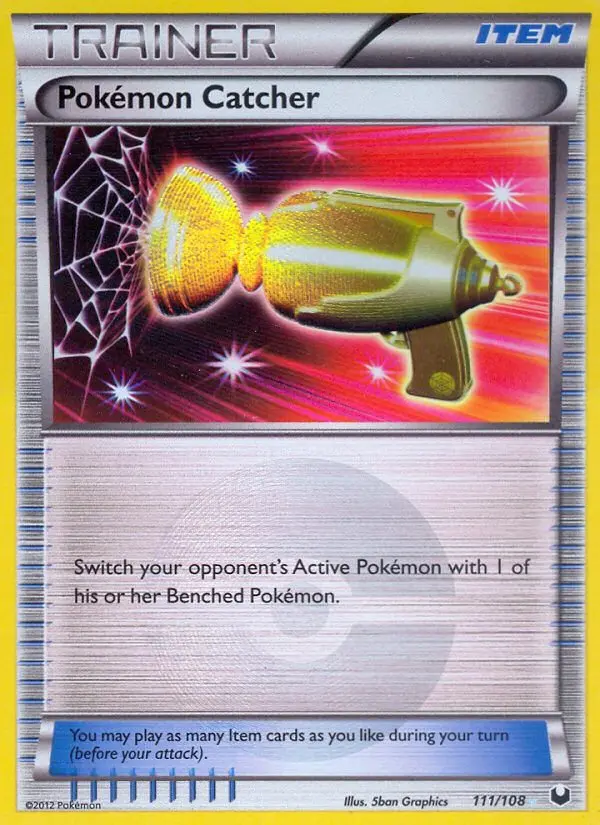 Pokémon Catcher#111
What they sell for
Raw (ungraded) prices from real completed sales, as of September 23, 2026:
| Card | Kind | Raw price |
|---|---|---|
| Charizard ★ 100/101, EX Dragon Frontiers (2006) | Gold Star | $8,515 (6 sales) |
| Rayquaza ★ 107/107, EX Deoxys (2005) | Gold Star | $8,474 (10 sales) |
| Pikachu ★ 104/110, EX Holon Phantoms (2006) | Gold Star | $3,216 (7 sales) |
| Vaporeon ★ 102/108, EX Power Keepers (2007) | Gold Star | $896 (5 sales) |
| Mega Charizard Y ex 294/217, Ascended Heroes (2026) | Mega Hyper Rare | $364 (7 sales) |
| Mega Lucario ex 188/132, Mega Evolution (2025) | Mega Hyper Rare | $220 (13 sales) |
| Arceus VSTAR GG70, Crown Zenith (2023) | Gold secret rare | $207 (18 sales) |
| Charizard 4/102, 30th Celebration (2026) | Classic Collection | $194 (180 sales) |
| Reshiram 114/113, Legendary Treasures (2013) | Gold secret rare | $146 (6 sales) |
| Pikachu V SWSH145, Celebrations Ultra-Premium Collection (2021) | Gold promo | $101 (35 sales) |
| Pikachu ex 247/191, Surging Sparks (2024) | Hyper Rare | $79.39 (14 sales) |
| Pikachu 58/102, 30th Celebration (2026) | Classic Collection | $30 (170 sales) |
| Luxurious Cape 265/182, Paradox Rift (2023) | Hyper Rare | $3.67 (18 sales) |
Most gold cards are cheap. On the same date, 61 of the 73 Scarlet & Violet Hyper Rares with a price, Pokémon ex included, sell for under $15 raw. The costly ones are the Mega Hyper Rares ($94 to $364), a few popular Pokémon such as Pikachu ex, and the Gold Star cards.
How hard they are to pull
| Set | Gold cards in the set | One gold card, on average, every |
|---|---|---|
| Scarlet & Violet (2023) | 6 Hyper Rares | 54 packs |
| Surging Sparks (2024) | 6 Hyper Rares | 188 packs |
| Destined Rivals (2025) | 6 Hyper Rares | 149 packs |
| Mega Evolution (2025) | 2 Mega Hyper Rares | 1,260 packs |
| Pitch Black (2026) | 1 Mega Hyper Rare | 1,081 packs |
The Pokémon Company does not publish pull rates for English sets; these are averages from openings of more than 4,000 packs per set, and the Mega Hyper Rare figures rest on a handful of pulls, so read them as rough. A booster box holds 36 packs, so a Mega Hyper Rare takes 30 to 35 boxes on average, and a gold card has become roughly twenty times harder to pull than in 2023.
Gold Star and gold-bordered cards
Gold Star cards are not gold all over. They show a Pokémon in its shiny colors breaking out of the art frame, with a gold star after its name and a small gold star after the number. Twenty-seven were printed in English, from EX Team Rocket Returns (November 2004) to EX Power Keepers and POP Series 5 in 2007, and raw copies mostly sell for $700 to $8,500 as of September 23, 2026, which puts them among the costliest gold cards to come out of packs and makes them a target for counterfeiters. Two later cards carry the star legitimately: an Umbreon ★ reprint in the Celebrations Classic Collection (2021), marked with a 25th anniversary logo, and the Greninja ★ promo SWSH144 (2021). All 27 originals are pictured, with their prices in every grade, in our list of Gold Star Pokémon cards.
The 30 Classic Collection reprints of 30th Celebration (September 16, 2026) have genuine gold borders and a "30" Pikachu logo on the art. They keep the original card's layout, so the number sits where the original's did: bottom right on Base Set Charizard 4/102, bottom left with its regulation mark and set code on Magikarp 203/193. They turn up in ordinary 30th Celebration booster packs, about one pack in ten in early openings, and each Ultra-Premium Collection (Day and Night, due November 6, 2026) adds a three-card Classic Collection pack beside its 29 ordinary packs.
The rare holos of EX Delta Species (October 2005) carry holofoil on the yellow border as well as on the Pokémon, which can pass for gold in hand. They are genuine, and "δ Delta Species" beside the name identifies them.
 Charizard#4/102
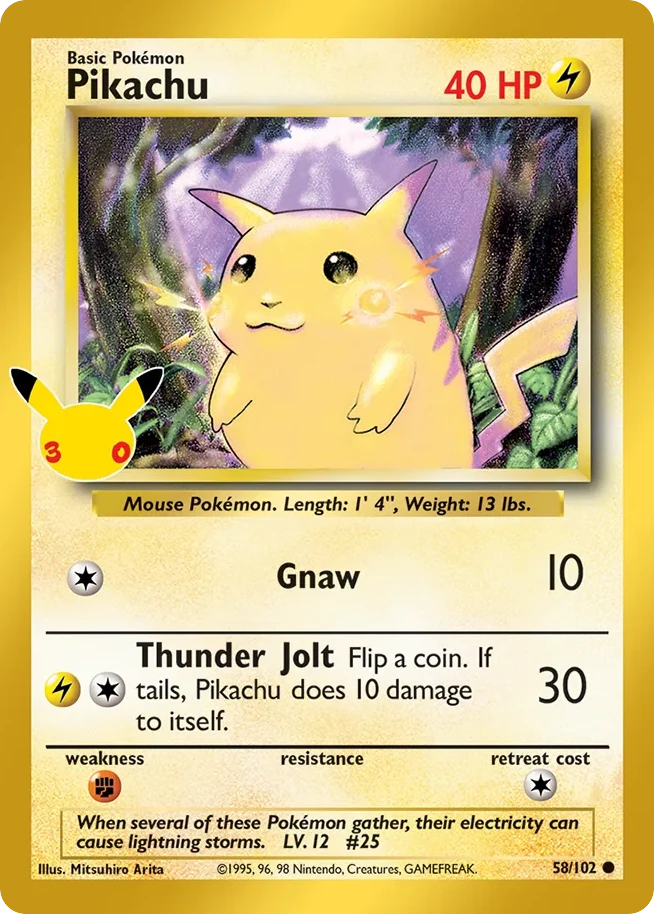 Pikachu#58/102
 Magikarp#203/193
 Pikachu VSWSH145
 Charizard Gold Star#100
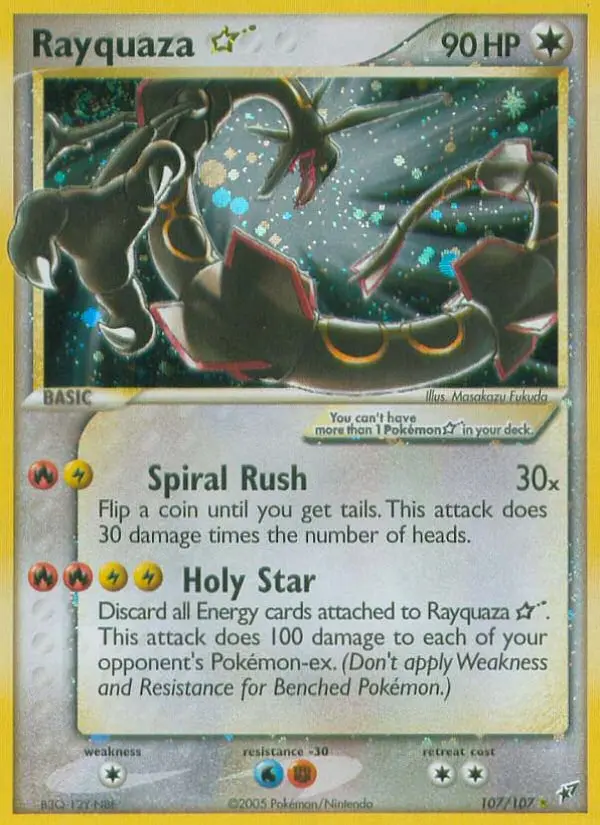 Rayquaza Gold Star#107
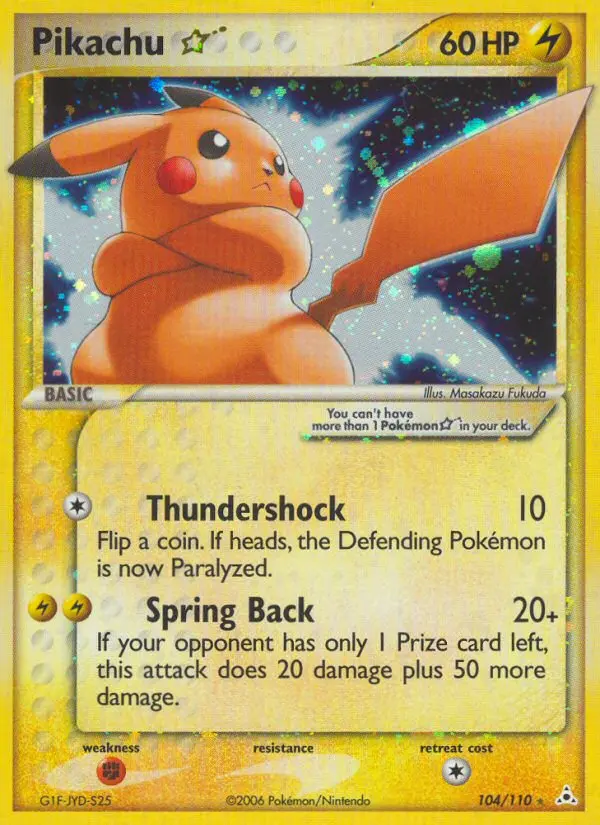 Pikachu Gold Star#104
Metal, gold-plated and solid gold
The six metal cards
As of September 23, 2026, six official metal cards exist in English, each from an Ultra-Premium Collection:
- Charizard 4/102 and Pikachu 58/102, Base Set replicas with gold faces: Celebrations Ultra-Premium Collection, October 2021
- Arceus V 122/172 and Arceus VSTAR 123/172, in full color: Arceus VSTAR Ultra-Premium Collection, November 4, 2022
- Mew ex 205/165, the gold Hyper Rare in metal: 151 Ultra-Premium Collection, October 6, 2023
- Tera Greninja ex 106/167: Greninja ex Ultra-Premium Collection, November 1, 2024, sold through GameStop in the United States
The Mega Charizard X ex Ultra-Premium Collection (November 14, 2025) and the two 30th Celebration Ultra-Premium Collections hold metal coins, not metal cards. An English metal card outside this list, such as a metal Lugia or Umbreon, is a custom piece.
The 1999 Burger King cards
From November 15, 1999, Burger King sold six 23-karat gold-plated cards for $1.99 each with a meal: Charizard, Jigglypuff, Mewtwo, Pikachu, Poliwhirl and Togepi. Mew is not one of them. Each is a thick metal plate in a plastic cover, with Pokédex text on the back instead of attacks, so none is playable. Each came inside a Poké Ball, packed in a blue or red box with a certificate of authenticity signed by Howard Lincoln, then chairman of Nintendo of America. Keep the box, the Poké Ball and the certificate with the card.
The pure gold Pikachu
For the card game's 20th anniversary, The Pokémon Company and Tanaka Kikinzoku Jewelry made a replica of the Pikachu card from the first Japanese set of 1996 in 11 grams of pure gold, sold with an acrylic stand for ¥200,000 before tax. It was made to order from October 19 to November 7, 2016, through Pokémon Center Online and Seven Net Shopping, for delivery in late December, and sold a second time by lottery on Pokémon Center Online in February 2018. It cannot be used in official tournaments, and counterfeits of it have been listed on Japanese auction sites.
Fake gold cards: two different problems
Most fake gold cards are replicas: flexible gold foil or plastic cards sold in bundles, with invented attacks, numbers that exist in no set and often no set symbol. The costlier problem is counterfeits of real gold cards: printed copies of Hyper Rares, Mega Hyper Rares and Gold Star cards, and metal cards of Pokémon that were never made in metal. Those need the full comparison above, because a good counterfeit copies the number, the symbol and even the texture.
Buying a real gold card
A Mega Hyper Rare is the rarest pull in Mega Evolution and Pitch Black packs, so buying the single is usually cheaper than chasing it: Mega Darkrai ex sells for $157 raw (23 sales) as of September 23, 2026, against about 1,081 packs of Pitch Black, on average, to pull one. Buy sealed product from a store you trust: counterfeit sealed packs exist, so a card is not proven genuine because it came out of a pack. As of September 23, 2026, the newest English set is 30th Celebration (September 16, 2026) and Delta Reign follows on November 6, 2026; the release calendar keeps the list current. A listing of "55 gold cards" is a bundle of replicas, fine as a toy for a young child and nothing more.
FAQ
Are gold Pokémon cards worth anything?
Genuine ones are, though most sell cheaply. As of September 23, 2026, most Scarlet & Violet gold Hyper Rares sell for under $15 raw, Mega Hyper Rares for $94 to $364 and most Gold Star cards for $700 to $8,500. Gold foil replicas are worth nothing.
Are the gold foil Pokémon cards sold online real?
No. Cheap bundles of gold foil, "metal" or "polymer" cards are unofficial replicas. Genuine gold cards come from booster packs, as promos and in a few premium boxes, never in bundles of dozens.
What does a gold star on a Pokémon card mean?
It depends on the era. On Scarlet & Violet cards, one gold star marks an Illustration Rare, two a Special Illustration Rare and three a gold Hyper Rare. A four-pointed gold star outlined in black marks a Mega Hyper Rare, and a gold star after the Pokémon's name marks a Gold Star card from 2004 to 2007.
Is a gold Charizard card real?
It can be. Genuine gold Charizards include the gold-bordered M Charizard EX 107/106 and 108/106 (Flashfire, 2014), Charizard ex 228/197 (Obsidian Flames, 2023), Mega Charizard X ex 130/094 (Phantasmal Flames, 2025), Mega Charizard Y ex 294/217 (Ascended Heroes, 2026), the Classic Collection Charizard 4/102 (2026), the metal Charizard (2021) and the Burger King plate (1999). A gold Charizard that matches no set list, or prints 10,000 HP, is a replica.
Are metal Pokémon cards real?
Six English ones are, as of September 23, 2026: Charizard and Pikachu (2021), Arceus V and Arceus VSTAR (2022), Mew ex (2023) and Tera Greninja ex (2024), each from an Ultra-Premium Collection. Metal cards outside that list, such as a metal Lugia or Umbreon, are custom pieces.
Are the gold-bordered 30th Celebration cards real?
Yes. The 30 Classic Collection reprints of 30th Celebration have genuine gold borders, a "30" Pikachu logo on the art and the original card's number. They come in 30th Celebration booster packs, and in three-card packs inside the Ultra-Premium Collections due November 6, 2026.


