
A standard English Pokémon booster pack holds 10 cards, plus a basic Energy card and a code card for Pokémon TCG Live: 12 items in the wrapper. That holds for the Scarlet & Violet and Mega Evolution main sets and for special sets such as Prismatic Evolutions and Ascended Heroes. A standard Japanese pack holds 5 cards and no code card; Japanese special packs hold 6, 7, 10 or 35.
Among English sets on sale in September 2026, the exception is 30th Celebration, released September 16, 2026: its packs hold 5 foil cards, one of them a Pikachu rare, plus a foil basic Energy and a code card. Five is the right count for that pack, not a short one. About 1 pack in 10 held a gold-bordered Classic Collection card in early openings, each Ultra-Premium Collection (November 6, 2026) adds a separate 3-card Classic Collection pack, and as of September 24, 2026 there is no English 30th Celebration booster box. Celebrations packs (2021) held 4 cards; every other pack you are likely to hold is in the table.
| Pack | Cards | What else to know |
|---|---|---|
| English booster pack, Scarlet & Violet and Mega Evolution (2023 on) | 10 | Plus a basic Energy and a code card; 3 of the 10 are foil |
| English 30th Celebration (September 16, 2026) | 5 | All foil, one a Pikachu rare; plus a foil basic Energy and a code card |
| 30th Celebration Classic Collection pack | 3 | Classic Collection cards only; one in each Ultra-Premium Collection (November 6, 2026) |
| Celebrations (2021) | 4 | All foil; plus a code card |
| Fun Pack | 3 | Two commons and a reverse holo; found in magazines, at events, in holiday calendars and at some discount stores |
| Trick or Trade mini pack | 3 | Halloween bundles, 2022 to 2025; reprints with a Pikachu jack-o'-lantern stamp |
| McDonald's Happy Meal pack (2021 to 2025) | 4 | One Confetti holo and three non-holo cards |
| Japanese expansion pack | 5 | ¥200 (¥180 for sets released before May 2026); no code card and, in most sets, no Energy |
| Japanese Pokémon Card 151, Black Bolt, White Flare | 7 | ¥290 |
| Japanese High Class Pack | 10 | ¥550 |
| Japanese 30th CELEBRATION (September 16, 2026) | 6 | ¥360; all foil, one Pikachu and one basic Energy in every pack |
| Japanese Deluxe (Black Bolt, White Flare, 2025) | 35 | ¥1,450; one Art Rare in every pack |
| Japanese gym promo pack | 1 or 2 | Given for playing or winning at Pokémon Card Gym events, not sold |
| Pokémon TCG Pocket (mobile game) | 5 | Sometimes 6 |
Japanese suggested retail prices (MSRP) per pack, tax included, as of September 24, 2026.
Inside a standard English pack
A Scarlet & Violet or Mega Evolution booster pack is filled slot by slot:
- 4 commons (● symbol).
- 3 uncommons (◆ symbol).
- A reverse holo: a common, uncommon or rare of the set with a foil background. In some sets an ACE SPEC Rare (Temporal Forces to Prismatic Evolutions) or a Shiny Rare or Shiny Ultra Rare (Paldean Fates) takes this slot.
- A second reverse holo, which the biggest pulls replace: an Illustration Rare, a Special Illustration Rare or a Hyper Rare, and in Mega Evolution sets a Mega Hyper Rare.
- The rare slot: a foil Rare (★), a Double Rare (a regular ex) or an Ultra Rare (a full-art ex or Trainer card).
- A basic Energy card, playable in a deck, and a code card that unlocks a digital pack in Pokémon TCG Live.
That makes 3 guaranteed foils per pack, and a pack can hold two hits at once, one in the rare slot and one in the second reverse slot. Every card of rare or higher has been foil since Scarlet & Violet (March 2023); packs before it guaranteed only one reverse holo, and their rare could be non-holo. Our rarity guide explains each symbol, and our guide to the best packs for rare cards ranks the sets by what a pack gives back.
A set's booster pack holds the same count whatever product it comes in: a Booster Bundle holds 6 of them, an Elite Trainer Box 9 and a booster display 36. What each product costs per pack is in our guide to how many packs are in a booster box.
30th Celebration: five cards, all foil
A 30th Celebration pack holds 5 foil cards and a foil basic Energy designed by the artist YOSHIROTTEN, plus a code card. Every pack holds one of 30 Pikachu rares, each drawn by a different illustrator. The set's Classic Collection, 30 gold-bordered reprints of historic cards such as the Base Set Charizard, comes out of the same packs: about 1 pack in 10 held one in early openings.
Each Ultra-Premium Collection (Day or Night, out November 6, 2026) adds a separate 3-card pack of Classic Collection cards to its 29 ordinary packs, at an MSRP of $179.99 as of September 24, 2026. There is no English 30th Celebration booster box: the packs come only inside products such as the Elite Trainer Box (9 packs) and the Booster Bundle (6 packs, from October 2, 2026).
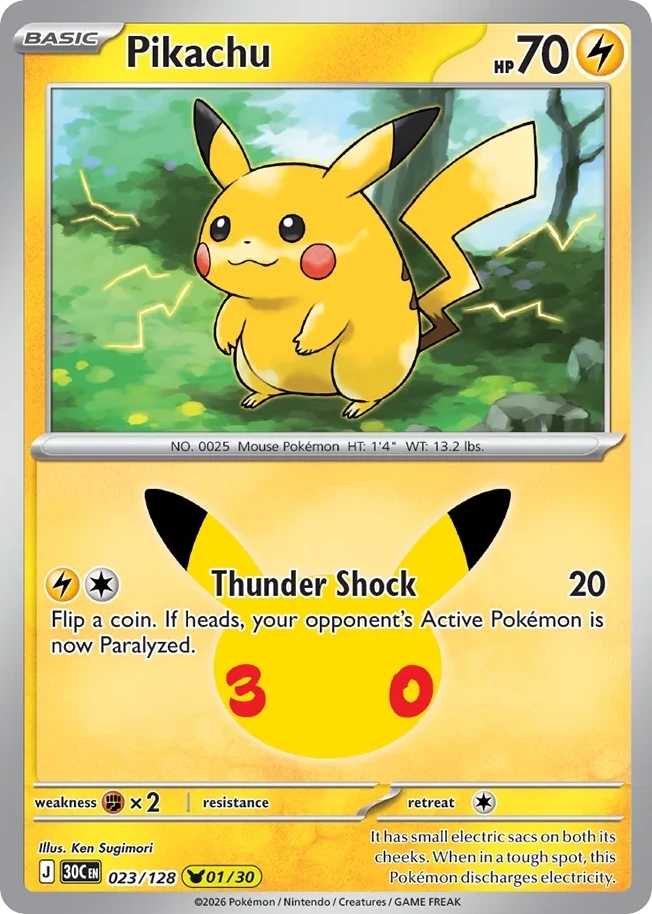
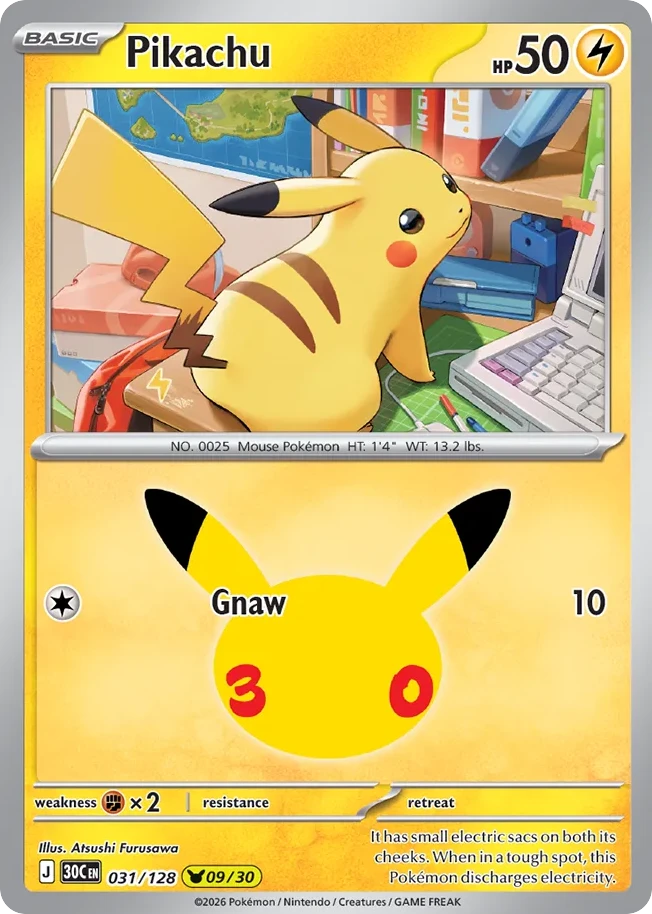
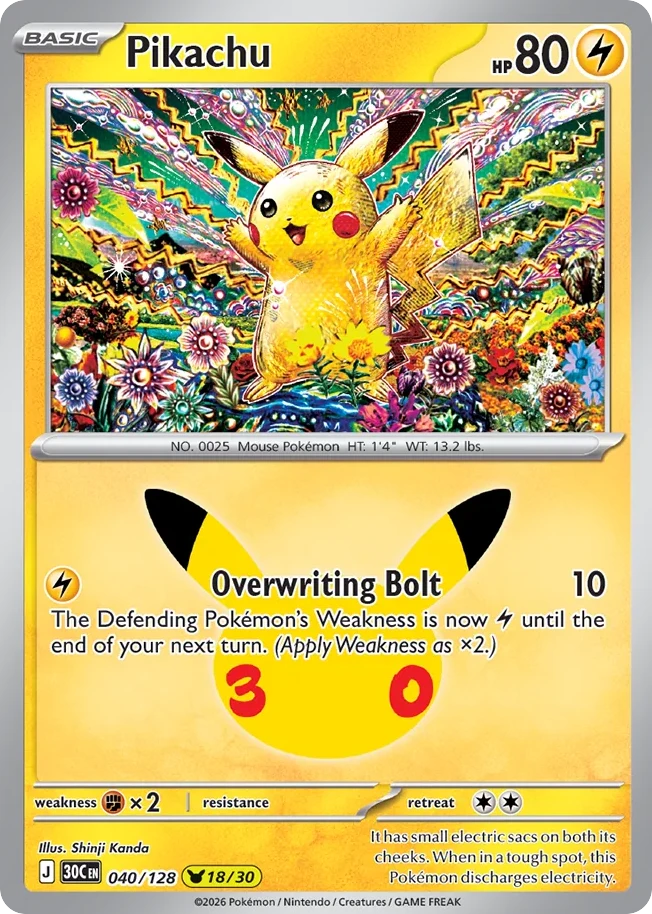
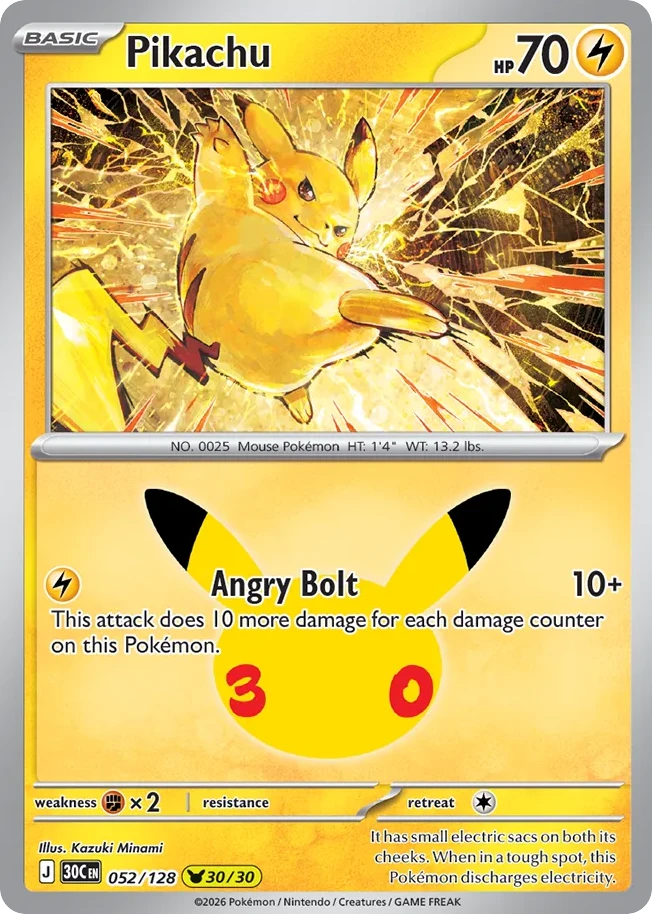
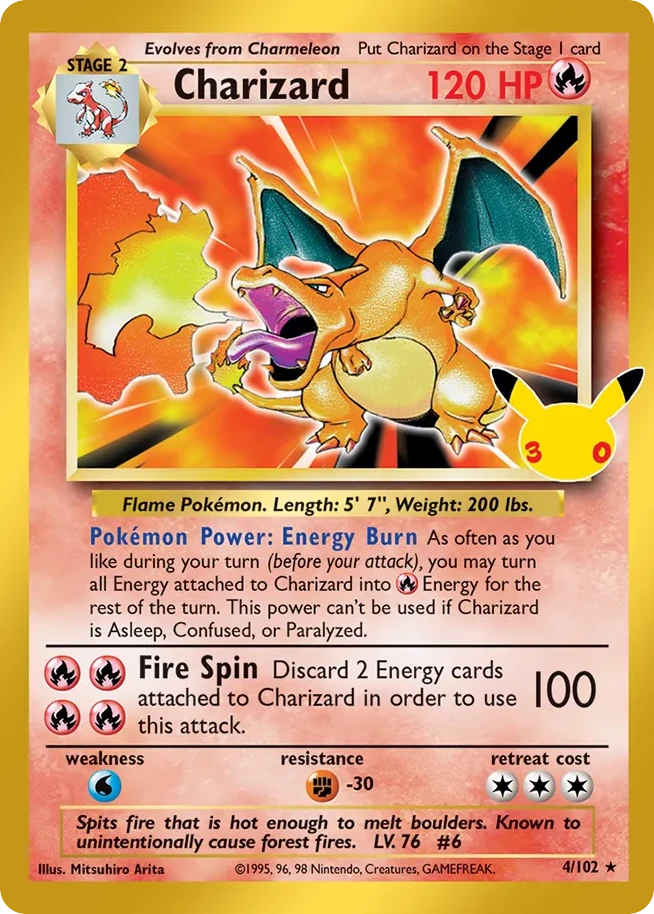
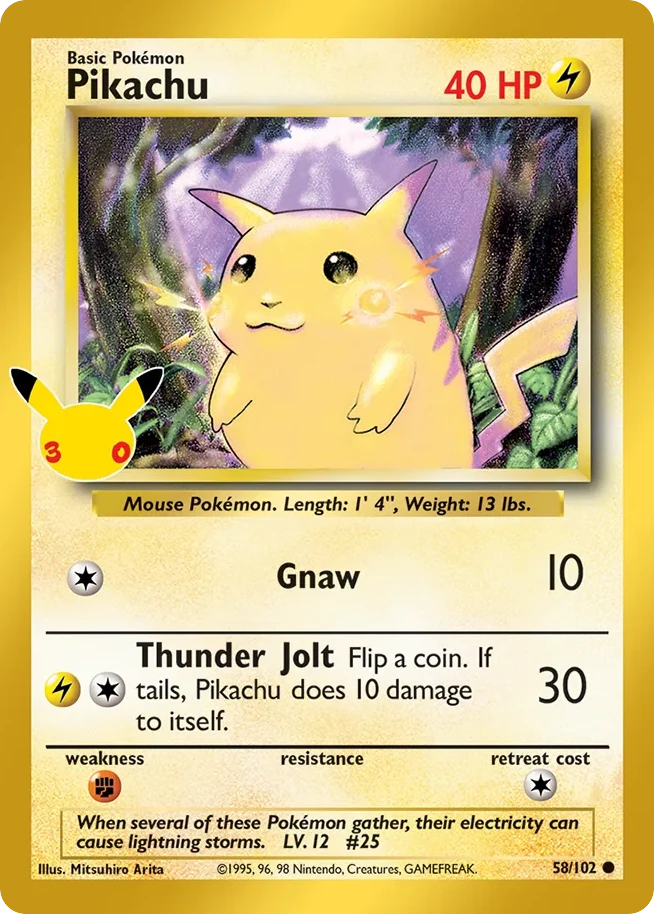
Celebrations (October 8, 2021), the 25th-anniversary set, had 4-card packs: all foil, no reverse holo slot, plus a code card. Detective Pikachu (2019) packs held 4 cards too. Special sets such as Prismatic Evolutions (2025) and Ascended Heroes (January 30, 2026) use the standard 10-card pack.
Mini packs of 3 and 4 cards
Fun Packs are genuine 3-card packs of a main set, two commons and a reverse holo, handed out in magazines, at events and in holiday calendars, and they have been sold singly at discount stores. Trick or Trade bundles, sold for Halloween from 2022 to 2025, hold 35 to 50 mini packs of 3 cards stamped with a Pikachu jack-o'-lantern. Discount-store assortments of other counts are usually repacks: loose cards put together by another company, not a Pokémon product.
From 2021 to 2025, McDonald's Happy Meal packs held 4 cards, one Confetti holo and three non-holo; before 2021, most campaigns gave one card with each toy. As of September 23, 2026, no McDonald's Pokémon card giveaway had run in 2026 in the United States or Japan. The campaigns are listed year by year in our catalog of McDonald's Pokémon cards.
Japanese packs
A standard Japanese expansion pack holds 5 cards, at a suggested retail price of ¥200 since Abyss Eye (May 22, 2026); Ninja Spinner (March 13, 2026) was the last set at ¥180. Japanese packs carry no code card, and most sets put no basic Energy in them; 30th CELEBRATION guarantees one in every pack.
The product name does not tell you the count. 拡張パック (expansion pack) covers the 5-card sets, the 6-card 30th CELEBRATION, the 7-card Black Bolt and White Flare and the 35-card Deluxe; 強化拡張パック (enhanced expansion pack) covers 5-card sets such as Eevee Heroes and the 7-card Pokémon Card 151. High Class Packs of 10 cards have come once a year, late in the year; the latest as of September 2026 is MEGA Dream ex (November 28, 2025).
Promo card packs, given for playing or winning at Pokémon Card Gym events, hold 1 or 2 promos. From September 16, 2026 to January 31, 2027, one of the two packs given for playing a gym battle is a 30th anniversary promo pack. How Japanese sets line up with English ones is in our guide to Japanese Pokémon cards.
Other languages
Korean packs hold 5 cards, 10 in a High Class Pack. Traditional Chinese packs, sold in Taiwan and Hong Kong, match the Japanese sizes for current sets: 5 cards at NT$54, 7 for Pokémon Card 151, Black Bolt and White Flare at NT$79, and 6 foil cards for 30th CELEBRATION at NT$99. Mainland China has had a Simplified Chinese product line of its own since October 2022; its 30th Celebration pack also holds 6 foil cards, at 18 yuan (all suggested retail prices as of September 24, 2026). Brazilian packs, printed in Portuguese, hold 6 cards.
How the pack changed
| Period | Game cards | Also in the wrapper |
|---|---|---|
| Base Set (January 1999) to Legendary Collection (May 2002) | 11; a reverse holo in every pack from Legendary Collection | No code card |
| Expedition (September 2002) to the end of the EX series (early 2007) | 9, including a reverse holo | No code card |
| Diamond & Pearl (May 2007) to XY (2016) | 10, with a rare and a reverse holo | A code card from Emerging Powers (August 2011) |
| Sun & Moon (February 2017) to Crown Zenith (January 2023) | 10, with a rare and at least one reverse holo | A basic Energy, or in some Brilliant Stars to Crown Zenith packs a VSTAR marker, and a code card |
| Scarlet & Violet (March 2023) on | 10, three of them foil | A basic Energy and a code card |
Japanese packs moved more: 10 cards from 1996, 5 from the e-Card era (December 2001), 11 from ADV (January 2003) to the LEGEND sets of 2010, and 5 again since Black Collection and White Collection (December 17, 2010), with the special packs above as the exceptions.
In July 2025, some Mega Evolution packaging described packs as holding a basic Energy or a code card. On July 31, 2025, The Pokémon Company called that wording an error: every booster pack still holds both. The genuine change announced the same day was elsewhere: some other products stopped including code cards for digital promo cards.
The code card was once a clue to a pack's contents: from about 2014 (XY, Phantom Forces) to at least 2020, its design told a regular rare from a holo rare or better. Mega Evolution code cards carry artwork unrelated to what is in the pack. What a short or opened-looking pack can and cannot prove is in resealed Pokémon packs.
FAQ
Why does my Pokémon pack have 12 cards?
Because a standard English pack holds 10 game cards plus a basic Energy and a code card. The Energy is playable; the code card unlocks a digital pack in Pokémon TCG Live.
How many cards are in a 30th Celebration pack?
Five foil cards, one of them a Pikachu rare, plus a foil basic Energy and a code card; about 1 pack in 10 held a gold-bordered Classic Collection card in early openings. The Japanese 30th CELEBRATION pack holds six foil cards, one of them a basic Energy.
How many cards are in a Japanese Pokémon pack?
Five in a standard expansion, seven in Pokémon Card 151, Black Bolt and White Flare, ten in a High Class Pack, six in 30th CELEBRATION and 35 in a Deluxe pack. Japanese packs carry no code card.
How many rare cards are in a Pokémon pack?
At least one: a Scarlet & Violet or Mega Evolution pack guarantees a rare or better among its three foils. A second hit can replace one of the reverse holos, so a pack can hold two.
Is a pack with fewer cards resealed?
Not necessarily: 30th Celebration packs hold 5 cards, Celebrations packs 4, Fun Packs and Trick or Trade packs 3. A main-set pack short of a card or a foil is a warning sign, not proof, since factory errors happen.
How many cards are in a Pokémon booster box?
An English booster display holds 36 packs: 360 cards, plus 36 basic Energy and 36 code cards. Japanese boxes hold 100 to 150 cards, depending on the product.
How many cards do you need to build a deck?
Exactly 60, with the rules in our guide to how many cards are in a Pokémon deck. For a prerelease, the Build & Battle Box holds 4 packs, a ready-to-play 40-card deck and one of four promo cards.
What is a god pack?
Collector slang for a pack in which every slot holds a top-rarity card; a demi-god pack holds two or three hits. No odds are published for English or Japanese packs; in Pokémon TCG Pocket, the app lists the equivalent, its Rare Pack, at 0.05%, about 1 pack in 2,000.
How many cards are in a Pokémon TCG Pocket pack?
Five. Since July 2025, sets that offer it add a sixth card to about 1 pack in 12, and the app shows its own odds.


