A Pokémon slab is a card that a grading company has authenticated, graded on a scale of 1 to 10, and sealed inside a sonically welded plastic case. The case is tamper-evident: it cannot be opened without breaking the weld, and the damage shows. The label sealed in with the card carries the grade and a unique certification number, which anyone can look up on the grader's site before paying.
Is grading worth it? On the modern cards measured below (September 24, 2026), a PSA 10 sells for about three to five times the raw price and a PSA 9 for only 15 to 27% more, so grading pays mostly on a card with a real chance at a 10. PSA's cheapest open US tier costs $59.99 a card.
Inside a slab
Three parts: the card, an inner sleeve or well that holds it still, and two plastic shells welded around both with ultrasound rather than glue. The label names the grading company, the card (year, set, name and number), the grade in figures and usually in words (GEM MT 10, Pristine 10), and the certification number, unique to that card in that holder. A case measures about 3.2 by 5.3 inches; PSA, CGC and TAG publish their exact sizes, listed in our card dimensions guide.
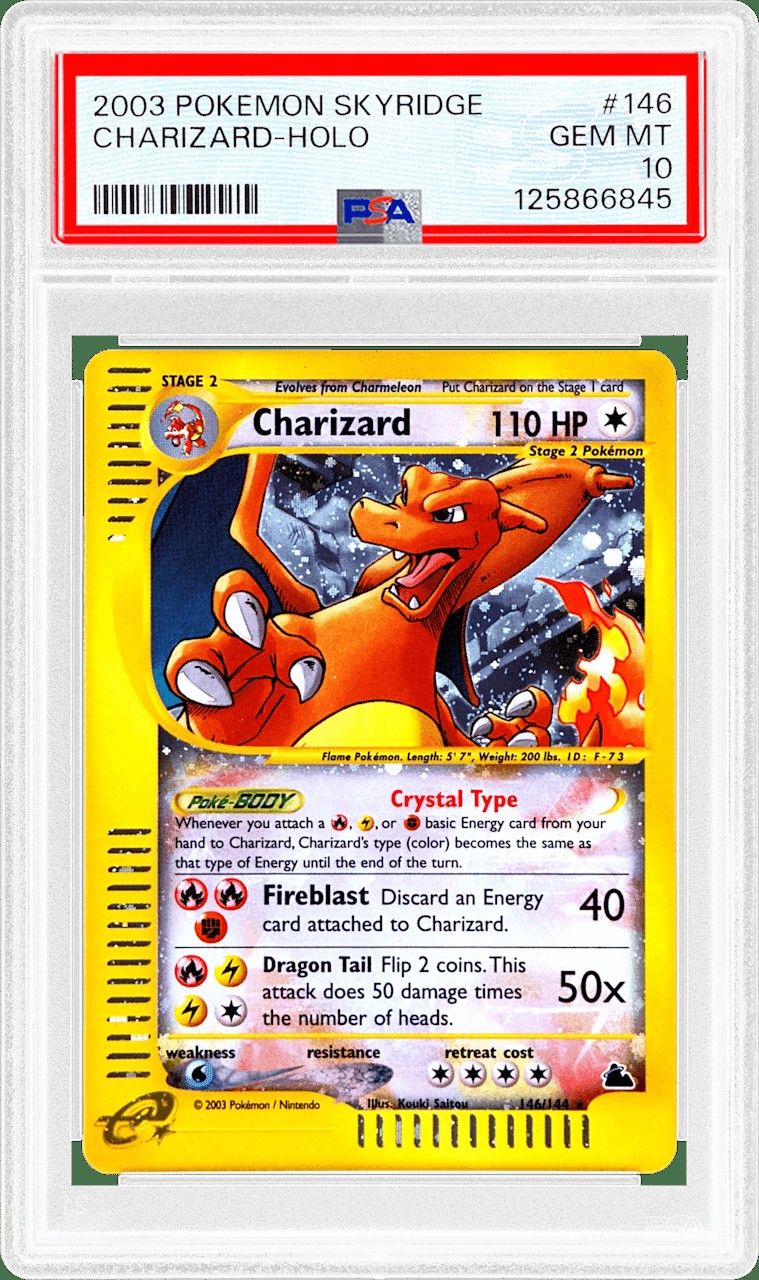 PSAGEM MT 10, red label bar, certification number
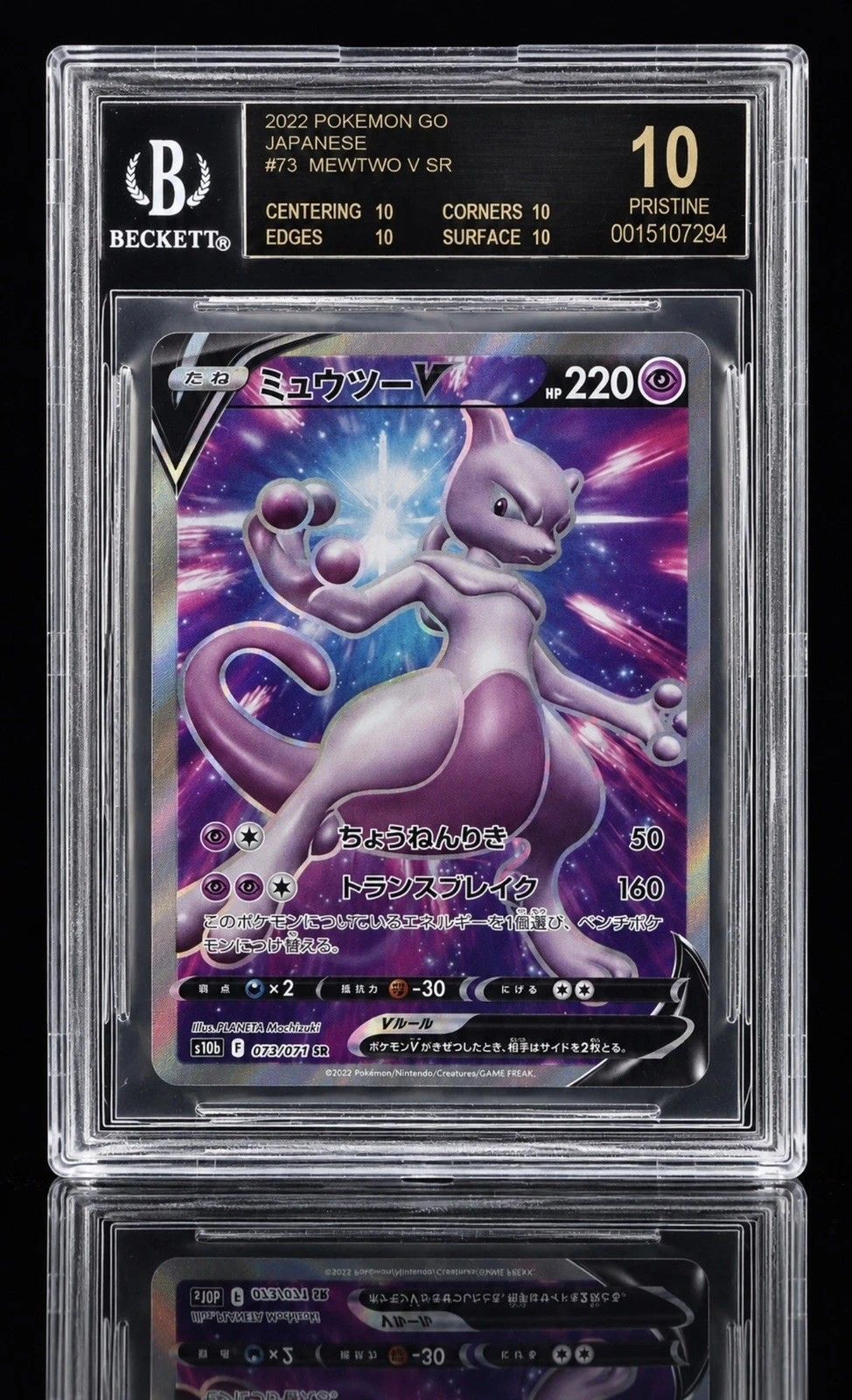 BGS (Beckett)Black Label 10: four subgrades, all 10
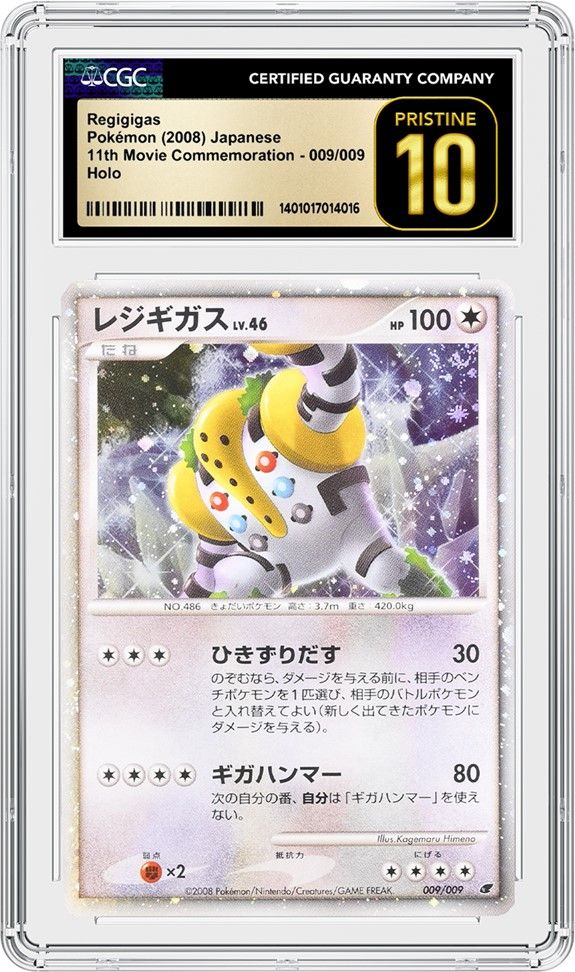 CGCPristine 10, the gold label above Gem Mint
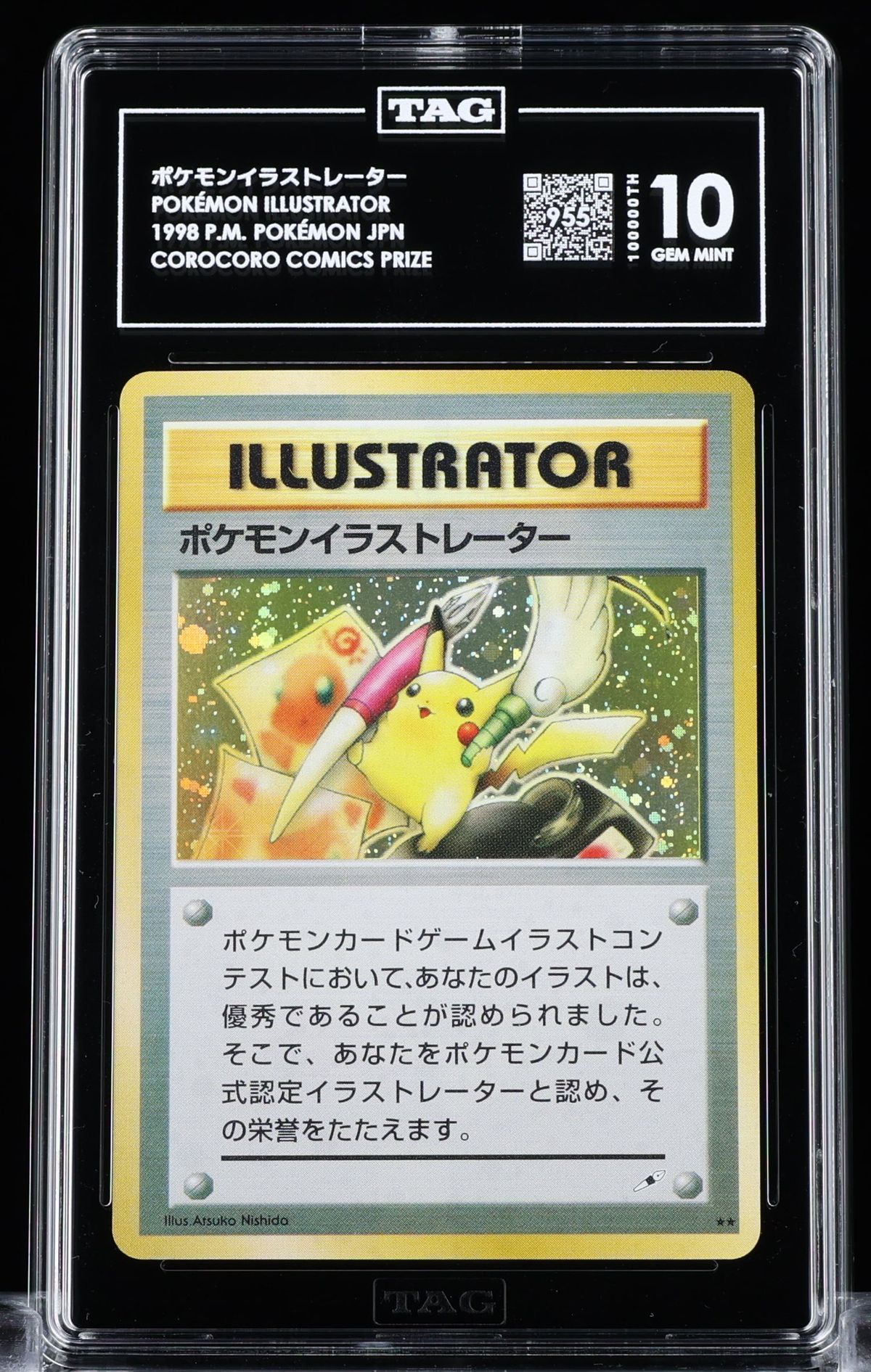 TAGGem Mint 10; the QR code on the label opens the full report
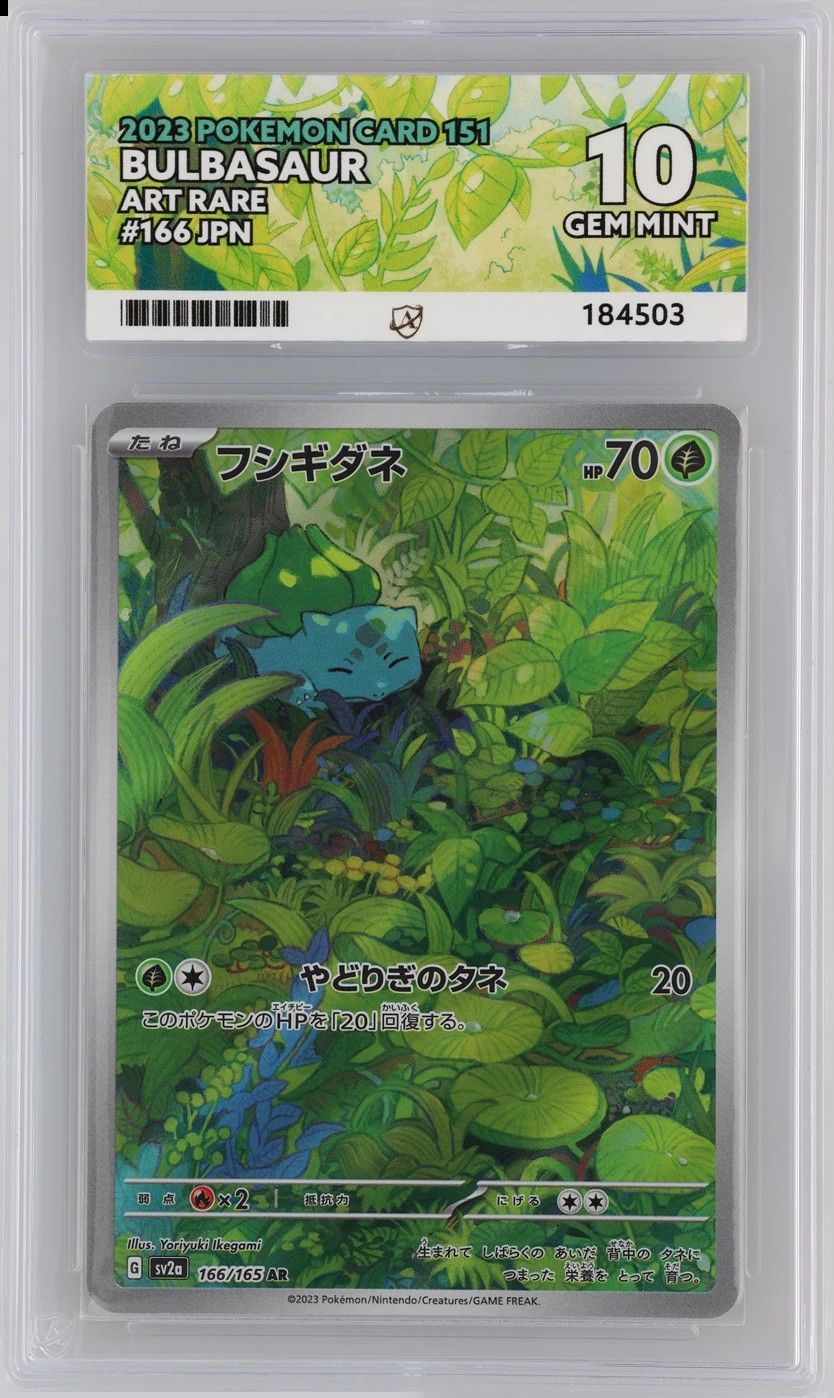 ACE Grading10 Gem Mint, graded in England
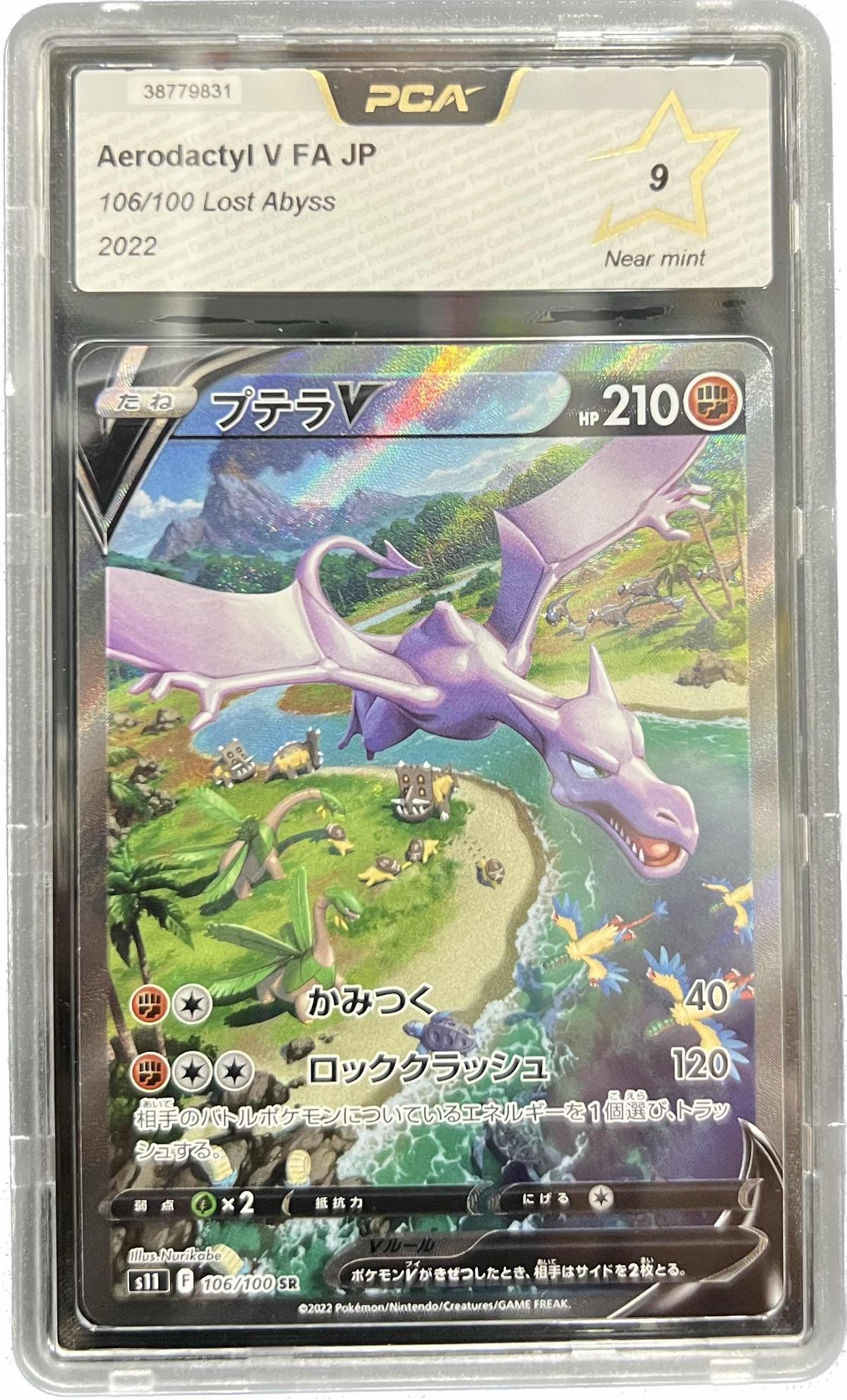 PCA (France)9, Near mint, gold star, on a Japanese full art
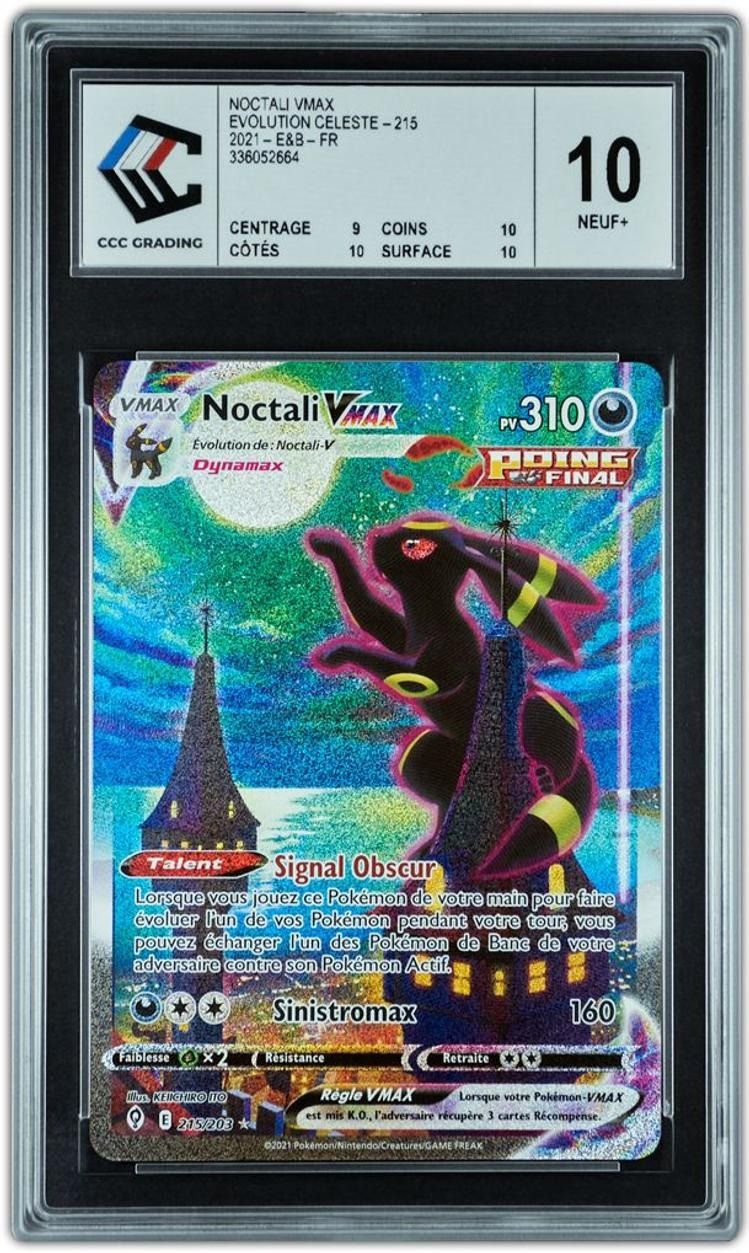 CCC Grading (France)10 on a white label: CCC's rule for centering at 9 with the other three criteria at 10
What a slab certifies, and what it does not
Two things: that the grader judged the card genuine, and its condition on the day it was graded, on that grader's scale. A slab does not certify a value; the grade is one company's opinion, and another company can put a different number on the same card. A card that has been trimmed or recolored gets no number at all, only a code or an Authentic Altered label. And a population report counts the copies a grader has slabbed, never how many were printed.
What a grade is actually worth
Three modern cards in the table and one vintage card below it, from real completed sales of the English print; each graded price is followed by its multiple of raw.
Medians in US dollars as of September 24, 2026; the number of sales is in brackets.
| Card | Raw | PSA 8 | PSA 9 | PSA 10 |
|---|---|---|---|---|
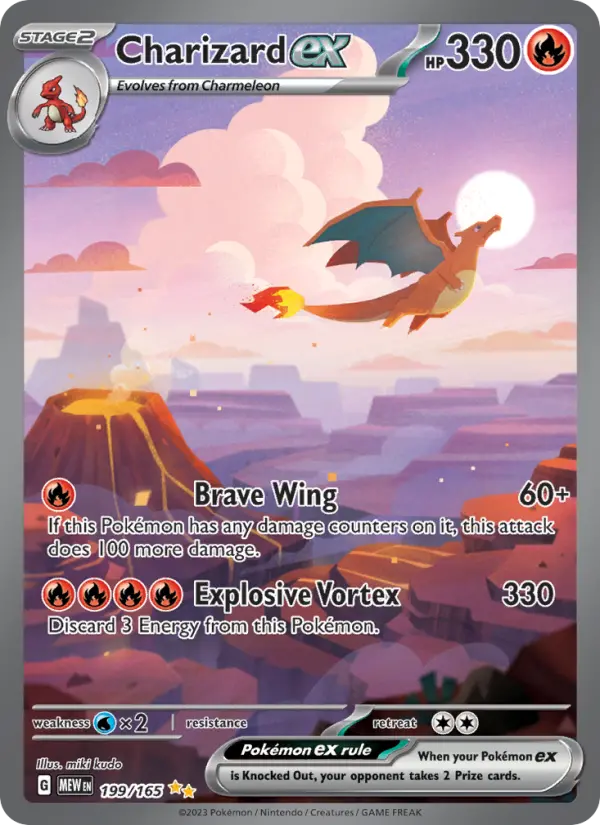
| Charizard ex SIR, 151 (2023) | $306 (24) | $345 (5), x1.1 | $353 (11), x1.2 | $1,441 (30), x4.7 |
| Umbreon ex SIR, Prismatic Evolutions (2025) | $1,187 (22) | $1,127 (4), x0.9 | $1,382 (8), x1.2 | $5,094 (5), x4.3 |
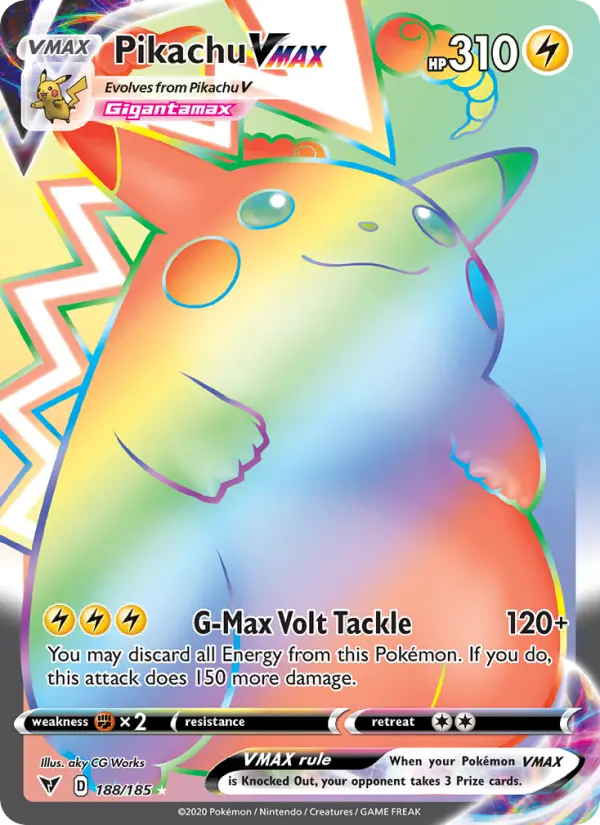
| Pikachu VMAX rainbow, Vivid Voltage (2020) | $125 (22) | $149 (3), x1.2 | $159 (11), x1.3 | $361 (5), x2.9 |
Raw is the median of copies sold as ungraded, in any condition, over the shortest window with enough sales (7, 30 or 90 days); each grade picks its own window. Because raw mixes conditions, the step from raw to a PSA 9 overstates what grading adds to a near-mint copy.

Where the premium sits
On the three modern cards the curve stays flat until the top: a PSA 8 or 9 sells for at most 1.3 times raw, a PSA 10 for 2.9 to 4.7 times. Four cards show a pattern, not a rule: read your own card's page before deciding.
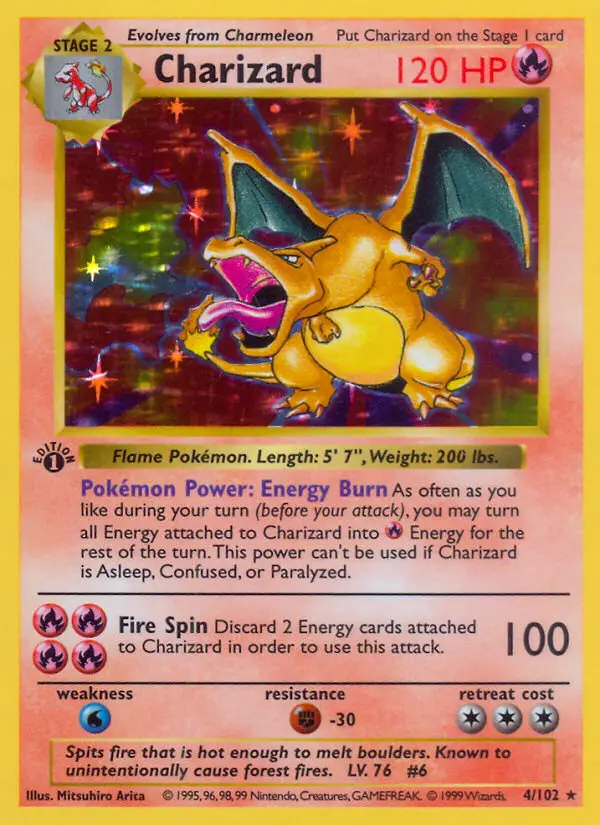
The vintage card keeps climbing. From a PSA 2 to a PSA 9, each grade of the 1999 Base Set Charizard sold for more than the one below: $432 in a PSA 5 (7 sales), $850 in a PSA 7 (5), $1,397 in a PSA 8 (15) and $3,397 in a PSA 9 (4). No PSA 10 has a current median in our sales. The raw median, $206 (64 sales), sits below even a PSA 2 ($344), a sign that most raw copies sold are played. These are Unlimited prices: check your copy against our guide to 1st Edition and Shadowless printings.
A mid grade can sell below raw
Slabbing does not always add value. The Prismatic Umbreon sold for $1,127 in a PSA 8 (4 sales), below its $1,187 raw median, so the fee was lost on top. PSA 8 copies of the 151 Charizard and of the Pikachu sold only 13% and 19% above raw, less than it costs to grade them. A low grade is a published verdict on the card, and buyers price it that way.
The name on the label moves the price too
The 151 Charizard ex sold for $615 in a CGC Gem Mint 10 (9 sales), less than half its PSA 10 price of $1,441, and for $2,107 in a CGC Pristine 10 (4 sales), about 1.5 times it. The Prismatic Umbreon sold for $10,013 in a BGS 10 (5 sales), about twice its PSA 10 price of $5,094, and for $5,197 in a TAG 10 (6 sales), about the same. Samples are thin here: read the direction, not the figure. Measured on 1,699 cards on September 17, 2026, a PSA 10 sold for 2.3 times a CGC Gem Mint 10; the figures are in our PSA Frankfurt guide.
Population and gem rate
A population report counts how many copies of a card a grader has slabbed, and at which grade; the gem rate is the share that came back as 10s.
| Card | PSA-graded copies | Share that are 10s |
|---|---|---|
| Charizard, Base Set (1999) | 106,294 | 0.5% (496 tens) |
| Umbreon VMAX alt art, Evolving Skies (2021) | 31,064 | 69.3% |
| Pikachu VMAX rainbow, Vivid Voltage (2020) | 19,783 | 60.7% |
| Charizard ex SIR, 151 (2023) | 103,692 | 27.5% |
| Umbreon ex SIR, Prismatic Evolutions (2025) | 21,451 | 29.7% |
PSA population as of September 1, 2026.
Seven graded Umbreon VMAX alternate arts in ten are 10s; one Base Set Charizard in two hundred is. That scarcity is part of why the vintage card's price climbs grade after grade and the modern ones only at the top, alongside demand for the card and the mixed condition of raw sales. A population also belongs to one grader: the same Base Set Charizard had been graded 14,553 times by CGC, 2.0% of them 10s (September 1, 2026), and 8,964 times by BGS, one of them a Pristine 10 (August 1, 2026).
And people submit their best copies: a 27.5% share of tens describes cards already selected for grading, not the one in your binder.
When grading Pokémon cards is worth it
Do the arithmetic on every grade the card can come back with, not on the one you hope for; the simulation below is illustrative, and every assumption is listed. You pay:
- The grading fee: at the US graders, from $17 a card at CGC's bulk tier (25 cards minimum) to $999 and up for PSA's Premium tiers. Speed costs less outside PSA: five business days is $100 at CGC and $149 at TAG. PSA sets the tier by the card's value after grading, so a card that comes back worth more than its tier's ceiling is moved up and billed the difference (in the EU, only if you accept).
- Shipping both ways, insured on the way back.
- The wait: 90 to 100 business days at PSA's cheapest open tier, 150 working days at CGC's bulk tier.
You get back the net price at the grade you actually receive, minus the net price the same copy would have fetched raw, the sale you are giving up. Net matters: a marketplace commission is a percentage of the sale, so it takes more from a graded sale than from a raw one.
The assumptions, all of them:
- Prices: the medians of the table above, as of September 24, 2026.
- Raw reference: the raw median, which mixes conditions. For your own copy, use what a copy in its condition sells for; a near-mint copy sits above the median, which shrinks the gain.
- Costs: PSA Standard at $59.99, or Priority at $79.99 when the grade received is worth more than $1,000, plus $25 of shipping and insurance.
- Commission: 10% of the sale, raw or graded.
- Outcomes: 10, 9 or 8. When the card misses the 10, two times in three it is a 9 and once an 8.
The Pikachu VMAX rainbow rare from the table, raw $125, about $113 after commission:
| It comes back as | Sells for | Net after commission, fee and shipping | Against $113 net raw |
|---|---|---|---|
| PSA 10 | $361 | $240 | +$127 |
| PSA 9 | $159 | $58 | -$55 |
| PSA 8 | $149 | $50 | -$63 |
Now weight the rows by your own odds. The population share of tens, 60.7% on this card, is not them: it describes the copies people chose to submit, and yours sits above or below it depending on what a loupe finds on its centering, corners, edges and surface. At one chance in two of a 10 the expected gain is about $35; at one in three it is about $4, close to break-even; below that you lose money on average.
The Charizard ex from 151 runs the other way. Raw $306, about $275 net. A PSA 10 at $1,441 nets about $1,191 after commission, shipping and the Priority tier, so the 10 gains about $916, while a 9 loses about $43 and an 8 about $50. That trade breaks even at around one chance in twenty of a 10, because the prize is large next to the loss. The fee moves the line as much as the card: in France, PCA starts at €12.90 (about $15) and CCC at €20 (about $23), which lowers it on cheap cards, provided the label sells where you sell.
Buying the slab instead
When a slab sells for less above raw than grading would cost you, buy the slab: its grade is already known. A PSA 9 of the 151 Charizard sells $47 above raw and a PSA 9 Pikachu VMAX $34 above, both less than the $85 a Standard submission costs with shipping. Grading your own copy pays when it is clean enough for a 10 and the 10's premium dwarfs the fee, as on the Charizard. On vintage cards, where raw sales are mostly played copies, a slab is the practical way to buy a known condition.
How to check a slab is real
Start with the certification number. Look it up on the grader's own site and check that the record's year, set, card, number and grade match the label exactly. A number that exists proves little: fake slabs reuse real numbers taken from public listings, and PSA's own terms say a lookup "does not eliminate risk". Where the record has photos, compare them with the card in your hands: the holo pattern, the centering, any mark unique to that copy. A mismatch settles it; a match reassures without proving. PSA has imaged every card at every service level only for submissions received since December 15, 2022, so a missing photo on an older PSA slab is normal.
With the slab in your hand
- Light through the label. Hold a PSA slab close to a lamp: you should be able to make out the text on the other side of the label. A fake front glued onto a real label is too thick to see through.
- A firm case with clean edges. A sonically welded case is firm, virtually inflexible. A broken weld leaves cloudy frosting or hairline cracks along the edges, and a case glued back together flexes and may crack open under a fingernail.
- The label's security features. PSA's LightHouse label, in use since 2017, has a lighthouse logo that switches on and off as you tilt it, a pattern of PSA logos that shows under UV light on the back, and a QR code that opens the certification page.
- A genuine slab of the same period, side by side. A label off center or in the wrong typeface, a printed rather than embedded hologram, a seam that looks glued, a card tilted inside, or a grade that ignores visible flaws are warning signs. Recent PSA cases also carry a small PSA logo molded into the plastic near the bottom right corner; PSA does not document it, so check it only against a genuine case of the same generation.
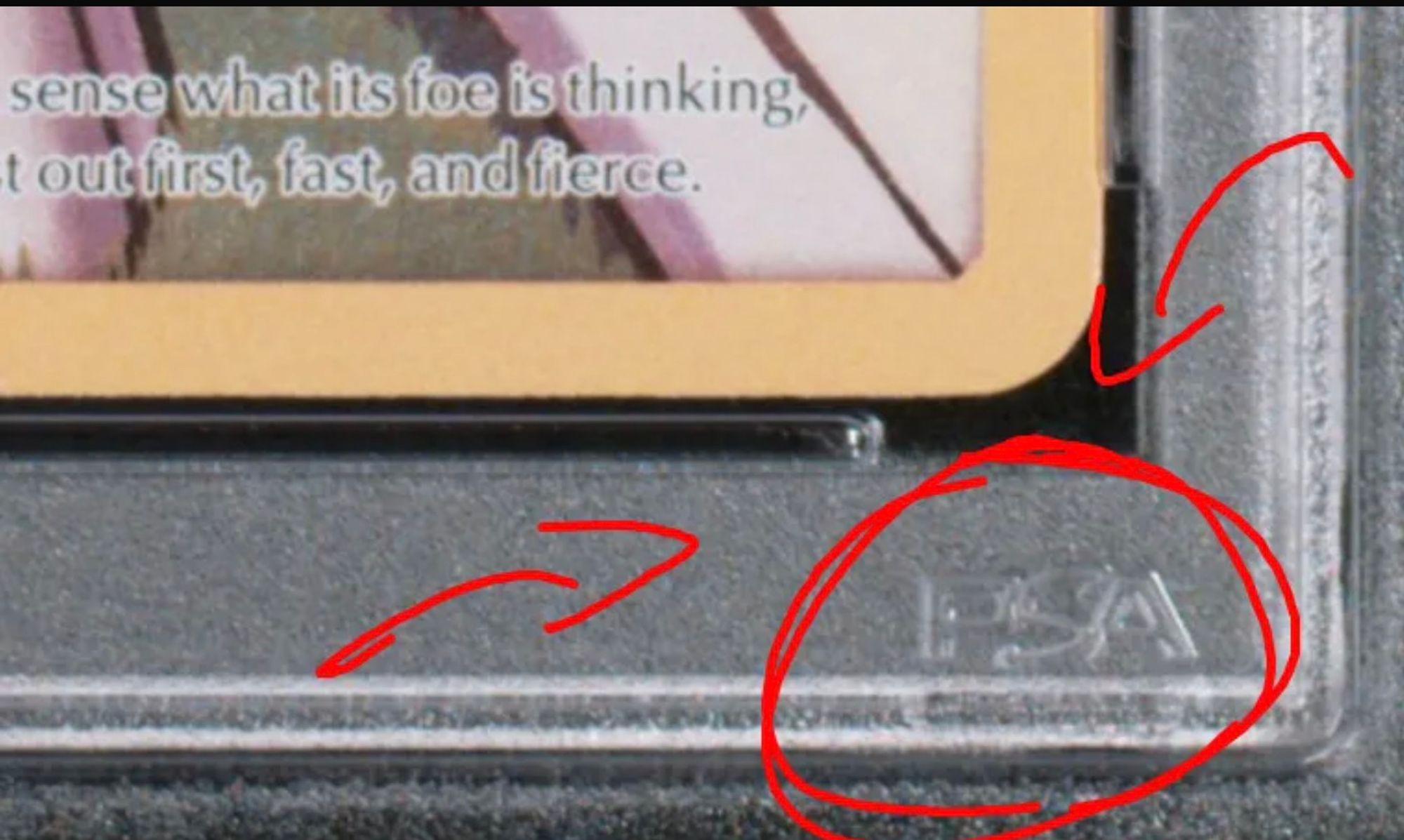 The PSA logo molded into a recent PSA case, bottom right: in the plastic itself, not printed, so tilt the slab until the light catches it. Photo: PokéSats.
PSA, BGS and CGC authenticate a card before grading it, so a slab whose case, label and record all check out carries that authentication. You are still buying the card: our guide to spotting fake Pokémon cards covers what to check through the plastic. On an expensive slab, make the sale depend on the grader's confirmation: PSA reviews a slab for a buyer who asks, and a seller who is sure of it has no reason to refuse.
Cracking, crossover and regrading
Cracking a slab means breaking the case open to get the card out. The holder is destroyed; done with care, the card is not. People do it to chase a higher grade on resubmission, or to move a card to another grading company.
PSA's Crossover service takes the gamble out of a move, on one condition: PSA grades the card inside its current holder and moves it into a PSA case only if it reaches the minimum grade you wrote on the form. If it falls short, the card comes back untouched in the original holder, and the full grading fee is charged either way. Reholder re-encapsulates a card already in a PSA case, and Review is listed alongside them.
The line into fraud is the card, not the case. Trimming a card's edges to improve its centering and resubmitting it is fraud whatever the new label says. PSA does not put a number on an altered card: it returns a code, N1 evidence of trimming, N2 restoration, N3 recoloration, N5 altered stock, N7 cleaning, and can encapsulate the card as Authentic Altered; N4, questionable authenticity, is never encapsulated. A factory miscut is a different thing, a code N8 or a qualifier MC on a graded card, and not an alteration. CGC marks an altered card Authentic Altered in the grade box.
The graders and their scales
All of them grade on a 1 to 10 scale; what separates them sits under the number: half grades, subgrades, and how the final grade is built.
| Grader | Scale | Top grade | Notable |
|---|---|---|---|
| PSA | 1 to 10; half points from 2.5 to 8.5, and a 1.5 | GEM MT 10 | LightHouse label; altered cards get a no-grade code, not a number |
| BGS (Beckett) | 1 to 10 in half points | Black Label 10 | Four subgrades on the label; Black Label is a 10 with all four at 10; 9.5 is Gem Mint |
| CGC | 1 to 10 in half points | Pristine 10 | Pristine 10 above Gem Mint 10; Mint+ 9.5; Authentic Altered in the grade box |
| SGC | 1 to 10 in half points | 10 Pristine | 10 Pristine (50/50 centering) above 10 Gem Mint (55/45) |
| TAG | 1 to 10 plus Pristine 10, from a 1,000-point score | Pristine 10 (990 to 1,000) | Online report of the card's notable defects, opened by the QR code on the label |
| ACE | 1 to 10 with names | 10 Gem Mint | Qualifiers: MC miscut, OC off-center, A altered, C counterfeit, QA questionable authenticity |
| PCA (France) | 12 named levels | Collector | Every card graded three times by three different experts |
| CCC (France) | Four criteria scored 1 to 10, centering 8 to 10 | Black Label, 10 on all four | Final grade from the lowest criterion, raised one level when no other criterion shares it |
PSA's GEM MT 10 allows centering within about 55/45 on the front and 75/25 on the back; CGC's Gem Mint 10 and SGC's 10 Gem Mint use about the same front tolerance, and their Pristine 10s ask for 50/50. CCC gives a 10 on a white label in two cases (centering at 9 with the other three criteria at 10, or two 9.5s and two 10s), a gold label for three 10s and one 9.5, and its Black Label for four 10s.
What grading costs and how long it takes
Prices read on the graders' own sites on September 24, 2026. These numbers move.
| Grader | Tier | Price per card | Max declared value | Estimated turnaround |
|---|---|---|---|---|
| PSA | Standard | $59.99 | $1,000 | 90-100 business days |
| PSA | Priority (formerly Regular) | $79.99 | $1,500 | 70-80 business days |
| PSA | Express | $199 | $2,500 | 20-30 business days |
| PSA | Super Express | $349 | $5,000 | 10-15 business days |
| PSA | Premier (formerly Walk-Through) | $599 | $10,000 | 7-10 business days |
| PSA | Premium 1 to 10 | $999 to $9,999 and up | $25,000 to over $250,000 | 5-7 business days |
| CGC | Bulk, 25 cards minimum | $17 | $500 | 150 working days |
| CGC | Economy | $20 | $1,000 | 90 working days |
| CGC | Standard | $55 | $3,000 | 10 working days |
| CGC | Express | $100 | $10,000 | 5 working days |
| CGC | WalkThrough | $300 | $100,000 | 2 working days |
| BGS | Base, subgrades included | $17.95 | Not on the temporary form | 75+ business days |
| BGS | Standard | $34.95 | Not on the temporary form | 45 business days |
| BGS | Express | $79.95 | Not on the temporary form | 15 business days |
| SGC | Standard | $50 to $85 | $1,500 to $3,500 | 40+ business days |
| SGC | Expedited | $150 to $3,750 and up | $3,500 to over $100,000 | 2-3 business days |
| TAG | Priority | $149 | $2,500 | 5 business days |
| TAG | Walkthrough | $299 | $5,000 | 2-3 business days |
| TAG | Basic, Standard, Express | Paused | $300 to $1,500 | Paused |
Turnaround times are the graders' estimates, not guarantees. On September 24, 2026 PSA's Value tiers were paused, TAG showed its regular tiers paused with limited Priority grading, and Beckett, whose site had been down for maintenance since September 9, took Base, Standard and Express orders through a temporary form, with $3 more for a card that grades 10.
In the European Union, PSA has taken collectors' submissions in Frankfurt, in euros, since September 15, 2026 (Standard €49.99 at its launch price; our PSA Frankfurt guide covers prices, VAT and the address). CGC grades trading card games in Munich (Economy €22.61, VAT included), and France has PCA (from €12.90, €10.90 from ten cards) and CCC (from €20).
FAQ
How much does it cost to grade a Pokémon card?
As of September 24, 2026: $59.99 a card at PSA's cheapest open US tier, $17.95 at Beckett, $50 at SGC and $17 at CGC for 25 cards or more, plus shipping both ways.
Why are they called slabs?
The name comes from coin collecting: PCGS began sealing graded coins in sonically welded plastic holders in 1986, and collectors called them slabs. PSA has used the same holder technology for cards since 1991.
Does PSA use half grades?
Yes, on cards: half points between 2 and 9, so 2.5 to 8.5, plus a 1.5 (Fair). Above a 9 there is only the 10.
What is a BGS Black Label?
A Beckett 10 whose four subgrades, centering, corners, edges and surface, are all 10 as well; the label turns black. A 10 with one subgrade below 10 is a Pristine 10 on a gold label.
What is the difference between a CGC Pristine 10 and a Gem Mint 10?
Pristine 10, CGC's top grade, needs 50/50 centering, flawless color and registration, and no flaw under 10x magnification. Gem Mint 10 allows centering up to about 55/45 on the front and 75/25 on the back.
Can I get cards graded in Europe?
Yes: PSA in Frankfurt for residents of the European Union, CGC in Munich for trading card games, Beckett in Lage, Germany (its EU online submissions were unavailable on September 24, 2026), ACE in Banbury, England, and PCA and CCC in France.
Does a valid certification number mean the slab is genuine?
No. Counterfeit labels reuse real numbers taken from public listings. Check that the grader's record matches the label exactly and, where it has a photo, that the photo shows the card in front of you.