
PSA, for most Pokémon cards you plan to sell. On the same cards, a CGC Gem Mint 10 sold for a median 0.44 times the PSA 10 price, a Beckett (BGS) 9.5 for 0.60 times and an ACE 10 for 0.71 times, in real completed sales as of October 5, 2026. Top grades narrow the gap or reverse it: a Beckett Pristine 10 sold for 1.53 times the PSA 10 (96 cards), and a TAG 10 and an English CGC Pristine 10 for about as much as a PSA 10. But Beckett gave a 10 to a median 0.6% of the copies it graded, and the PSA 10 has a current price on seven times as many cards as the TAG 10. CGC wins on cost, at $17 a card in bulk against $59.99 for PSA's cheapest open tier, which makes it the label for cards you keep.
What a slab is and what it certifies is in our guide to Pokémon slabs; this page compares the graders and what their labels are worth.
The graders compared
| Grader | Top grades | Subgrades | Cheapest open tier | Its 10 sells for | 10s among graded copies | Cards with a current 10 price |
|---|---|---|---|---|---|---|
| PSA | GEM MT 10 | None; defect notes from the $199 tier | Standard $59.99, 90-100 business days; Value paused | The reference | 38% | 16,440 |
| CGC | Pristine 10, then Gem Mint 10 | None since July 2023 | Bulk $17 a card from 25 cards, 150 working days | Pristine x0.80, Gem Mint x0.44 | 36%, of which Pristine 4.5% | 8,725 Gem Mint, 5,032 Pristine |
| BGS (Beckett) | Black Label 10, Pristine 10, then Gem Mint 9.5 | Four, included | $79.95 Express, 15 business days; Base and Standard paused | Pristine x1.53; a 9.5 sells for x0.60 | 0.6%; 9.5 or better 31% | 625 Pristine; 1,687 for the 9.5 |
| TAG | Pristine 10, then Gem Mint 10, by score | A defect report on every card; a 1,000-point score from the $59.95 tier | Base $39.95 from 5 cards, 60 business days | x1.03 to x1.13 | Not in our data | 2,376 |
| ACE | 10 Gem Mint | Four, on the online cert page | Basic £18 (about $24), 30 business days | x0.71 | Not in our data | 2,368 |
Fees and turnaround read on each grader's site on October 7, 2026; turnarounds are the graders' estimates. Prices: median ratio of each label's median sale price to the PSA 10 median on the same Pokémon cards, with at least three real completed sales of each, as of October 5, 2026; for TAG, the lower figure compares both labels over the same 90 days of sales, as explained below the ratio table. Shares of 10s: medians from the graders' population reports on cards graded at least 30 times by both (2,679 cards for CGC, 949 for Beckett, where PSA's share is 32%). Last column: Pokémon cards with a current median price for that label in our sales.
Which grader for which card
| Your card | Best bet | What the sales and fees show |
|---|---|---|
| Vintage, up to 2003, to sell | PSA | CGC 10 x0.24 the PSA 10 (149 cards); CGC 9 x0.57 the PSA 9 (413) |
| Card from 2020 on, worth $500 or more as a PSA 10 | PSA, or TAG | TAG 10 x1.01 (56 cards), x0.93 over the same 90 days; CGC Gem Mint 10 x0.51 (92), its Pristine 10 x1.18 (35); BGS 9.5 x0.64 (48) |
| Card from 2020 on, under $100 as a PSA 10 | CGC or TAG, or no grading: see the fee rule below | CGC Gem Mint 10 x0.45 (914 cards); TAG 10 x1.21 (248), x1.09 over the same 90 days; PSA's fee alone is $59.99 |
| Japanese card | PSA or TAG | TAG 10 x1.25 (276 cards), x1.11 over the same 90 days; CGC Pristine 10 x0.76 (906); CGC Gem Mint 10 x0.47 (918) |
| Flawless card, centered 50/50 | PSA; Beckett or CGC only as a bet on their Pristine 10 | BGS 10 x1.53 (96 cards), but Beckett gave 10s to 0.6% of copies; CGC Pristine 10 x1.01 on English cards (218), x0.76 on Japanese (906) |
| A card you keep | CGC, or TAG for its report | CGC costs $17 a card from 25 cards; TAG $39.95 from 5 |
| You live in the European Union | PSA Frankfurt for resale, CGC Munich for cost | PSA Standard €49.99 at its launch price; CGC Economy €22.61, VAT included |
PSA against CGC is fee arithmetic. A CGC Gem Mint 10 sells for 0.44 times a PSA 10, so on a card whose PSA 10 sells for $100, the PSA label is worth about $56 more. PSA's Standard tier costs $40 more than CGC's Economy tier ($59.99 against $20), so PSA pays for itself once the card's PSA 10 sells for more than about $70, provided both companies would grade it a 10. On cards printed since 2020, they give 10s about as often: 49.5% of CGC copies and 48.5% of PSA copies, on the same cards.
TAG is cheaper and its 10 sells about level, with one unknown. TAG's Base tier costs $39.95 (five cards minimum, grade only, no score) and its 10 sold for about as much as a PSA 10 (1.03 times over the same 90 days of sales), but TAG's population is not in our data, so we cannot say how often it gives a 10. Its Gem Mint 10 asks for tighter centering on the back than PSA's 10 (about 65/35 on card games, against 75/25). TAG grades in Los Angeles.
Beckett is a bet on perfection. Its Pristine 10 sold for 1.53 times a PSA 10, but Beckett gave a 10 to a median 0.6% of the copies it graded, against 32% PSA 10s on the same cards. It gave a 9.5 or better to 31% of copies, close to PSA's rate of 10s, so a copy good enough for a PSA 10 is likely to come back a Beckett 9.5, which sold for 0.60 times a PSA 10. Beckett's site remains, in its own words, temporarily offline (on October 2, Beckett said it had detected suspicious activity on its systems), and on October 7, 2026 its only open tier was Express, at $79.95.
What each label sells for, measured on the same cards
For every Pokémon card with at least three real completed sales under both labels, we divided one label's median price by the PSA 10 (or PSA 9) median, using sales of the card's own language, then took the median of those ratios. A ratio of 0.44 means the label sold for 44% of the PSA price on the typical card. Sales as of October 5, 2026; cards from sets released in September 2026 or later are left out, because their PSA 10 market had not formed yet. A label that sells less often takes its median from a longer stretch of sales, and modern PSA 10 prices fell from July to October 2026, so the last column compares both labels over 90 days of sales: the order of the labels holds, and the TAG 10's lead mostly goes.
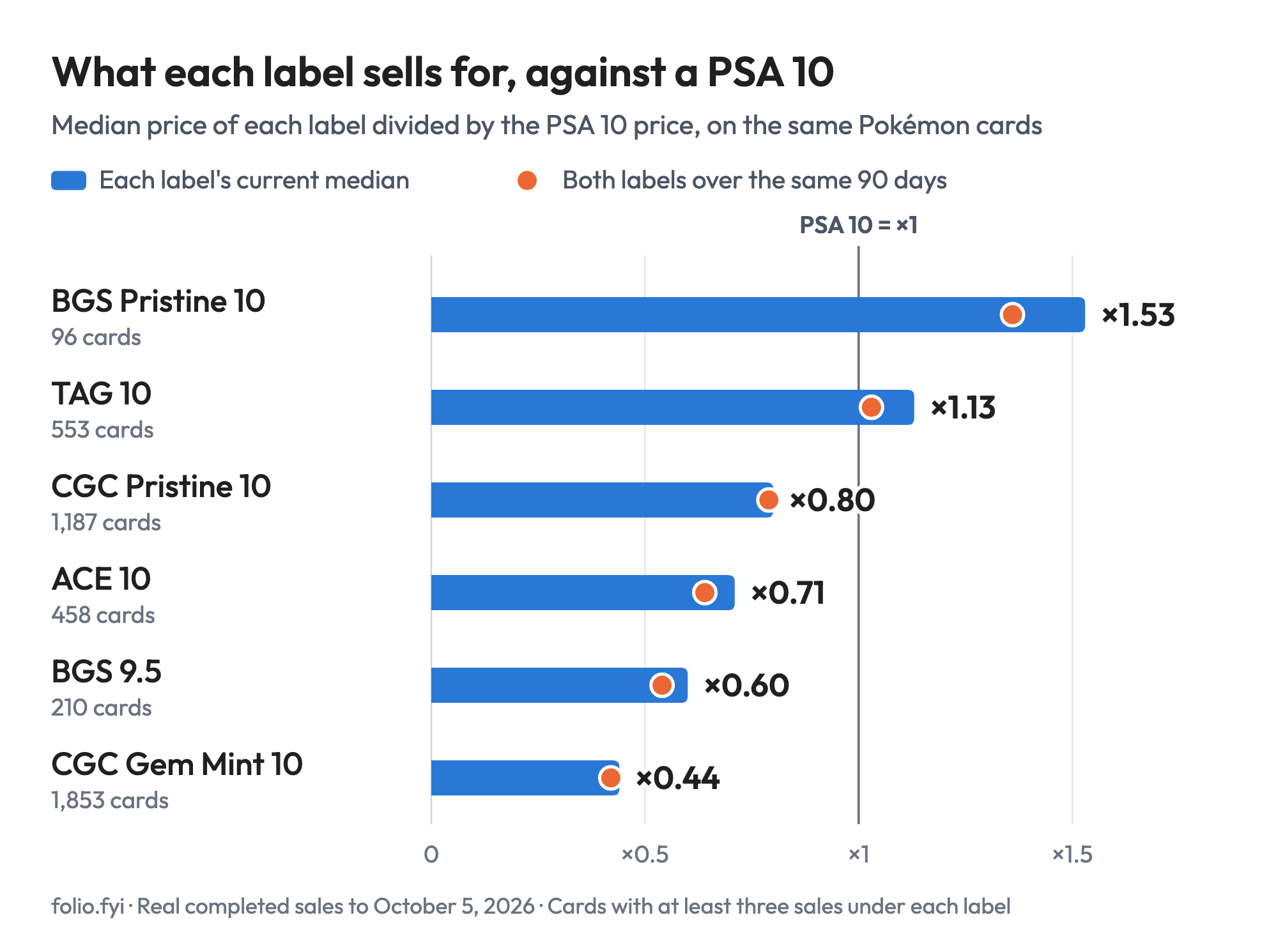 Each bar is the median, across cards, of a label's price divided by the PSA 10 price; each dot compares the two labels over the same 90 days of sales. SGC 10, with eight cards, is left out. Every figure is in the table below.
| Label | Against | Cards | Median ratio | Sold above the PSA slab on | Same 90 days of sales |
|---|---|---|---|---|---|
| BGS 10 (Pristine) | PSA 10 | 96 | x1.53 | 91% of cards | x1.36 (88 cards) |
| TAG 10 (Gem Mint and Pristine) | PSA 10 | 553 | x1.13 | 69% | x1.03 (534) |
| CGC Pristine 10 | PSA 10 | 1,187 | x0.80 | 30% | x0.79 (1,123) |
| CGC Pristine 10, English cards | PSA 10 | 218 | x1.01 | 52% | x0.95 (216) |
| ACE 10 | PSA 10 | 458 | x0.71 | 14% | x0.64 (448) |
| BGS 9.5 | PSA 10 | 210 | x0.60 | 8% | x0.54 (203) |
| SGC 10 | PSA 10 | 8 | x0.46 | 0% | x0.44 (7) |
| CGC Gem Mint 10 | PSA 10 | 1,853 | x0.44 | 2% | x0.42 (1,707) |
| CGC 9.5 | PSA 10 | 208 | x0.29 | 1% | x0.27 (191) |
| TAG 9 | PSA 9 | 172 | x1.14 | 71% | x1.08 (171) |
| ACE 9 | PSA 9 | 105 | x0.94 | 40% | x0.89 (104) |
| BGS 9 | PSA 9 | 108 | x0.85 | 34% | x0.86 (93) |
| CGC 9 | PSA 9 | 1,046 | x0.62 | 7% | x0.63 (899) |
Pokémon cards with at least three sales of each label, as of October 5, 2026. Eight cards whose recorded sales we found to be of another card, or of raw copies, are left out. Last column: both labels' medians over a 90-day window, on the cards with at least three sales of each in it. SGC's eight cards are too few to read.
The TAG 10 sells about level with the PSA 10. On the card pages' medians it sold for 1.13 times a PSA 10; over the same 90 days of sales, for 1.03 times, and above the PSA 10 on 56% of cards. It sold higher on Japanese cards (x1.11, 258 cards) and on cards whose PSA 10 sells for under $100 (x1.08, 241 cards), and lower on cards whose PSA 10 sells for $500 or more (x0.93, 60 cards), all over the same 90 days. TAG has two 10s, Gem Mint (a score of 950 to 989) and Pristine (990 to 1,000), and our TAG 10 price mixes them, but in 328 sales behind 40 of these cards picked at random, 10 were sold as Pristine 10s, and 17 of the 19 titles that gave a score were under 990: the figure is essentially a Gem Mint price. A grade lower, TAG keeps a small lead: a TAG 9 sold for 1.08 times a PSA 9 over the same 90 days (171 cards).
CGC's two 10s are two markets. The Gem Mint 10 sold below the PSA 10 on 98% of cards; the Pristine 10, CGC's top grade, sold for about the same as a PSA 10 on English cards (x1.01) and for less on Japanese ones (x0.76, 906 cards). On cards from 2020 on whose PSA 10 sells for $500 or more, the Pristine 10 sold for 1.18 times the PSA 10 (35 cards) and the Gem Mint 10 for 0.51 times (92 cards). A CGC slab labeled Gem Mint 9.5 is the same grade as today's Gem Mint 10: CGC made them equivalent in July 2023, when it also dropped subgrades and retired its Perfect 10, so the CGC 9.5 line above can mix those older slabs with today's Mint+ 9.5.
Vintage widens the gap. On cards printed up to 2003, a CGC 10 sold for 0.24 times a PSA 10 (149 cards), a CGC 9 for 0.57 times a PSA 9 (413 cards) and a BGS 9 for 0.68 times (38 cards). The TAG, Beckett 10 and ACE figures rest on modern cards: 511 of TAG's 553 cards, 82 of Beckett's 96 and 403 of ACE's 458 were printed in 2020 or later.
A median of ratios measures what buyers paid for each label on the typical card, not what your copy will fetch, and not whether two graders would give it the same grade.
Three cards, four graders
Medians in US dollars as of October 7, 2026; the number of sales is in brackets.
| Label | Umbreon ex SIR, Prismatic Evolutions | Umbreon VMAX alt art, Evolving Skies | Charizard ex SIR, 151 |
|---|---|---|---|
| BGS 10 (Pristine) | $9,889 (5) | $4,957 (5) | $4,822 est. (1) |
| CGC Pristine 10 | $5,691 (3) | $3,988 (7) | $1,962 (4) |
| TAG 10 | $5,458 (5) | $4,331 (4) | $1,251 (9) |
| PSA 10 | $4,989 (11) | $3,821 (9) | $1,463 (8) |
| BGS 9.5 | $2,479 (7) | $2,942 (5) | $712 (6) |
| CGC Gem Mint 10 | $2,218 (8) | $2,860 (5) | $608 (9) |
| PSA 9 | $1,261 (31) | $2,010 (8) | $362 (32) |
| Raw | $1,092 (14) | $1,619 (6) | $316 (30) |
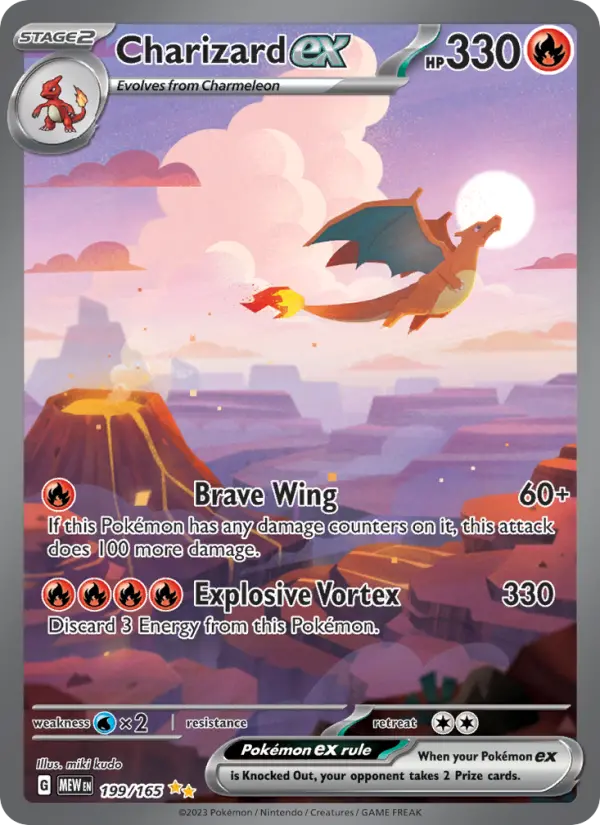
On the 151 Charizard a TAG 10 sold below the PSA 10, a reminder that the ratios above are medians and the order changes from card to card. On all three cards, the Pristine labels of CGC and Beckett sold above the PSA 10, and their Gem Mint labels below it.


How often each grader gives a 10
A population report counts the copies a grader has slabbed, grade by grade. On the same Pokémon cards, graded at least 30 times by both companies:
| Same cards | Cards | PSA 10s | The other grader's 10s |
|---|---|---|---|
| PSA and CGC (Gem Mint and Pristine) | 2,679 | 38.4% | 35.8% |
| PSA and CGC, cards from 2020 on | 1,381 | 48.5% | 49.5% |
| PSA and CGC, cards from 2004 to 2019 | 718 | 37.5% | 18.8% |
| PSA and CGC, cards up to 2003 | 580 | 20.3% | 12.0% |
| PSA and CGC, Pristine 10 only | 2,679 | 38.4% | 4.5% |
| PSA and Beckett (Pristine and Black Label) | 949 | 32.4% | 0.6% |
| PSA and Beckett, 9.5 or better | 949 | 32.4% | 31.0% |
Median share of each card's graded copies. PSA population as of September 1, 2026, CGC as of October 1, Beckett as of August 1. On the 2,679 cards, PSA has graded 11.3 million copies and CGC 2.2 million; on the 949, PSA 3.84 million and Beckett 135,320.
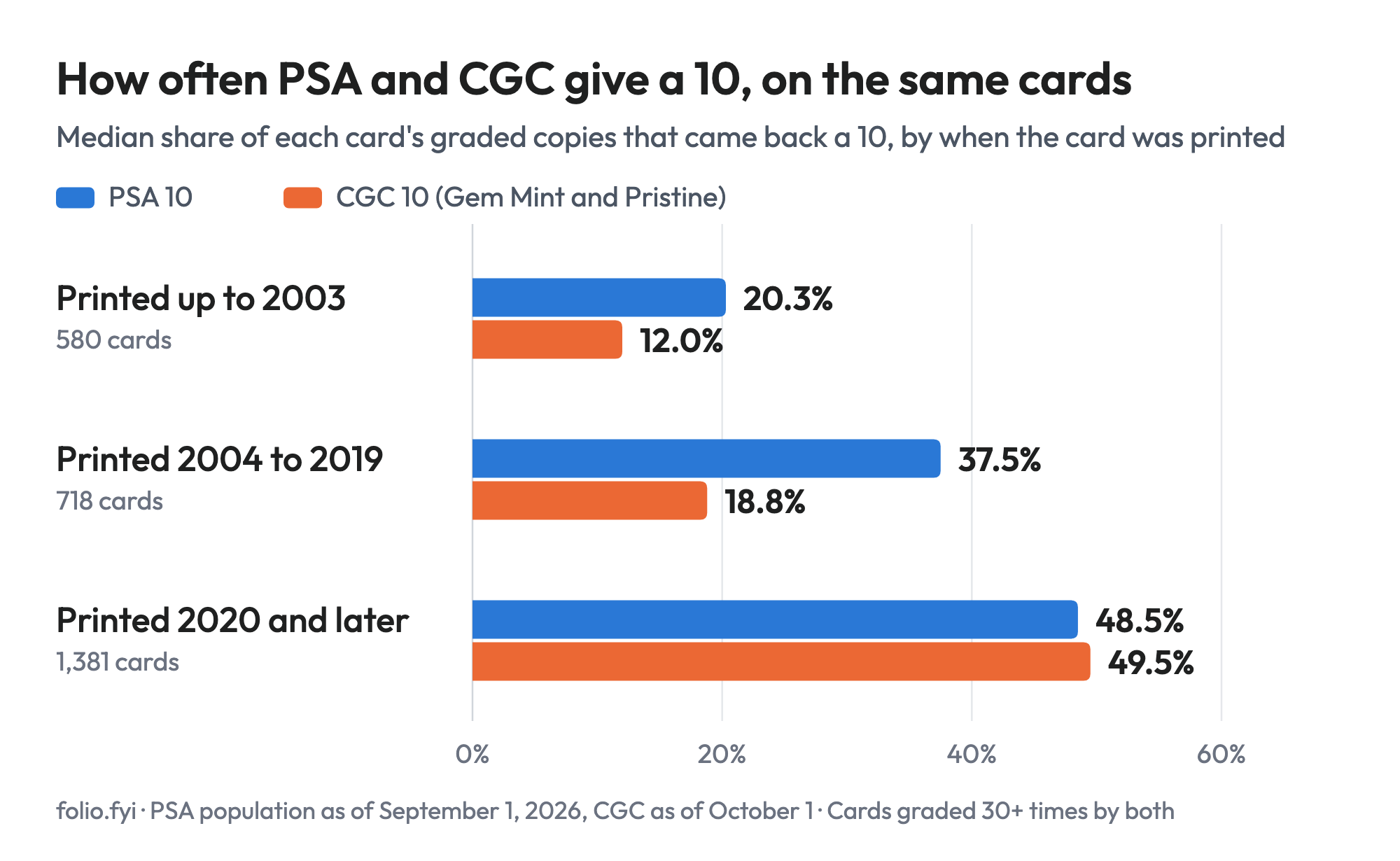 Cards graded at least 30 times by both companies; CGC's 10s count its Gem Mint and Pristine 10s.
On cards printed since 2020, CGC gave 10s about as often as PSA, and more often on 63% of those cards; on older cards, less often: half as often on cards from 2004 to 2019, and 0.6 times as often on cards printed up to 2003. That gap mixes two things the counts cannot separate: how strict each grader is, and which copies collectors choose to send where. Either way, a share of 10s describes the copies people submitted, not your odds.
Pristine 10s are a median 4.5% of CGC's copies on those cards, and about one CGC 10 in five (21%, across the 5,299 cards CGC graded at least 30 times). At Beckett, 9.5 is the usual top grade: 10s went to 0.6% of copies, and Black Labels, a 10 with all four subgrades at 10, to 3,123 of the 218,916 copies Beckett had graded on 1,593 of our cards. TAG publishes a population report, linked to each card's defect report, but it is not in our data.
The grading scales side by side
| Grader | Grades above 9 | Centering for its top 10, front and back | Half grades |
|---|---|---|---|
| PSA | GEM MT 10 | About 55/45 and 75/25 | From 1.5 to 8.5; no 9.5 |
| CGC | Pristine 10, Gem Mint 10, Mint+ 9.5 | Pristine 50/50; Gem Mint about 55/45 and 75/25 | Throughout |
| BGS (Beckett) | Black Label 10, Pristine 10, Gem Mint 9.5 | Not readable while Beckett's site is offline | Throughout, with four subgrades |
| TAG | Pristine 10 (score 990 to 1,000), Gem Mint 10 (950 to 989) | Pristine about 51/49 and 52/48; Gem Mint about 55/45 and 65/35 (card games) | From 1.5 to 8.5; no 9.5 |
| SGC | 10 Pristine, 10 Gem Mint, 9.5 | Pristine 50/50; Gem Mint 55/45 or better | Throughout |
| ACE | 10 Gem Mint | Better than 60/40 | None |
Read on each grader's site on October 5, 2026; Beckett's labels from its population categories and its slabs.
PSA and ACE stop at a single 10. CGC, SGC and TAG split their 10 into Pristine and Gem Mint, and Beckett puts Pristine and Black Label above its Gem Mint 9.5, which is why a 10 from one company is not a 10 from another, and why the buyer reads the word next to the number.
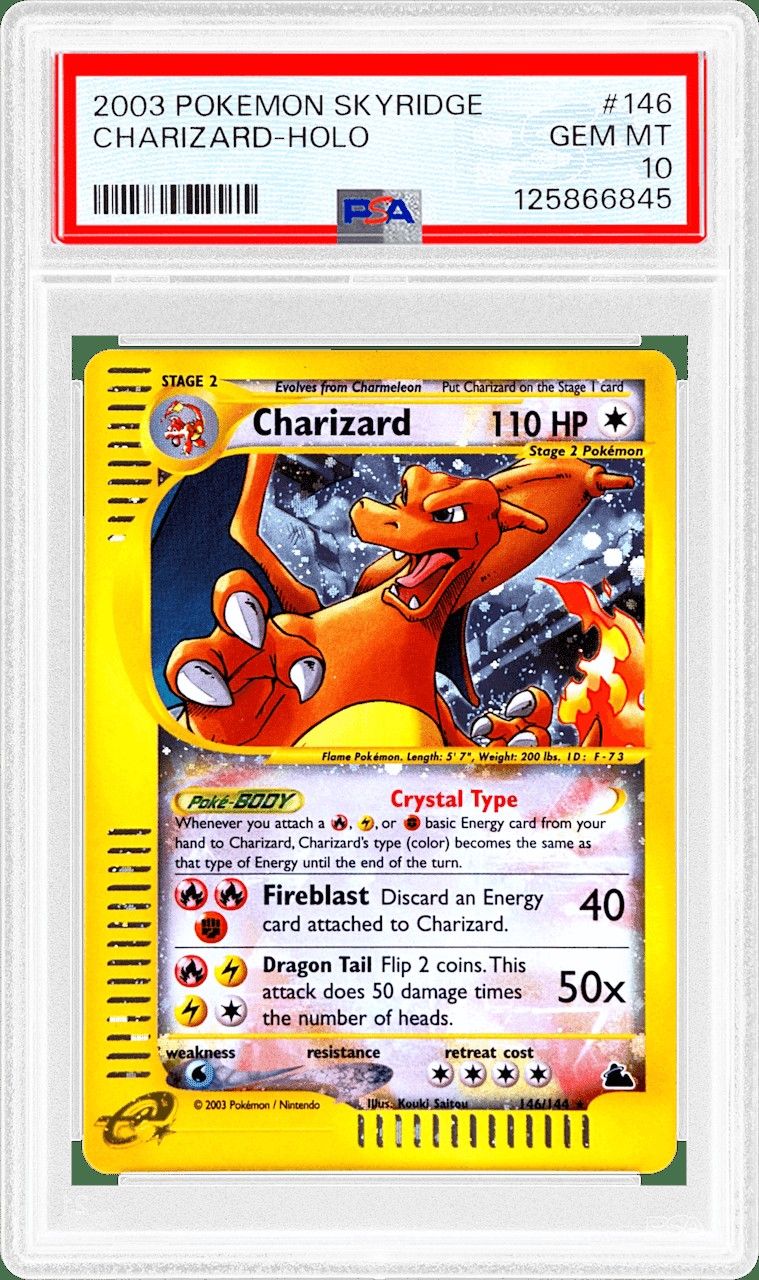 PSAGEM MT 10 on PSA's red-trimmed label
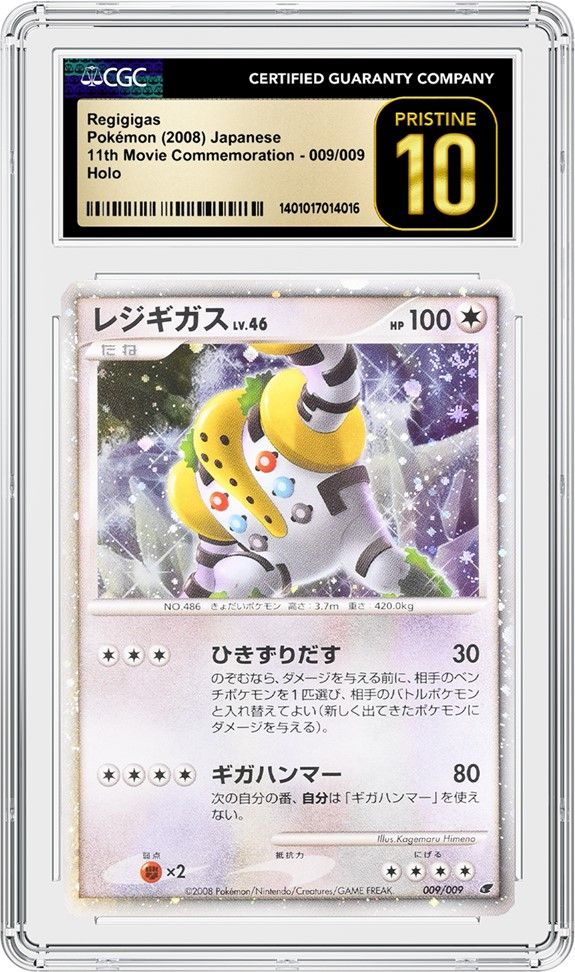 CGCPristine 10, CGC's top grade, on its gold label
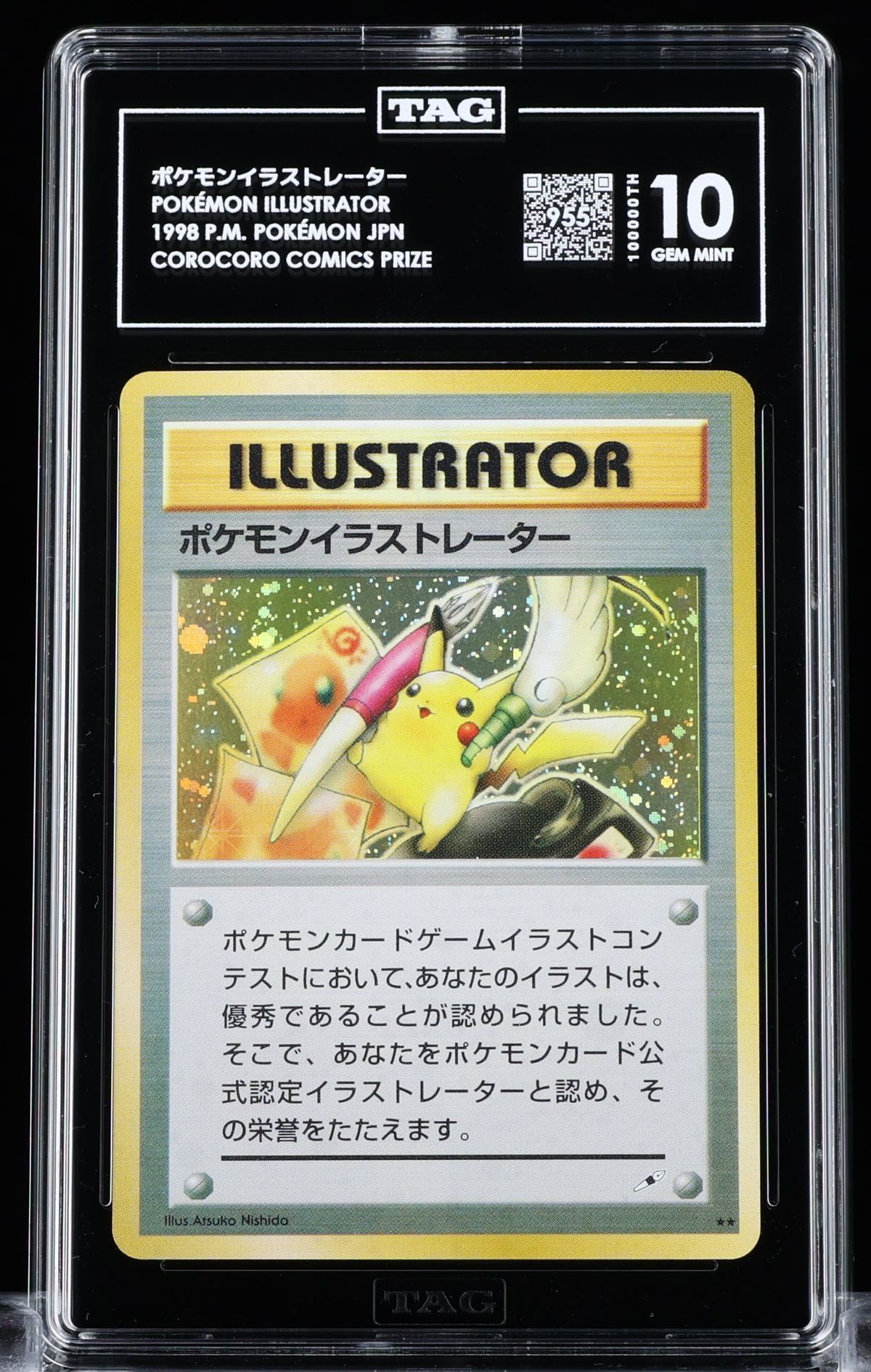 TAGGem Mint 10; the QR code opens the card's defect report
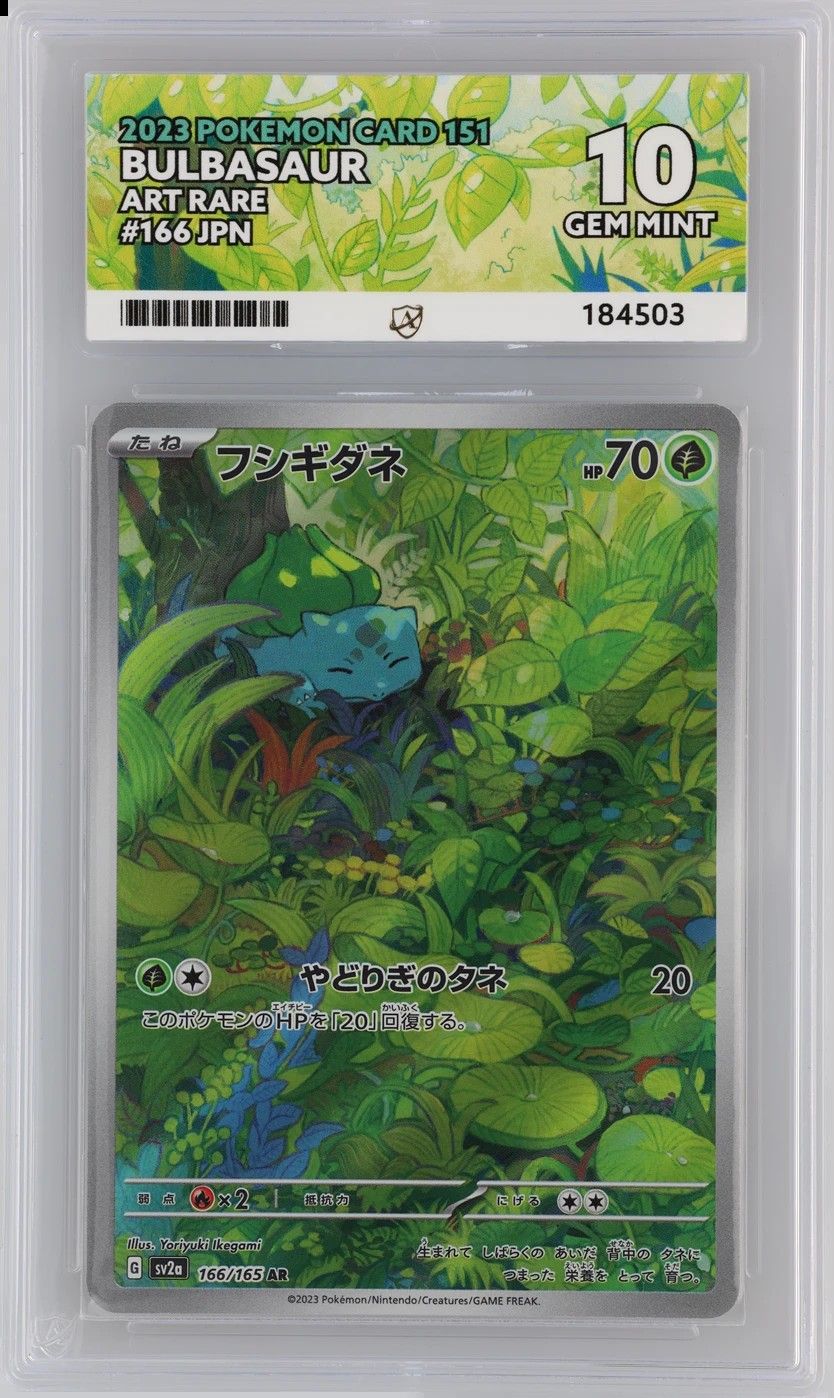 ACE10 Gem Mint, graded in England
Each label carries its own checks: PSA's LightHouse label has a UV logo pattern and a QR code to the certification page, CGC's uses microprinting, UV ink and holographic foil with a QR code on the back, and TAG prints a Proof code that verifies the slab itself. A slab is still only as good as its record: look up the number on the grader's site, compare any photos the record holds with the card in hand, and check the card through the plastic with our guide to spotting fake Pokémon cards.
Crossover and Europe
To move a card to PSA without cracking its slab, use PSA's Crossover service: PSA grades the card inside its current holder and moves it only if it reaches the minimum grade you wrote on the form; otherwise it comes back untouched, and the full fee is charged either way. CGC's CrossOver takes PSA, Beckett and SGC slabs and moves a card only if CGC's grade matches or beats the one on its label, unless you ask it to cross at any grade; the full fee applies when the card stays put. TAG takes no crossovers: cards must arrive raw.
In the European Union, PSA has taken collectors' submissions in Frankfurt since September 15, 2026 (Standard €49.99 at its launch price, 80 to 90 business days), CGC grades card games in Munich (Economy €22.61, VAT included), and France has PCA (€12.90 a card, €10.90 from ten) and CCC (from €20); our PSA Frankfurt guide compares them. On October 7, 2026, Beckett's EU online submissions were unavailable, and TAG took direct submissions only from the United States and Canada, with partners in the United Kingdom, Australia and Hong Kong.
FAQ
Is CGC better than PSA?
For resale, no: a CGC Gem Mint 10 sold for 0.44 times a PSA 10 on 1,853 Pokémon cards, as of October 5, 2026. CGC is cheaper ($17 a card in bulk, $20 at Economy) and its Pristine 10 sells about level with a PSA 10 on English cards, so it suits cards you keep, and English cards you expect to earn a Pristine 10.
Is a CGC 10 the same as a PSA 10?
Not in price. CGC has two 10s: the Gem Mint 10, which sold for 0.44 times a PSA 10 (a PSA 10 fetched about 2.3 times as much), and the Pristine 10, which sold for 0.80 times a PSA 10 overall and about the same on English cards.
Is a BGS 9.5 the same as a PSA 10?
It is Beckett's Gem Mint grade, but it sold for 0.60 times a PSA 10 on 210 cards, and above it on only 8% of them. Beckett's 10 is the Pristine label, which sold for 1.53 times a PSA 10.
Is a CGC 9.5 worth more than a PSA 9?
Not on most cards: a CGC 9.5 sold for 0.86 times a PSA 9 on 201 Pokémon cards, and above it on a third of them, as of October 5, 2026. An older CGC slab marked Gem Mint 9.5 is a different grade: it equals today's Gem Mint 10.
Is TAG grading legit?
Buyers pay for it: over the same 90 days of sales, a TAG 10 sold for about as much as a PSA 10 (1.03 times on 534 Pokémon cards, as of October 5, 2026). TAG measures each card with its imaging system, has the grade confirmed by human verifiers and publishes a defect report for every card. Its market is thinner: a TAG 10 had a current price on 2,376 Pokémon cards in our sales, against 16,440 for the PSA 10.
Which grading company is the strictest?
Beckett, at the top of the scale, among the three whose population reports we hold (PSA, CGC and Beckett): it gave a 10 to a median 0.6% of copies, against 32% PSA 10s on the same 949 cards. CGC gave 10s about as often as PSA on cards printed since 2020, and less often on older ones.
Which grading company is cheapest for Pokémon cards?
Of the five compared here, without a paid membership, CGC: $17 a card from 25 cards, or $20 at Economy, as of October 7, 2026. ACE's Basic tier costs £18 (about $24), TAG's Base tier $39.95 from five cards, PSA's Standard tier $59.99 and Beckett's only open tier $79.95, plus shipping both ways. ACE's members-only Core tier costs £12 (about $16) a card, with a £199 yearly membership.
Which grading company is fastest?
At the entry tiers on October 7, 2026, Beckett's Express took an estimated 15 business days ($79.95, its only open tier), ACE's Basic 30 business days (£18), TAG's Base 60 business days ($39.95 from five cards), CGC's Economy 90 working days ($20; its Bulk tier, 150) and PSA's Standard 90 to 100 business days ($59.99). Speed costs extra everywhere: five working days is $100 at CGC, 10 business days $149.95 at TAG and 10 to 15 business days $349 at PSA.
Does PSA give subgrades?
No. PSA prints one grade, and from its $199 Express tier adds Grader Notes that list the card's defects. Beckett includes four subgrades, TAG gives a defect report on every card and a 1,000-point score from its $59.95 tier, and CGC stopped offering subgrades in July 2023.
Can you cross over a CGC slab to PSA?
Yes, through PSA's Crossover service: PSA grades the card in its CGC holder and moves it only if it meets the minimum grade you set, charging the full fee either way.
Do you need a membership to submit to PSA?
No. A free Collectors account is enough. PSA's Collectors Club ($149 or $199 a year) is optional, and on October 7, 2026 its bulk tier and member grading specials were paused.
Does PSA own Beckett?
PSA's parent company, Collectors, which also owns SGC, agreed in December 2025 to buy Beckett, and says Beckett keeps its own operations and grading standards.


