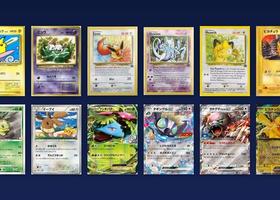
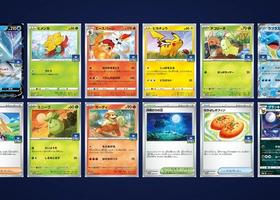
Pokémon cards have had seven standard holo patterns, each the default of an era: starlight (1999), cosmos (2000 to 2011), tinsel (2011 to 2013), sheen (2014 to 2016), water web (2017 to 2019), line (2020 to 2023) and mirage (Scarlet & Violet, from 2023). Product patterns sit on top of those (cracked ice, crosshatch, sequin, confetti), and so do the Poké Ball and Master Ball reverse holos, Japanese since June 2023 and English since January 2025. Since the Mega Evolution series began on September 26, 2025, ordinary reverse holos carry plain foil with no pattern.
A holo card has foil on the artwork; a reverse holo has foil on everything except the artwork. Cosmos, the dots and circles, is also a common foil for promos, blister exclusives and tin cards, 2026 store promos included.
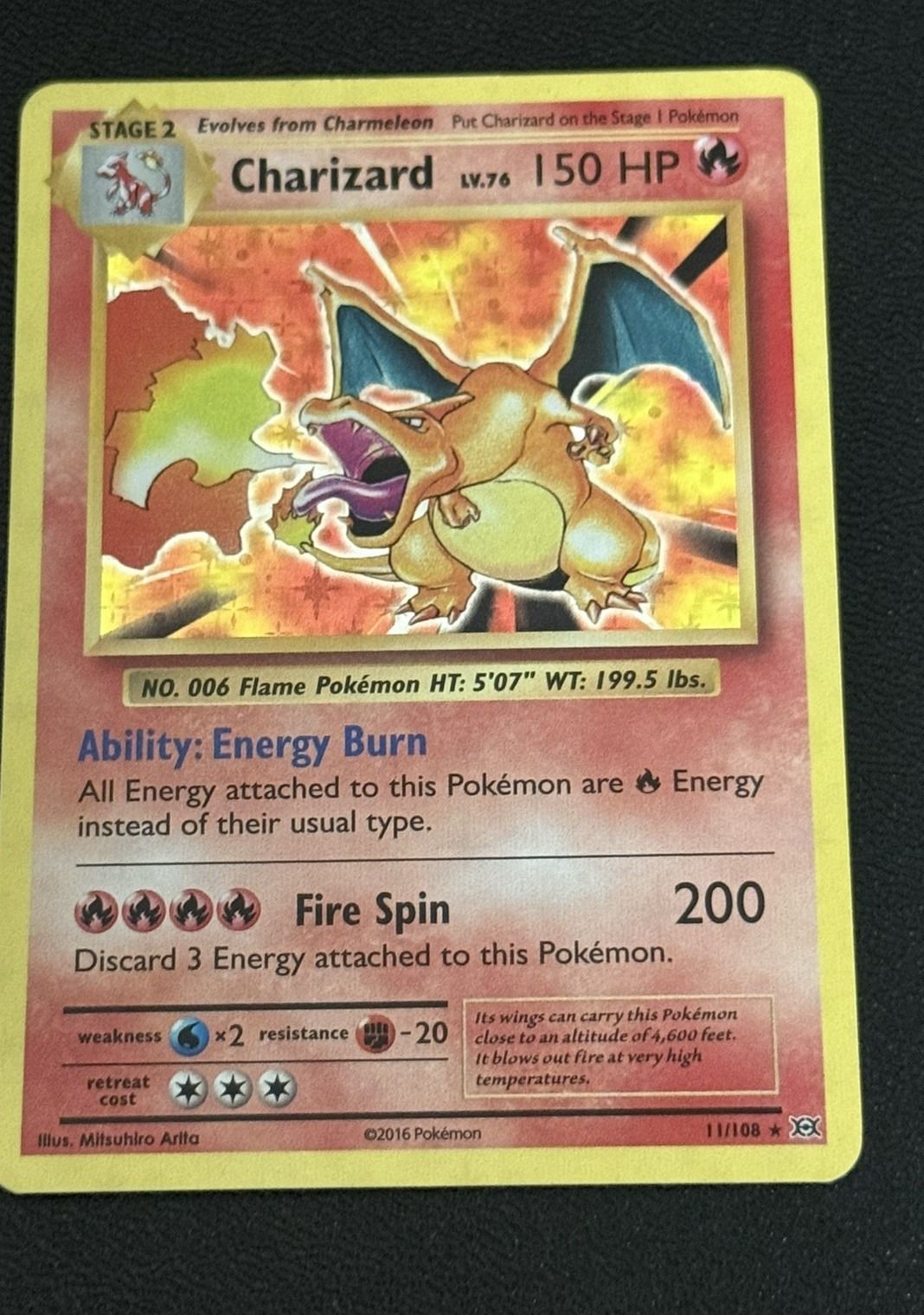 HoloOnly the artwork window shines (Charizard, XY Evolutions, whose anniversary foil is starry rather than sheen)
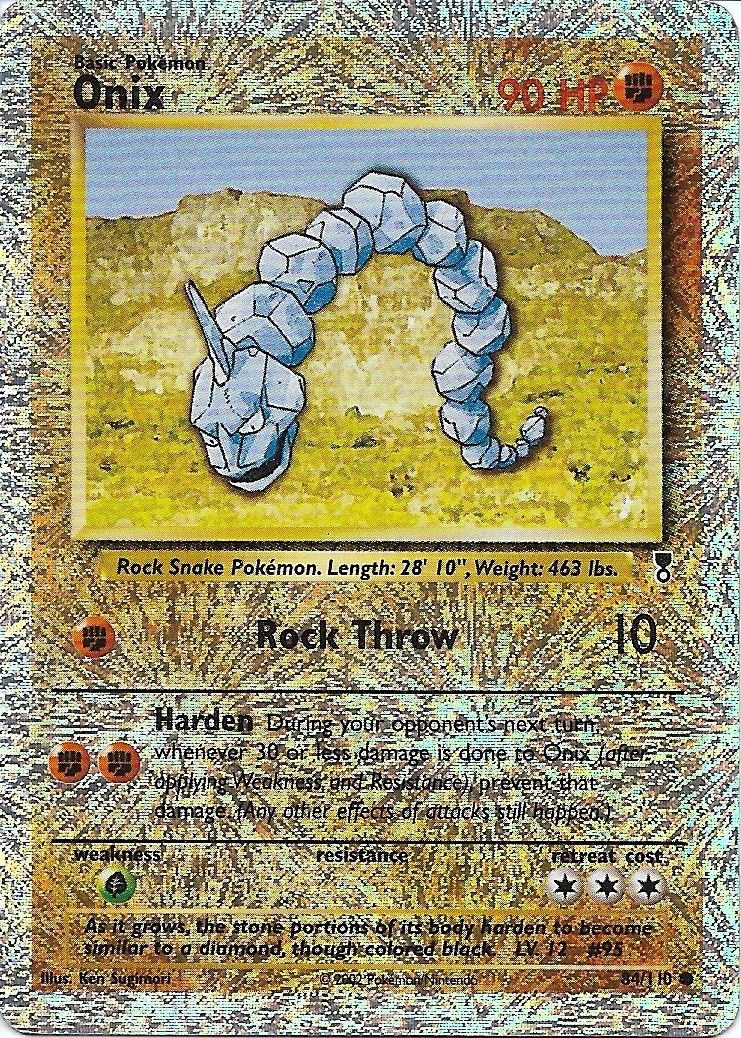 Reverse holoEverything shines except the artwork (Onix, Legendary Collection, 2002)
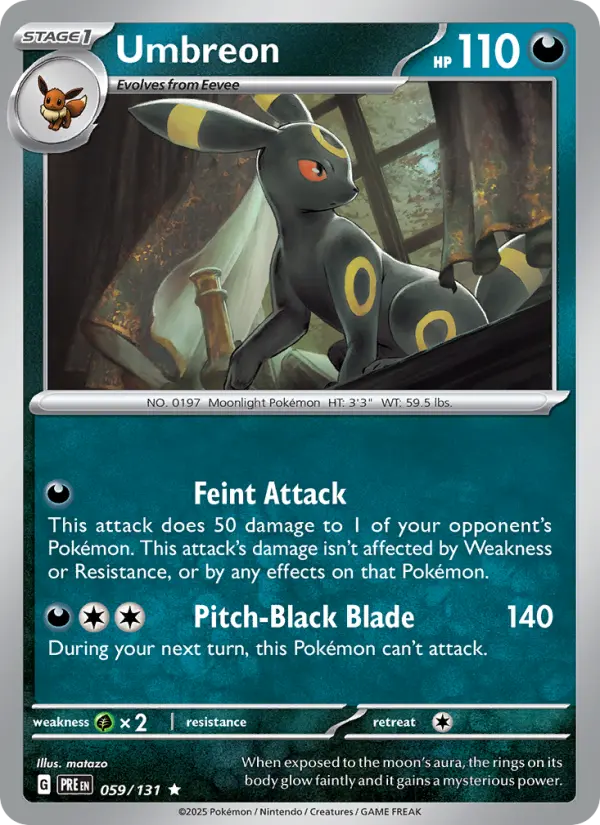
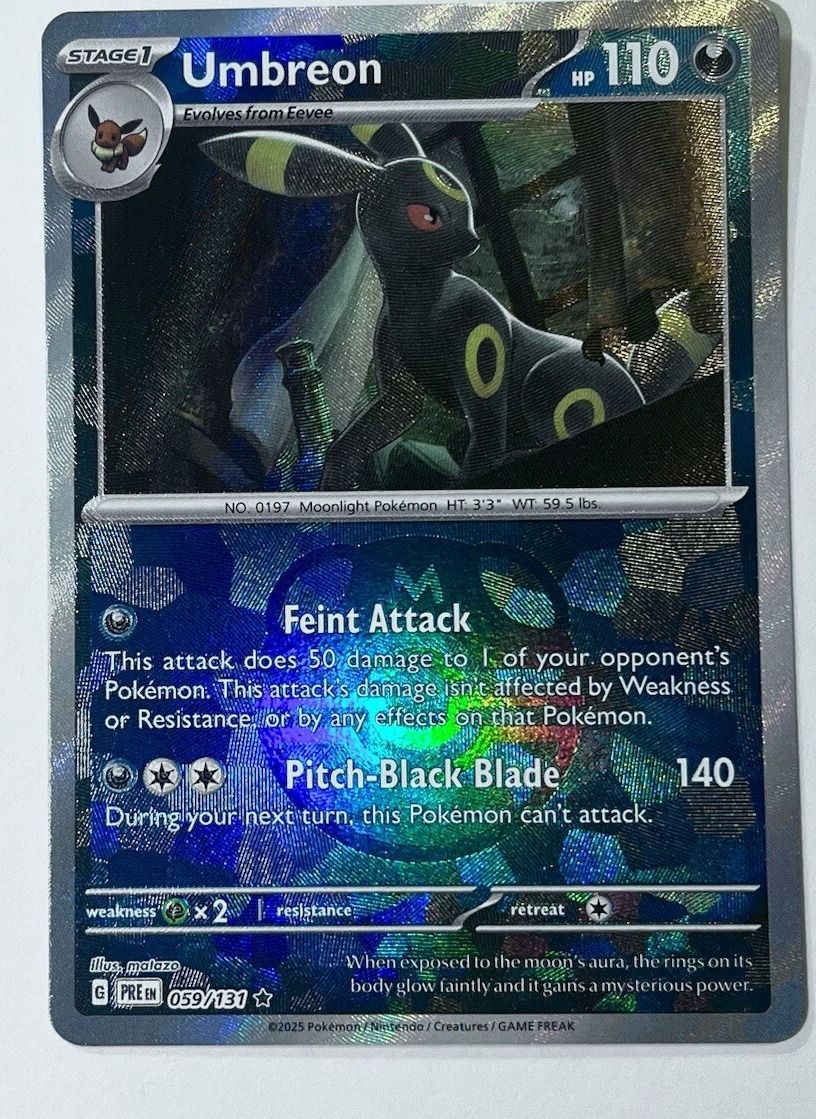 Ball-pattern reverseA reverse holo with Master Balls stamped in the foil (Umbreon, Prismatic Evolutions)
The named patterns, by family
Seven patterns were the standard holo of an era, so the foil narrows the date, though promos and reprints reuse older foils, cosmos most of all. The others mark a product: a theme deck, a blister, a tin, a mini pack, an event prize or a ball parallel. Reverse holo backgrounds have their own timeline, further down.
| Pattern | Looks like | Where you find it | Years |
|---|---|---|---|
| Starlight | Blurry starbursts of different sizes | Base Set, Jungle and Fossil holo rares | 1999 |
| Cosmos | Dots and circles of different sizes | Default holo, then promos, blisters, tins | 2000 to 2011, promos since |
| Tinsel | Horizontal stripes | Black & White through Legendary Treasures; Black Bolt and White Flare holo rares | 2011 to 2013, 2025 |
| Sheen | Smooth diagonal sweep | XY holo rares, many promos | 2014 to 2016, promos since |
| Water web | Wavy, like flowing water | Sun & Moon through Cosmic Eclipse | 2017 to 2019 |
| Line | Thin vertical lines, top to bottom | Sword & Shield through Crown Zenith | 2020 to 2023 |
| Mirage | Smooth horizontal sweep, silver foil borders | Scarlet & Violet holo rares | From 2023 |
| Cracked ice | Large angular shards | Theme decks, blisters, tins | By 2009, last in 2020 |
| Crosshatch | Diagonal grid of lines | Play! Pokémon prize cards | Event cards, no era |
| Sequin | Small geometric flecks | General Mills mini pack promos | From 2017 |
| Confetti, also called pixel | Small blocky pieces | McDonald's Collection sets, Celebrations Classic Collection | McDonald's from 2011, Celebrations 2021 |
| Poké Ball pattern, and the other balls | Repeating Poké Balls in the reverse foil; Love, Friend, Quick and Dusk Balls in Ascended Heroes | Japanese 151 and later special sets; English from Prismatic Evolutions | Japan 2023, English 2025 |
| Master Ball pattern | Master Ball silhouettes marked with an M | Japanese 151 and later special sets; English Prismatic Evolutions, Black Bolt and White Flare | Japan 2023, English 2025 |
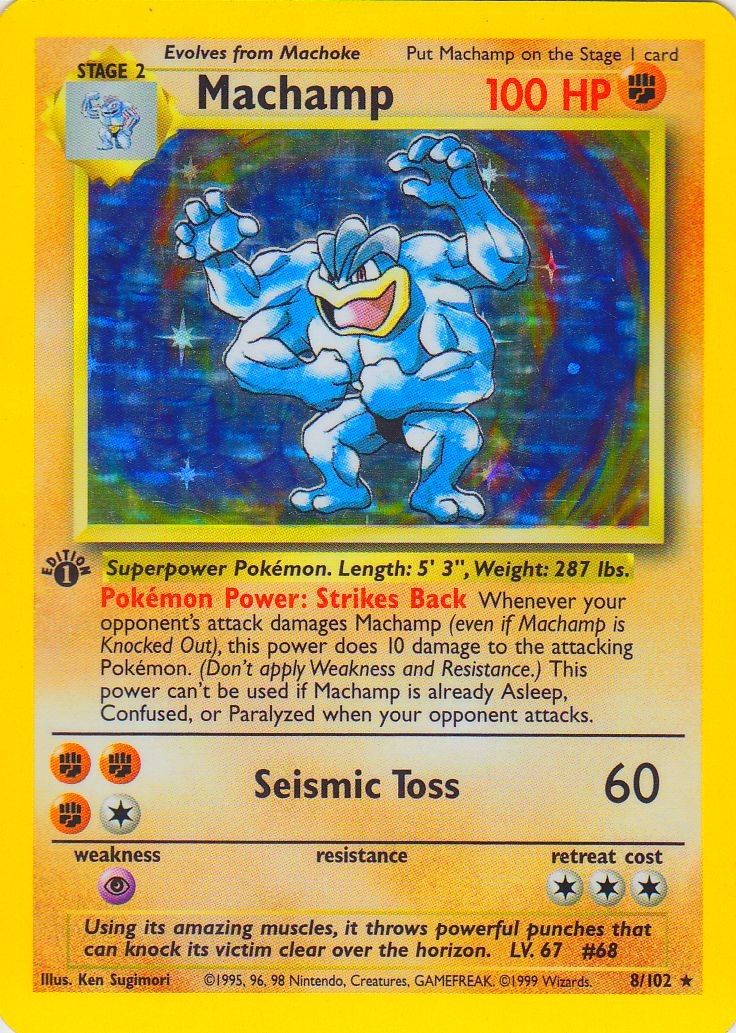 StarlightMachamp, Base Set, 1999
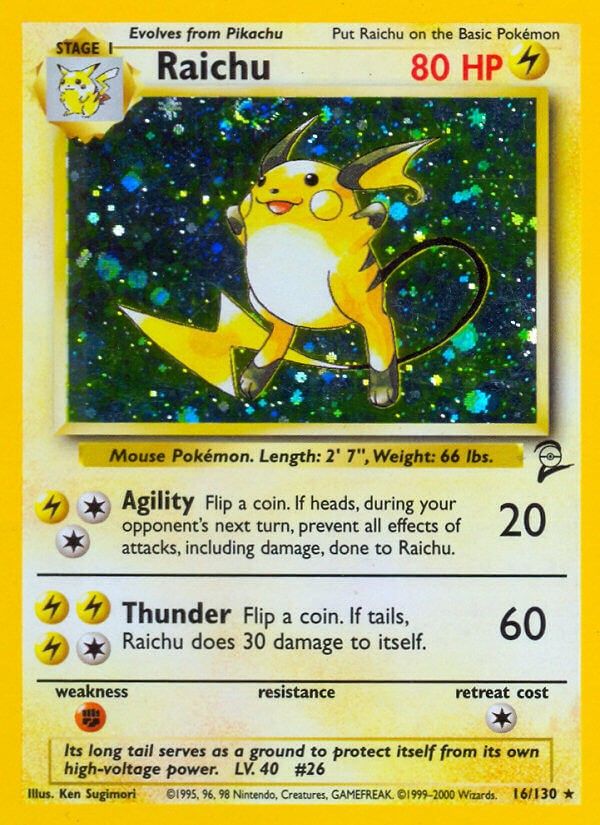 CosmosRaichu, Base Set 2, 2000
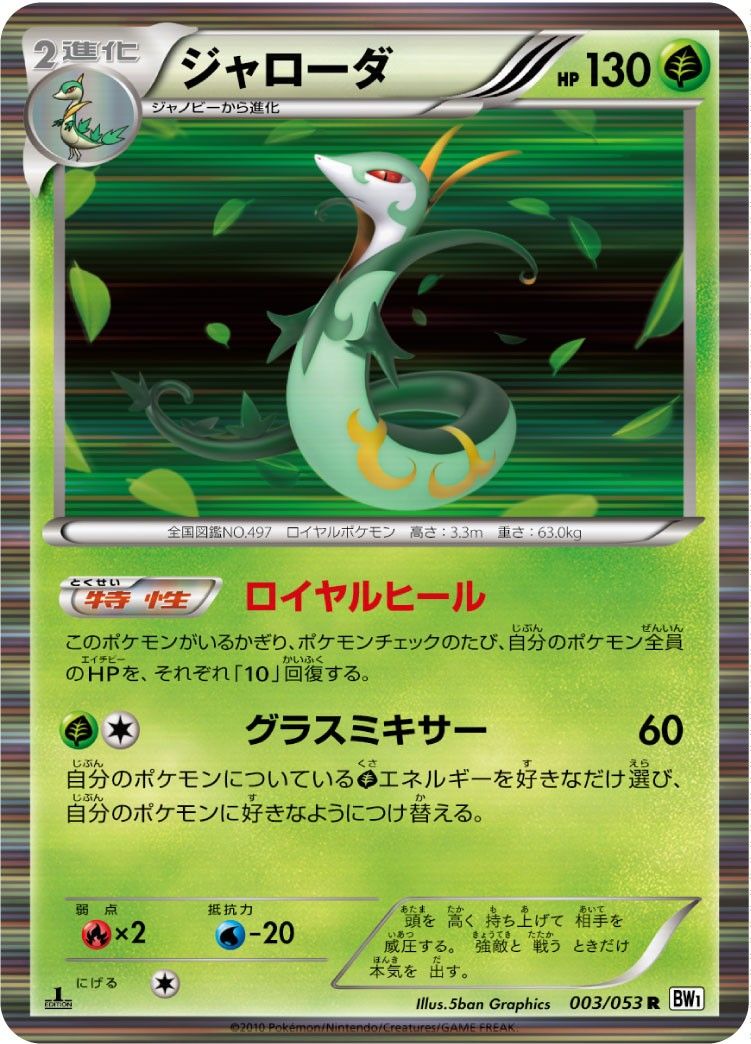 TinselSerperior, Japanese BW1, 2010
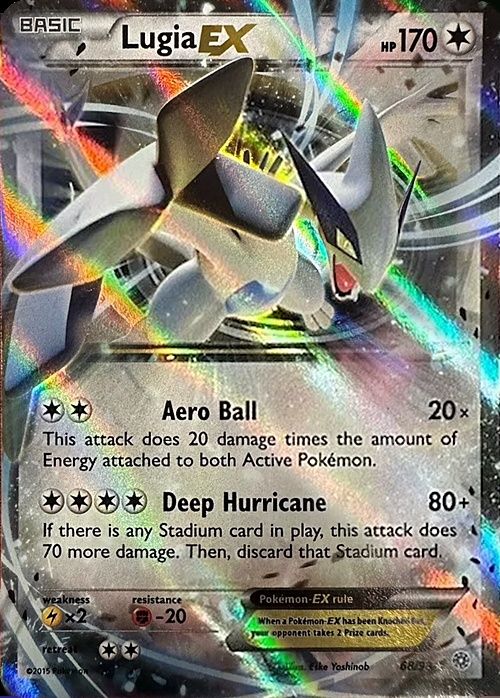 SheenLugia EX, Lugia Legendary Battle Deck, 2017, full-card version; on a regular XY holo the same sweep stays inside the artwork
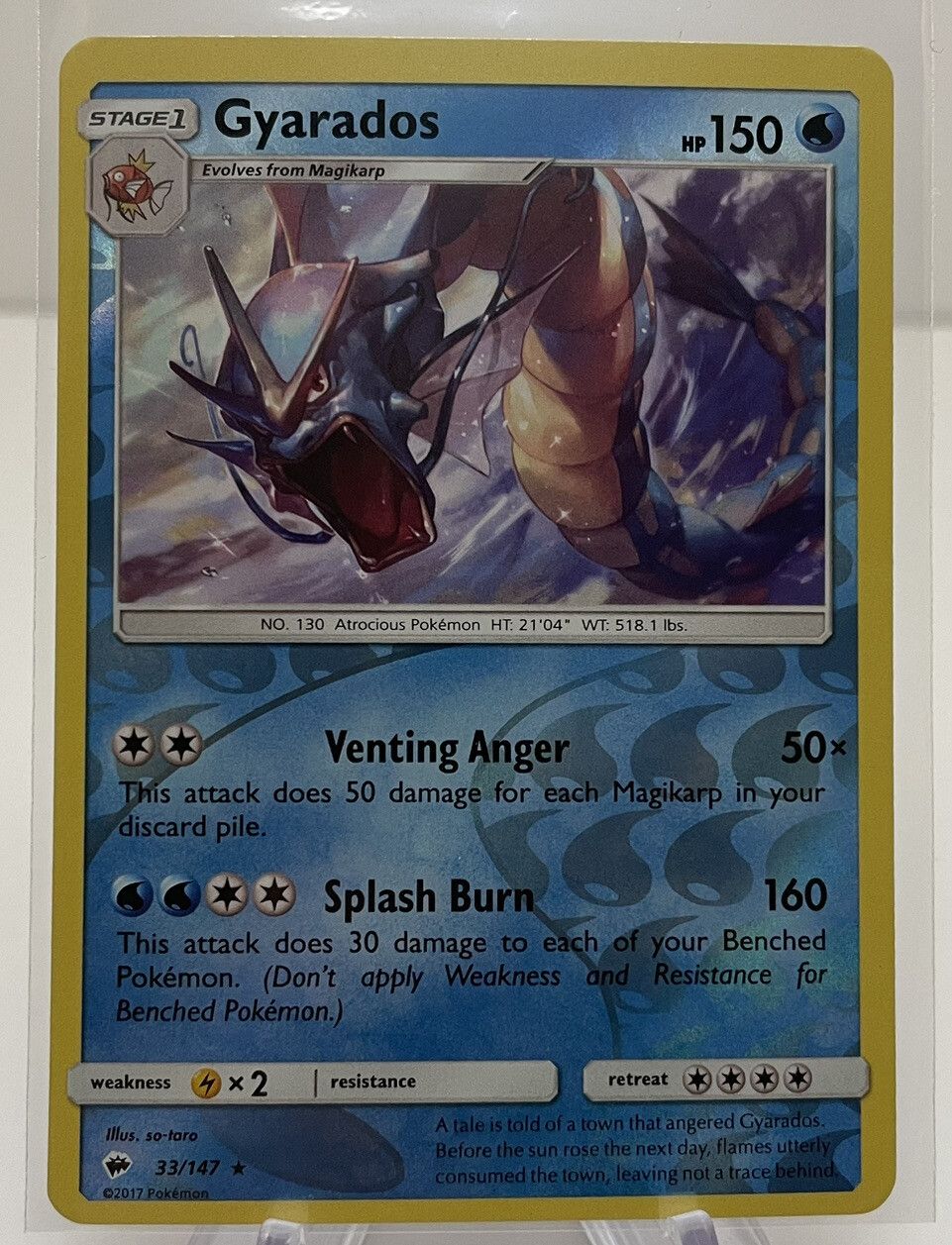 Water webGyarados, Burning Shadows, 2017
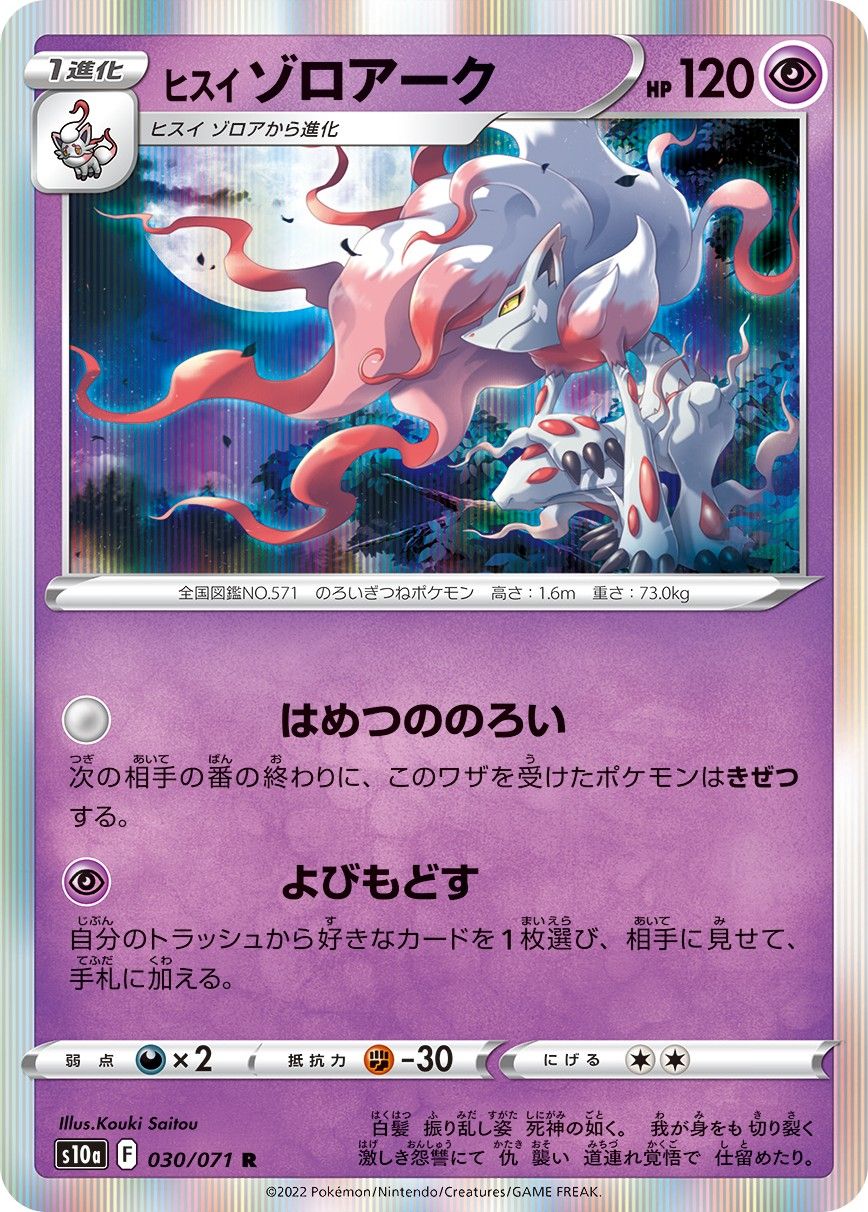 LineHisuian Zoroark, Japanese s10a, 2022
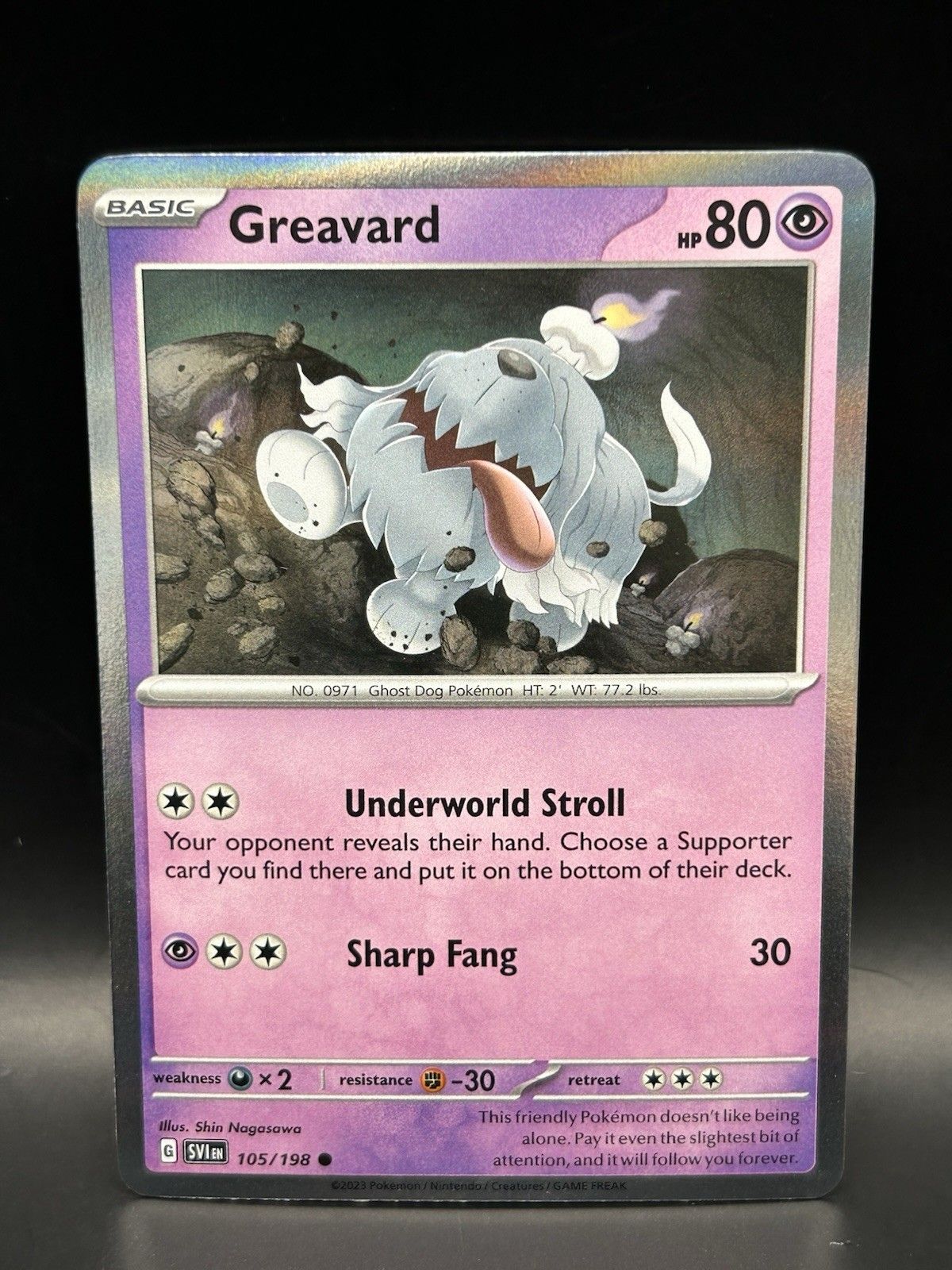 MirageGreavard, Scarlet & Violet, 2023, the holo version from the Mimikyu ex Box
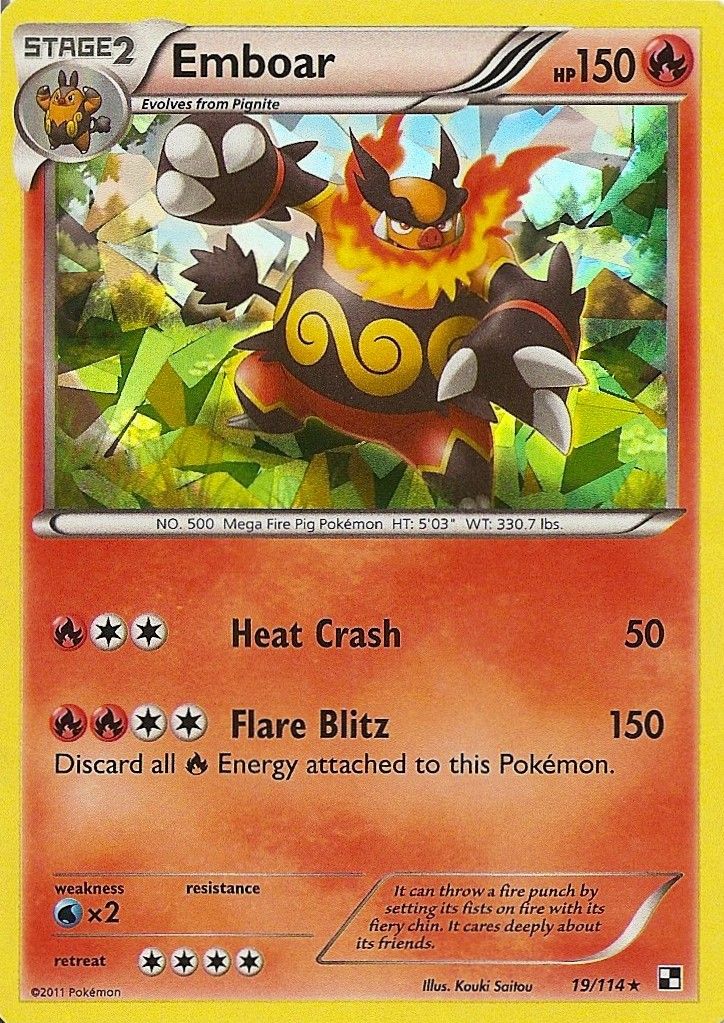 Cracked iceEmboar, Black & White theme deck, 2011
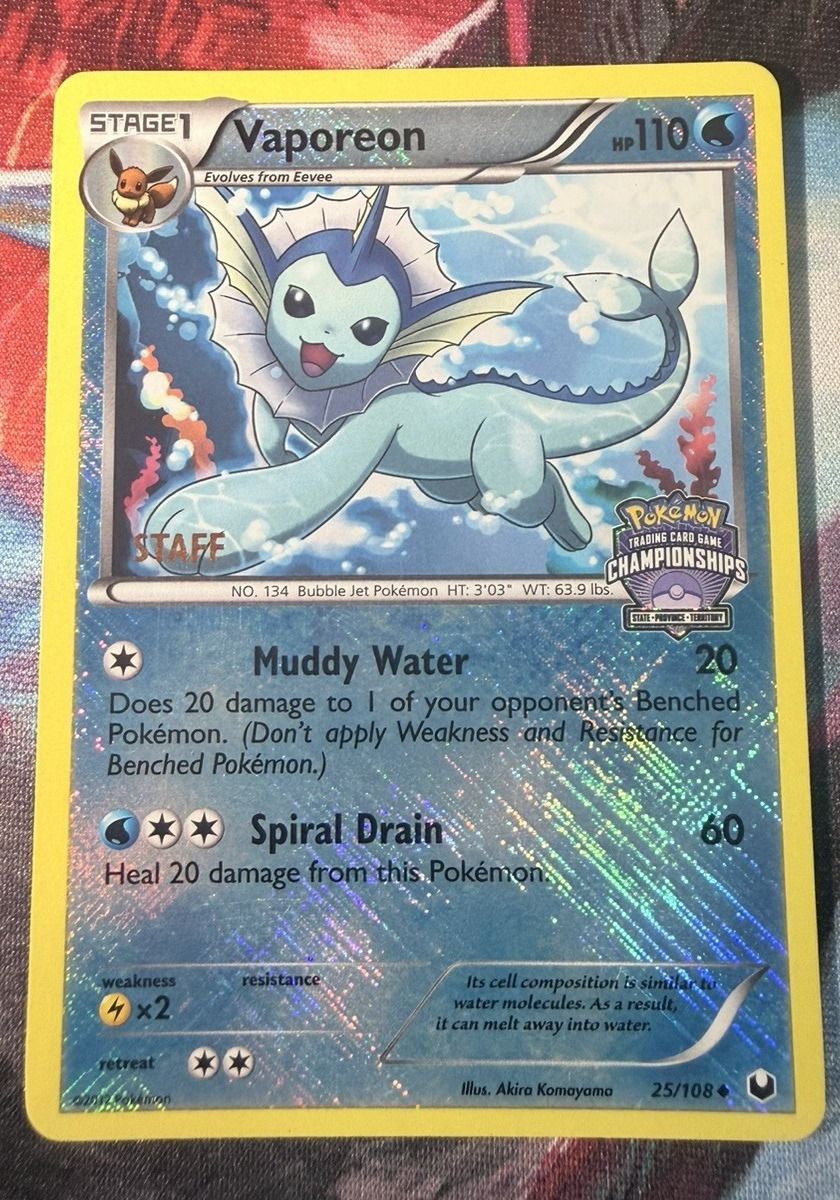 CrosshatchVaporeon, Dark Explorers STAFF promo
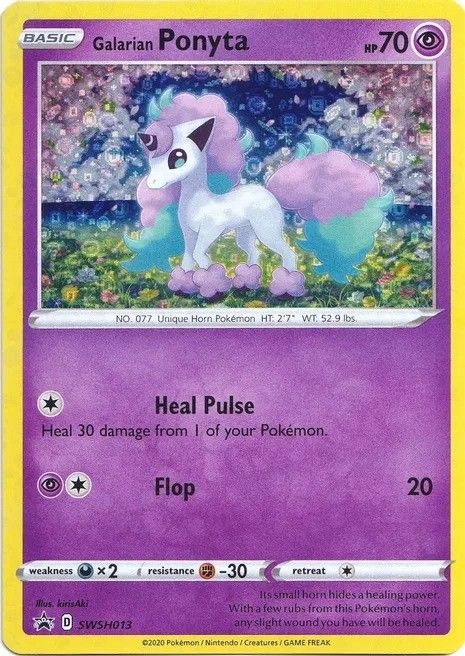 SequinGalarian Ponyta, General Mills promo
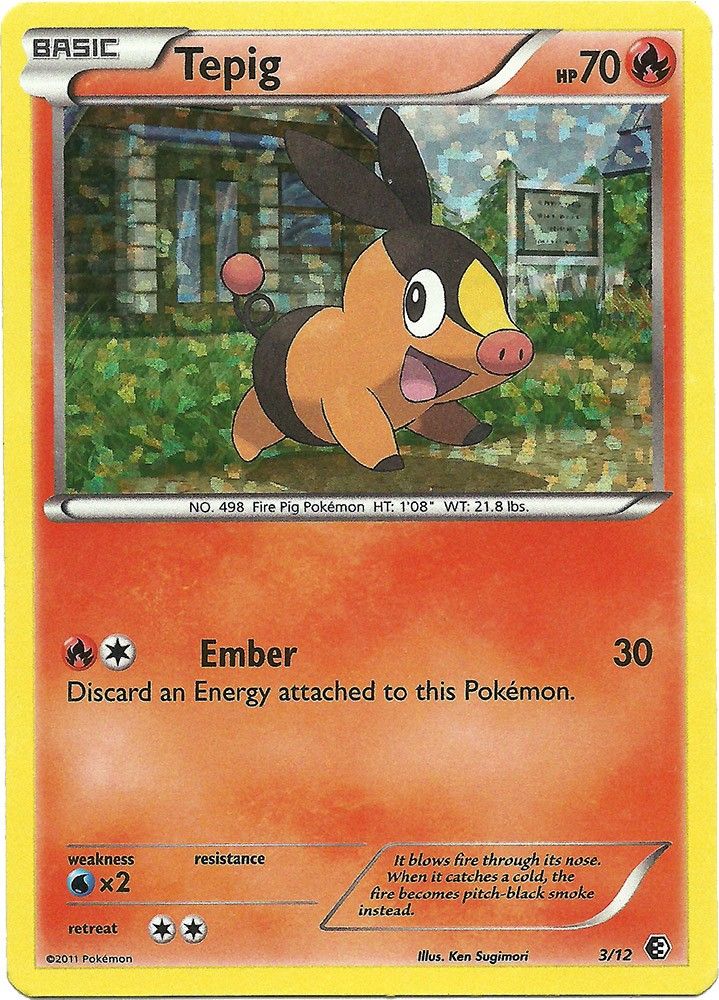 Confetti (pixel)Tepig, McDonald's Collection 2011First reverse holoOnix, Legendary Collection, 2002
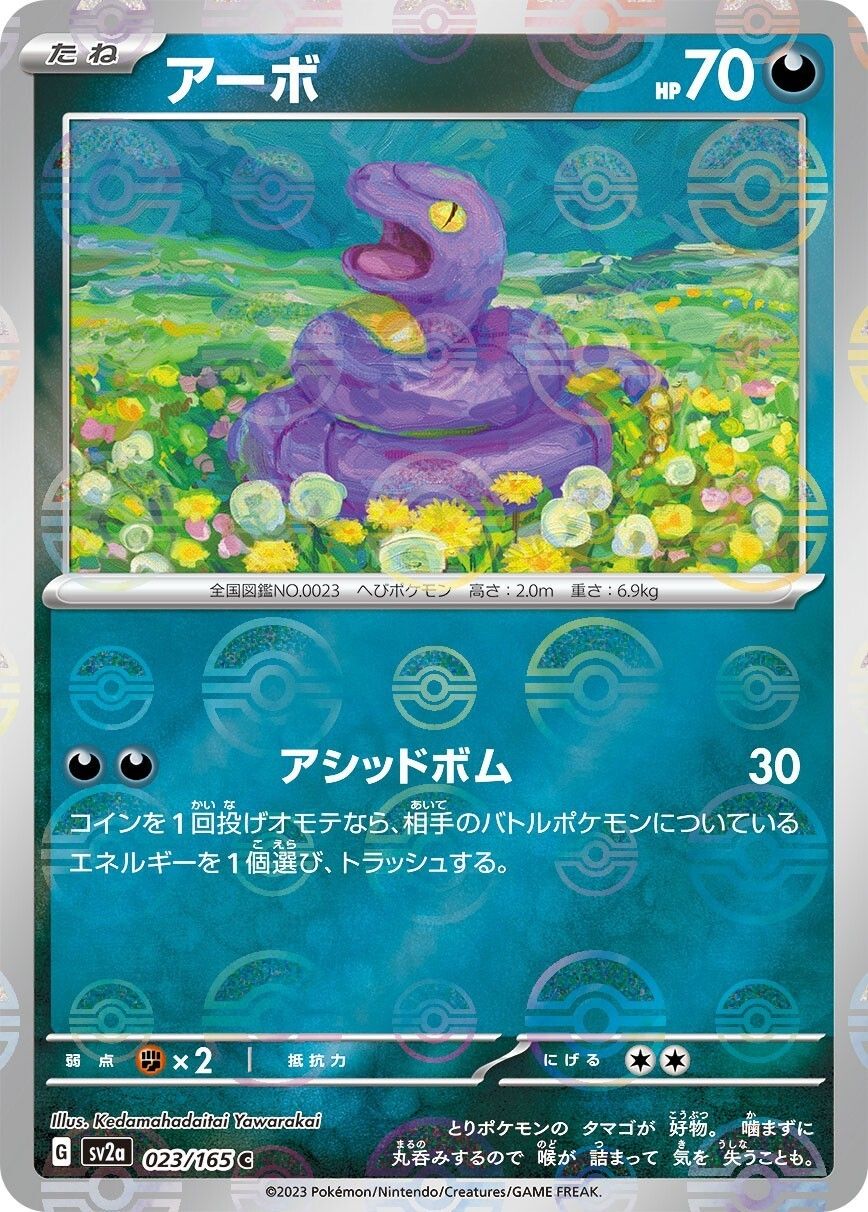 Poké Ball patternEkans, Japanese 151, 2023Master Ball patternUmbreon, Prismatic Evolutions, 2025: the M on the ball
One exception inside the XY era: Evolutions, the 2016 anniversary set, printed its English holo rares with a starry foil close to the 1999 starlight, with larger and sharper stars, and its reverse holos in plain foil, unlike most of XY.
Textured or etched cards are not a fourteenth pattern: the relief you feel is pressed into the card, as lines, fingerprints or energy effects. Texture follows the rarity and the print treatment, not the artwork. Full-art Ultra Rares, Special Illustration Rares and gold Hyper Rares carry it, and so do some cards that are not full art (Tera ex, VMAX and VSTAR among them) and the ball reverses of Prismatic Evolutions; ordinary holos and regular reverse holos are smooth. A smooth card is a problem only when that exact card, in that print, should be textured, which a known genuine copy settles; the rest of the method is in our guide to spotting fake Pokémon cards.
Holo or reverse holo: the ten second test
Hold the card under a lamp and watch the picture window. If the artwork shines, it is a holo. If the artwork stays flat and everything around it shines, it is a reverse holo. The shortcut holds from 2002 onward with one stretch of exceptions: from EX Hidden Legends to EX Power Keepers, 2004 to 2007, the reverse foil sits inside the illustration, as energy symbols or set logos behind the Pokémon, and on EX Dragon Frontiers on the Pokémon itself. Japanese XY holos are foiled over the whole card, borders included.
Slots, and why a reverse is not rarer
A reverse holo has foil on more of the card than a holo, which is why the name reads backwards to new collectors, but the finish does not make a card rarer: a reverse holo common is still a common, and the rarity symbol in the corner says so. From Legendary Collection in 2002, English packs carried a reverse holo slot, which a common could fill, beside a rare slot that held a holo rare only some of the time. Scarlet & Violet (2023) made every rare foil and gave packs two reverse slots, three guaranteed foils in all, which made room for the ball patterns: in Prismatic Evolutions a Poké Ball card turns up in the first reverse slot and a Master Ball in the second, so one pack can hold both.
An all-foil set has no reverse slot at all. Celebrations (2021) put four foil cards in a pack; 30th Celebration (September 16, 2026) puts five foil cards, one of them a Pikachu rare, plus a foil basic Energy, and prints no reverse holos. Japanese expansion packs have no reverse slot either: mirror parallels exist only in some special sets, about 17 per 20-pack box in Pokémon Card 151.
Cosmos holo, and why people get it wrong
Cosmos is dots and circles of different sizes spread across the artwork. It became the default international holo with Base Set 2 in 2000 and stayed the default through Call of Legends; tinsel replaced it with Black & White in April 2011. Since then it has been a common promo foil.
Cosmos is not starlight, and galaxy means both
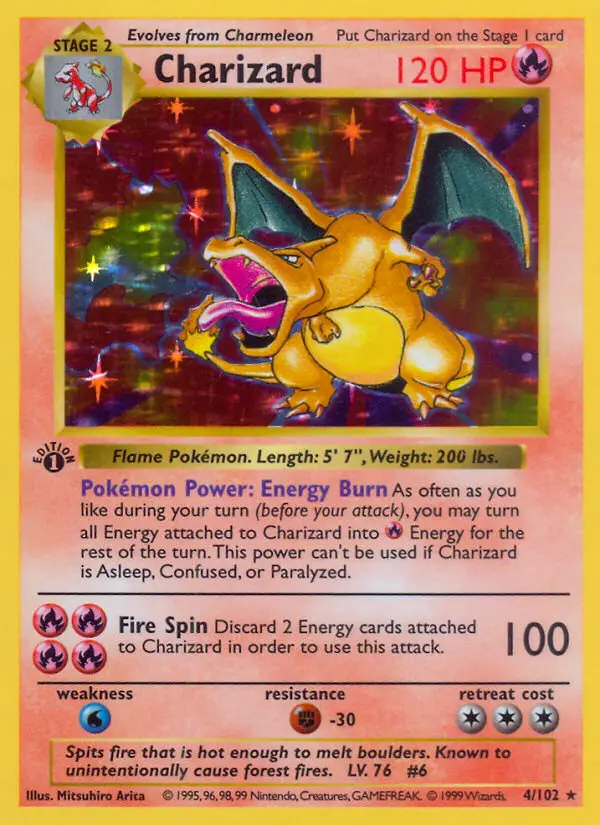
Base Set, Jungle and Fossil holo rares are not cosmos. They carry starlight: starbursts of different sizes with a slightly blurry look. Cosmos arrived a year later, with Base Set 2.
The word galaxy settles nothing. Collectors use it for cosmos, and CGC calls starlight the galaxy star pattern, so the same word points at both. Name the shapes instead: round orbs are cosmos, starbursts are starlight.
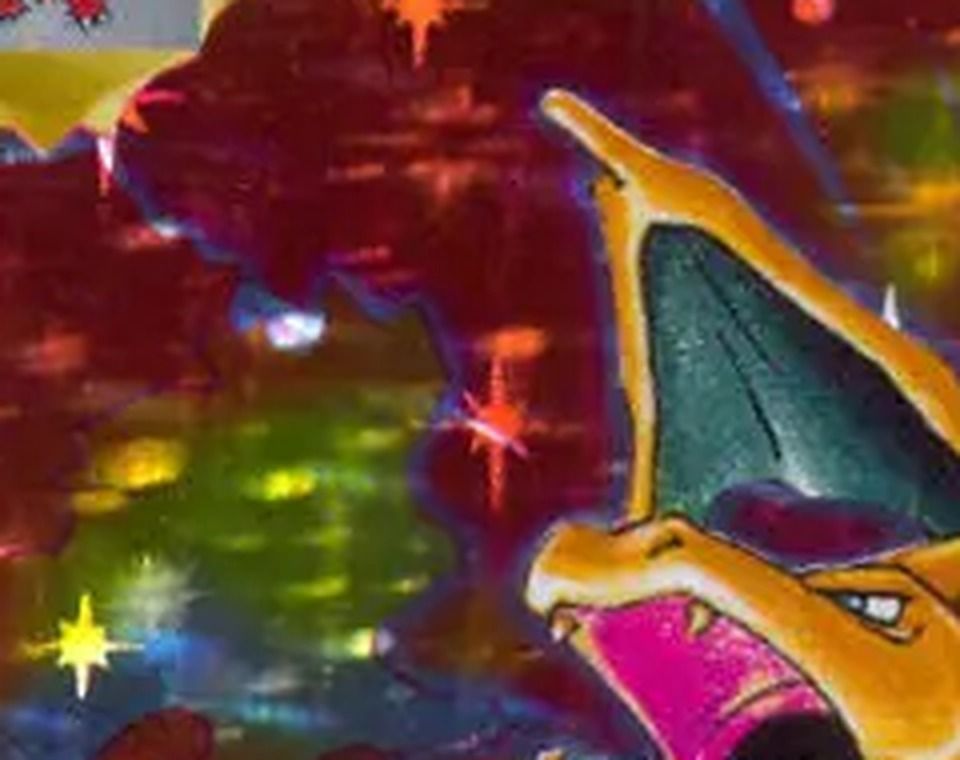 Starlight, Base Set 1999Blurry starbursts of different sizes
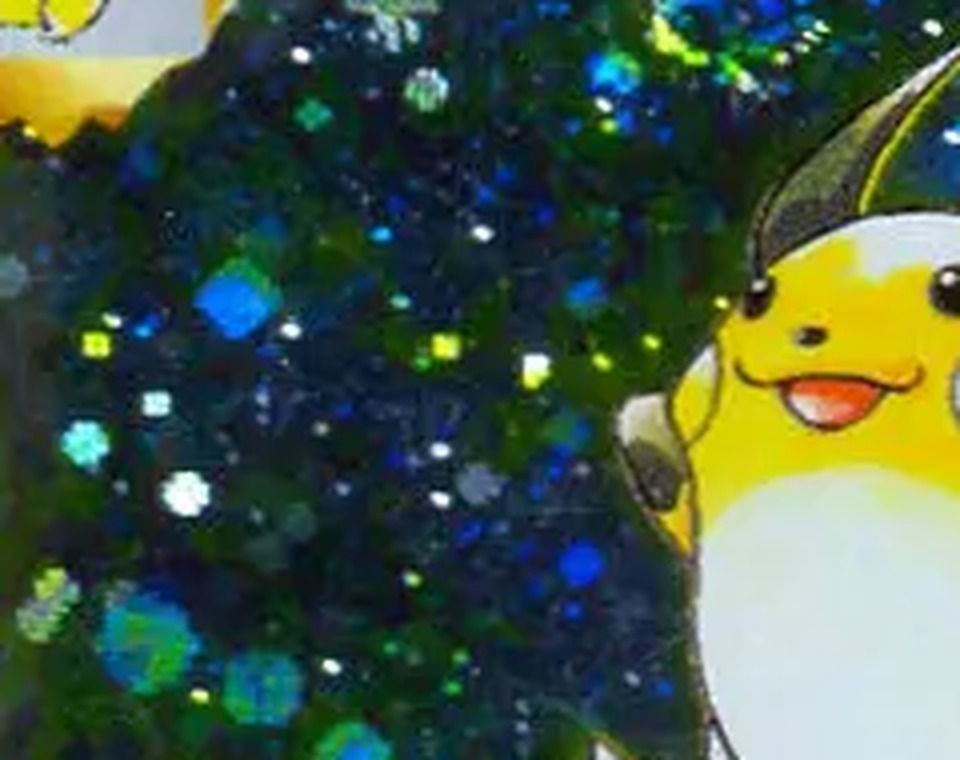 Cosmos, Base Set 2 2000Round dots and orbs of different sizes
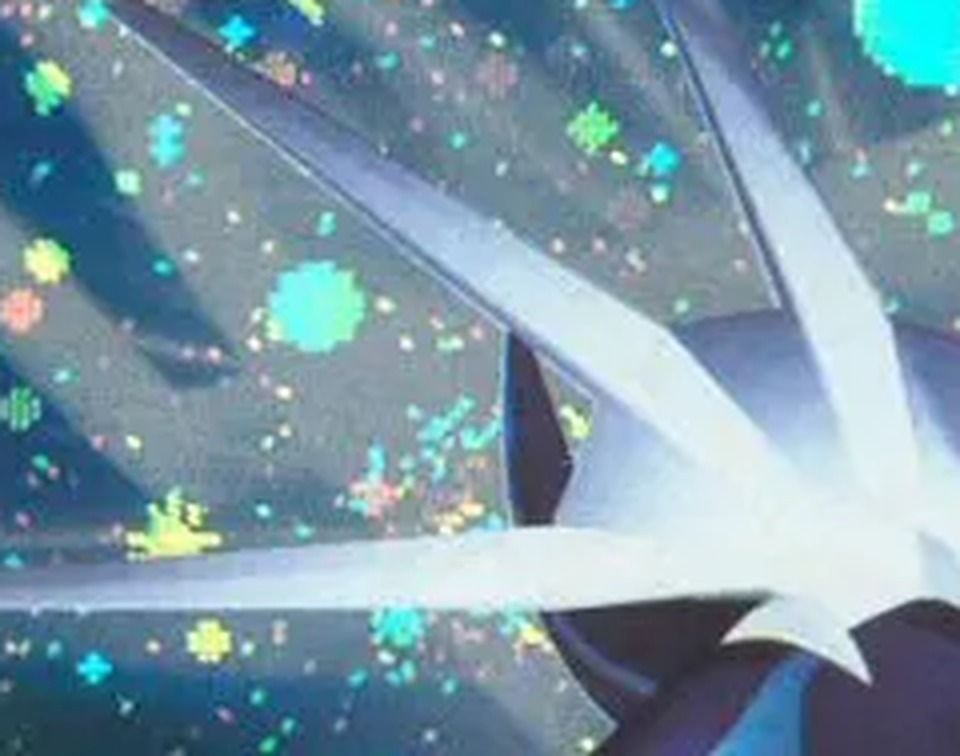 Cosmos, Diamond & Pearl 2007Same orbs, still the default holo
Pixel cosmos and smooth cosmos
Cosmos comes in two textures. Pixel cosmos is coarse: big pixelated orbs, squared-off edges, wide swirls. Smooth cosmos is finer, with smaller round orbs and thin wispy swirls. The Japanese Base Set Venusaur below carries the first, a Sun & Moon era promo Charizard the second. Pixel cosmos is not the confetti pattern, which some collectors also call pixel.
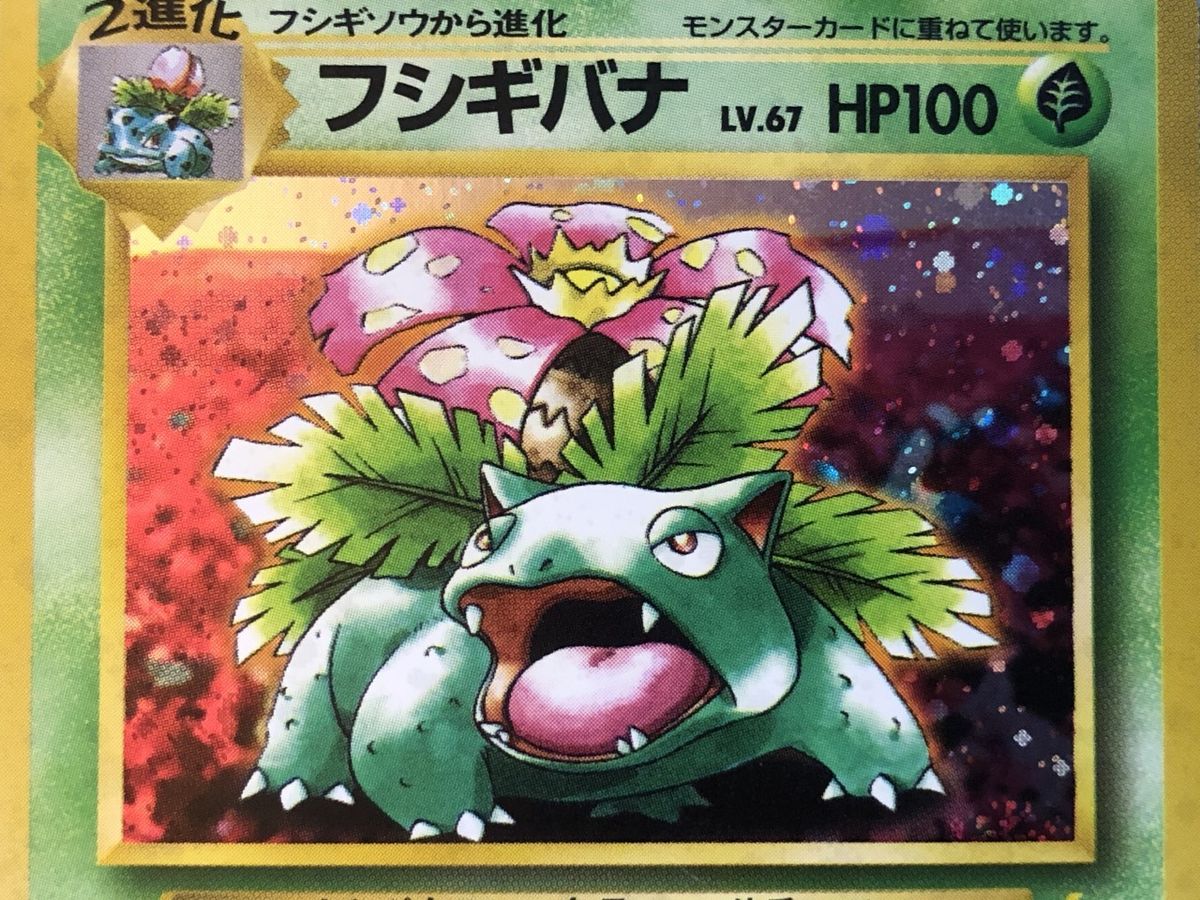 Pixel cosmosJapanese Base Set Venusaur: coarse orbs with squared-off edges
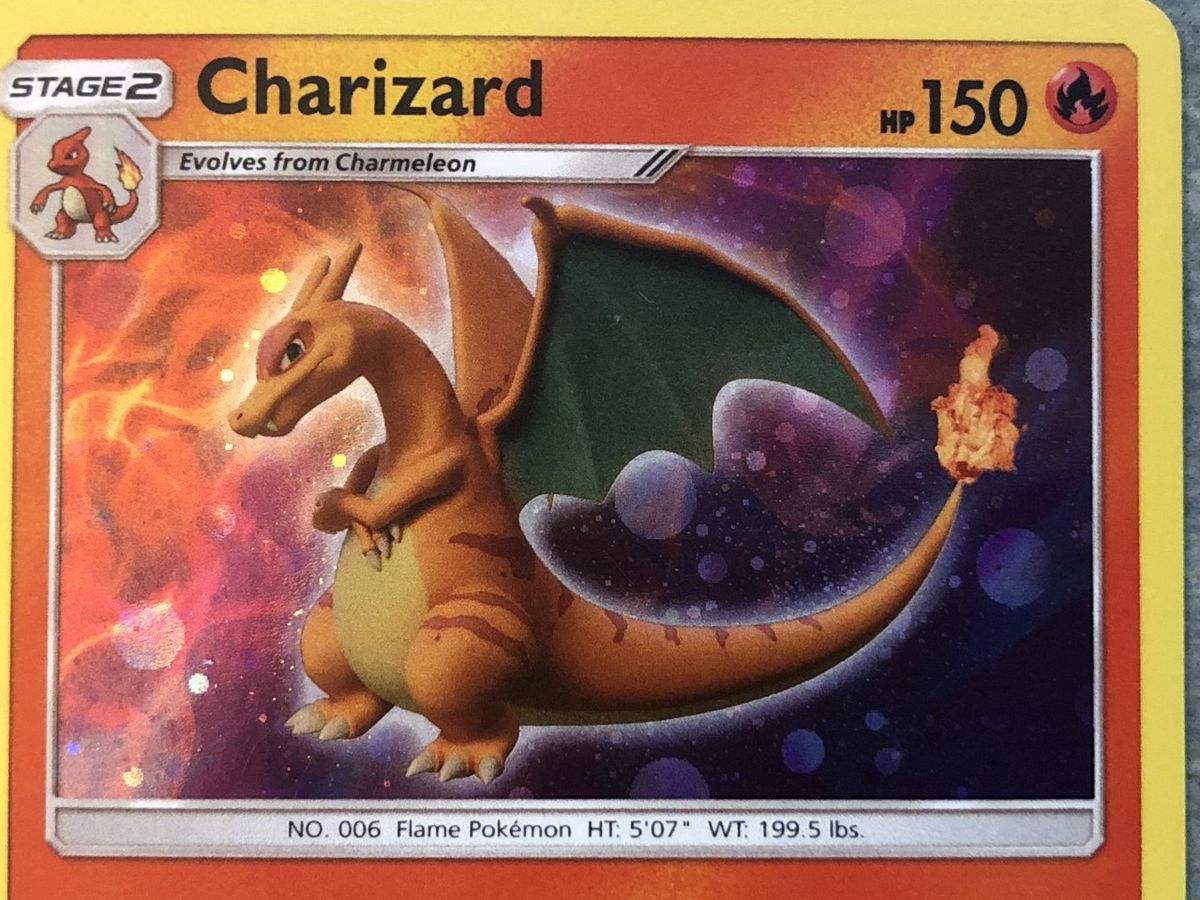 Smooth cosmosSun & Moon era promo Charizard: finer, rounder orbs and thin swirls
A cosmos holo Charizard is usually not a holo rare
This is the one that costs people money. Most cosmos cards printed after the pattern stopped being the default are promos: a card from a blister pack, a tin or a collector chest, printed with the cosmos foil and carrying the number of the main set.
The number identifies the card, not its finish. Often the set version is an ordinary non holo, as with the blister-pack Charizards and Blastoises of the Black & White and XY years. Sometimes the set version is itself a holo rare with the era pattern and the promo is the same number in cosmos: Charizard 19/113 from Legendary Treasures exists as the tinsel holo rare pulled from packs and as a cosmos reprint sold in the 2014 Mega Charizard Collection and Box, and graders list the two apart. So read the foil, then check the set and the product the card came from.
Holo swirls
A swirl is not a separate variant. It is part of the cosmos foil sheet, and where it lands depends on where the card was cut from that sheet. Buyers pay attention to swirls anyway, and a good one raises interest in a card.
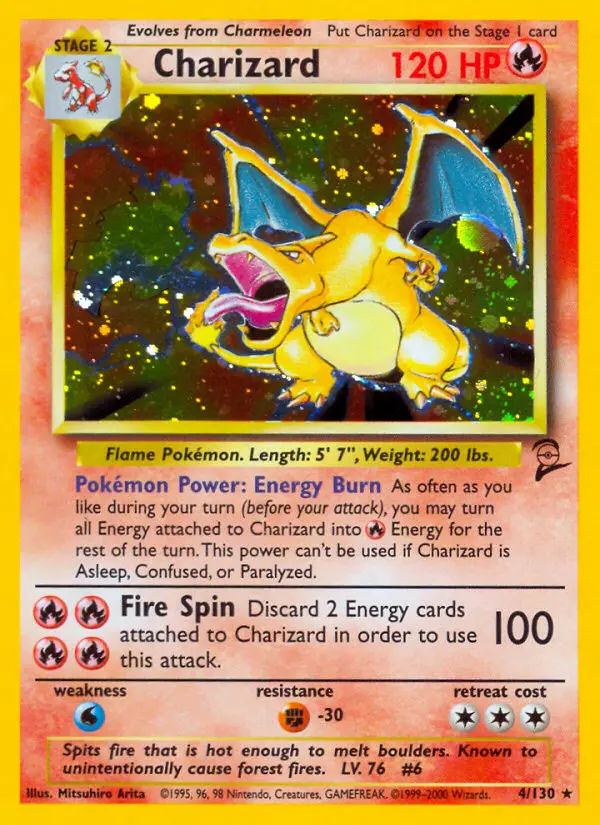
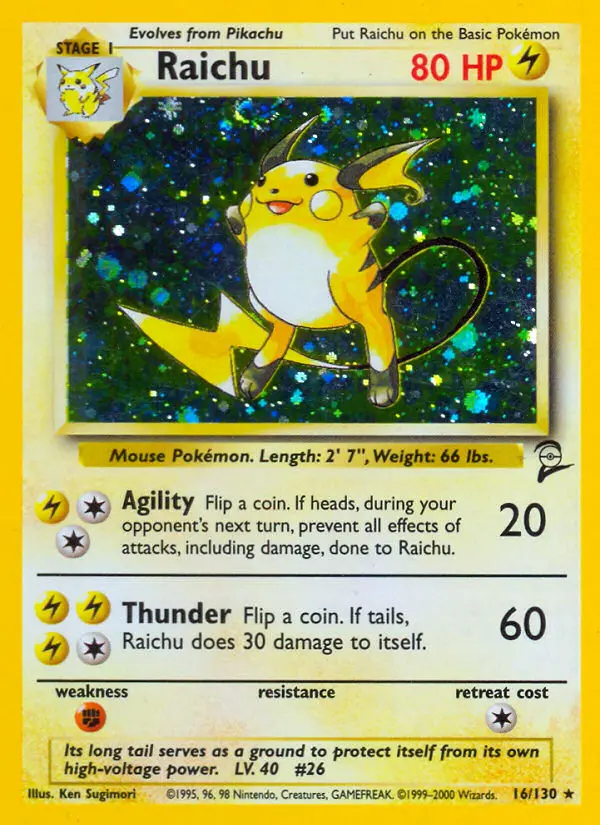
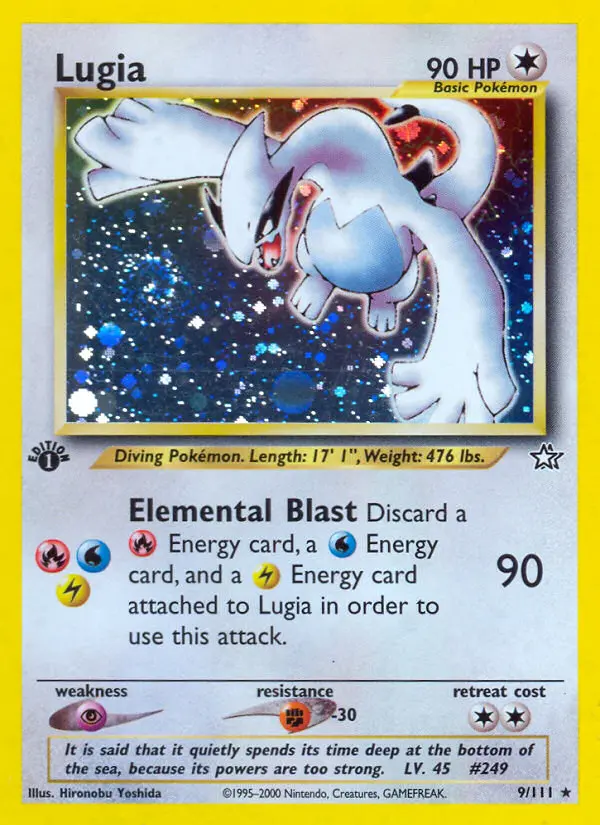
Reverse holo, era by era
The reverse holo background has been redesigned every few years, so it helps date a card. One trap first: Poké Ball shapes in a reverse holo are not new. EX Emerald used Poké Balls and stars, EX Unseen Forces a three dimensional Poké Ball, and most Trainer reverses from Emerging Powers to Steam Siege carry one. None of those is the Poké Ball pattern collectors mean today.
| Era or set | What the reverse holo looks like |
|---|---|
| Legendary Collection, 2002 | Dense sparkle across the card, called fireworks by some and cosmos by others |
| Expedition to EX Team Magma vs Team Aqua | Flat foil over the body, artwork left untreated |
| EX Hidden Legends to EX Team Rocket Returns | Energy symbol in the artwork, then set logos; FireRed & LeafGreen adds a faint Poké Ball |
| EX Deoxys to EX Unseen Forces | Pinwheel with set logo, then Poké Balls and stars, then a three dimensional Poké Ball |
| EX Delta Species to EX Power Keepers | Plainer artwork background with set logo stamps |
| Diamond & Pearl to Black & White | Plain holographic background |
| Emerging Powers to Steam Siege | The card type symbol; Trainers get Poké Balls |
| Evolutions, 2016 | Plain holographic, unlike most of XY |
| Sun & Moon to Cosmic Eclipse | One large type symbol on the left |
| Sword & Shield to Crown Zenith | Tiles of type symbols or Poké Balls |
| Scarlet & Violet sets, 2023 to 2025 | Finer tiles mixing type symbols of different sizes; plain on Ancient and Future Pokémon |
| Mega Evolution onward, from September 26, 2025 | Plain holographic foil, no pattern; Ascended Heroes gives its Pokémon an Energy-symbol and a ball parallel instead |
The current reverse: plain foil again
Mega Evolution dropped the type-symbol tiles: its reverse is a smooth, plain holographic foil with no pattern, the look of Diamond & Pearl to Black & White. A plain reverse therefore needs the frame and the set symbol to date it: with a yellow border it can come from several eras, among them 2002 to 2004, 2007 to 2011 and Evolutions (2016); with the silver border of the current frame it dates from September 2025 on, unless the card is one of the Ancient or Future Pokémon of Scarlet & Violet, whose reverses were plain too. The five main sets of the series, Mega Evolution to Pitch Black, print only the plain reverse, with no ball parallels; 30th Celebration prints no reverse at all.
Where it started: Legendary Collection, May 24, 2002
Legendary Collection reprinted 110 cards, and every one of them, holo rares included, came in a parallel reverse holo version, the first in the hobby; the reverse holo Charizard is its chase. It was also the first set after 1st Edition stamping ended with Neo Destiny in February 2002. Its reverse foil is prone to print lines and chipping, so clean copies are scarce and high grade slabbed copies scarcer still.
Poké Ball and Master Ball patterns
Both are reverse holos with a repeating ball in the foil: Poké Balls, or Master Balls marked with an M. Japan got them first, in Pokémon Card 151 on June 16, 2023, where they are sold as mirror cards; English sets got them with Prismatic Evolutions on January 17, 2025.
Japan first, and English 151 did not get them
The Japanese set runs two tiers. The Monster Ball mirror is the common one, described by the publisher as a Monster Ball pattern worked into the foil with a mirror finish. The Master Ball mirror is the rare one: it exists only for common, uncommon and rare cards, and its ball has rounder ears and carries an M mark. A community tally of 960 boxes counts about 16 Monster Ball mirrors and one Master Ball per box; the publisher has never published a rate. The English release of 151, in September 2023, has neither tier.
Prismatic Evolutions, Black Bolt and White Flare
Prismatic Evolutions carries three sets of reverse holos: 108 ordinary ones, 100 Poké Ball versions and 67 Master Ball versions. Only regular Pokémon get a Master Ball, so no Pokémon ex and no ACE SPEC, while Trainers do get Poké Ball versions. Both ball versions are textured, a design taken from Japan's Terastal Festival ex.
Black Bolt and White Flare (July 18, 2025), sold without booster boxes, repeat the three versions on their common, uncommon and rare Pokémon, while Trainers and Special Energy get the ordinary and Poké Ball versions. Their holo rares also brought back the horizontal tinsel foil of the Black & White era.
How rare they are
Counted across 1,200 packs of Prismatic Evolutions, a Poké Ball reverse came every 3 packs and a Master Ball every 20, which puts one named Master Ball, an Umbreon say, at about 1 in 1,360 packs if all 67 are equally likely. For scale, the same count gave a Special Illustration Rare every 45 packs. None of these rates is official.
| Set | Released | Ball versions | Pull rate |
|---|---|---|---|
| Pokémon Card 151, Japan | June 16, 2023 | Monster Ball and Master Ball mirrors | About 16 Monster Ball and 1 Master Ball per box, tally of 960 boxes |
| 151, English | September 2023 | None | Standard reverse holos only |
| Terastal Festival ex, Japan | December 6, 2024 | Both, textured | 3 mirrors per box; a Master Ball in about one box in two, tally of 2,000 boxes |
| Prismatic Evolutions | January 17, 2025 | 100 Poké Ball, 67 Master Ball | 1 in 3 packs, 1 in 20 packs, count of 1,200 packs |
| Black Bolt and White Flare | July 18, 2025 | Poké Ball and Master Ball | 1 in 3 packs, 1 in 19, count of 350-plus packs a set |
| Ascended Heroes | January 30, 2026 | Five ball designs plus Team Rocket's R, and an Energy-symbol parallel; no Master Ball | Not published |
Ascended Heroes: more balls, no Master Ball
Ascended Heroes gives its common, uncommon and rare Pokémon two parallels and no ordinary reverse: one with an Energy symbol of the card's type, one with a ball. The balls are the Love Ball, Friend Ball, Quick Ball, Dusk Ball and a standard Poké Ball, with an R on Team Rocket's Pokémon; each evolution line keeps one ball, first partners and the Pikachu family take Friend Balls, and Mythical Pokémon and the other Trainer's Pokémon the standard Poké Ball. Its Trainers and Special Energy keep the plain reverse, and there is no Master Ball in the set.
What they are worth
Master Ball versions are generally held to sell for several times the ordinary reverse of the same card. Our sales data does not track them apart from the regular card yet, so we give no multiple rather than invent one.
Not the Trainer card called Master Ball
Search for a Master Ball reverse holo and much of what comes back is a different object: the Trainer card named Master Ball, printed in Gym Challenge, Expedition, EX Deoxys, EX Delta Species, EX Power Keepers, Plasma Blast and Temporal Forces. Several of those prints exist in an ordinary reverse holo, and none has the ball pattern. The same trap catches Poké Ball, also a Trainer card. Read the set name and the year before you buy.
Mirror means two things in Japanese listings
On Japanese cards the word mirror covers two treatments. One is a plain mirror foil, used on cards such as the 25th Anniversary Collection Pikachu. The other is the ball pattern parallel of special sets such as Pokémon Card 151 and Terastal Festival ex. A listing title alone will not tell you which one is in the sleeve, so check the set code. More of these traps in our guide to Japanese Pokémon cards.
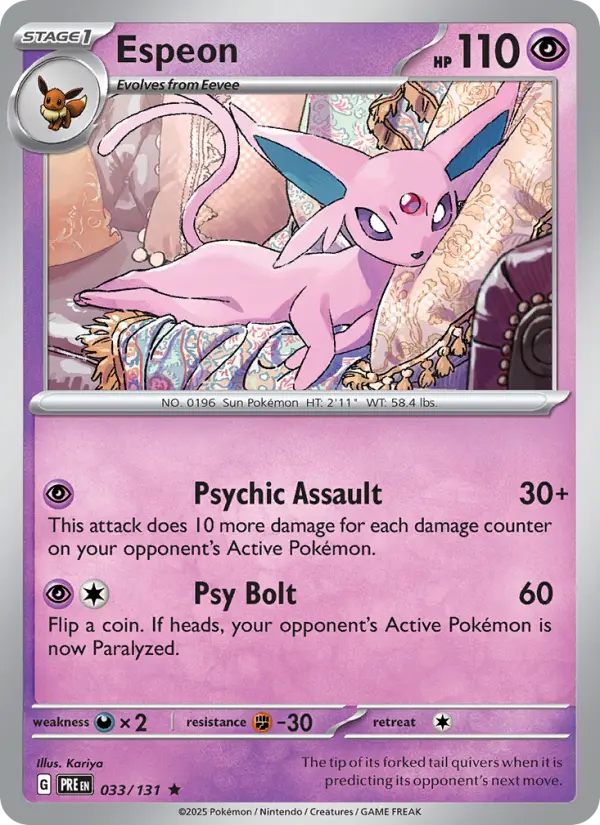
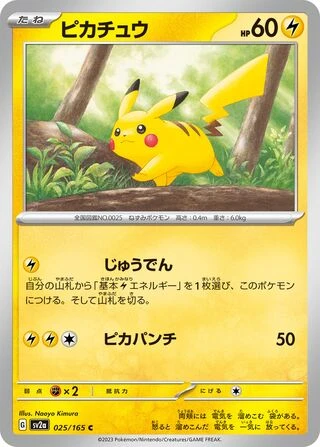
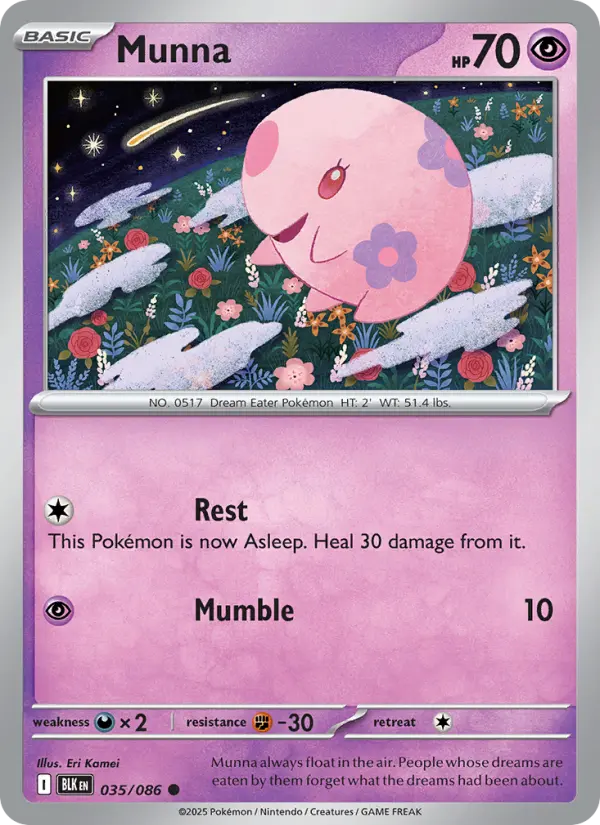
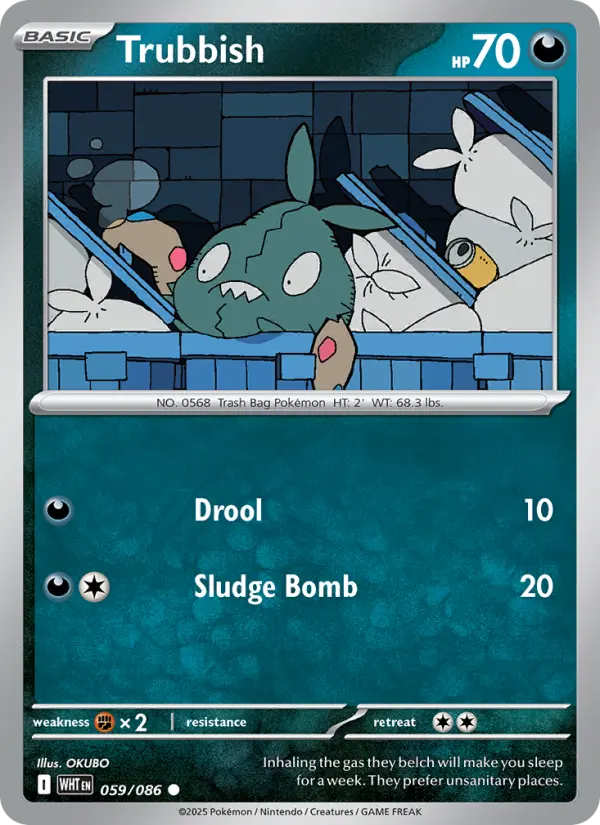
Cracked ice
Cracked ice is large angular shards, like broken glass laid over the card; collectors also call it shattered glass or shards. It marks a product, not an era: the featured cards of theme decks carried it from the Platinum era (2009) at the latest, and so did promos in blister packs and tins, often cards with no holo version in their own set. Theme decks gave way to V Battle Decks, and the last pair, a Charizard and a Drednaw from Vivid Voltage, came out on November 13, 2020.
What changes from one language to another
Several patterns are printed differently in Japan and elsewhere, which is why two copies of one card can look wrong side by side when both are genuine.
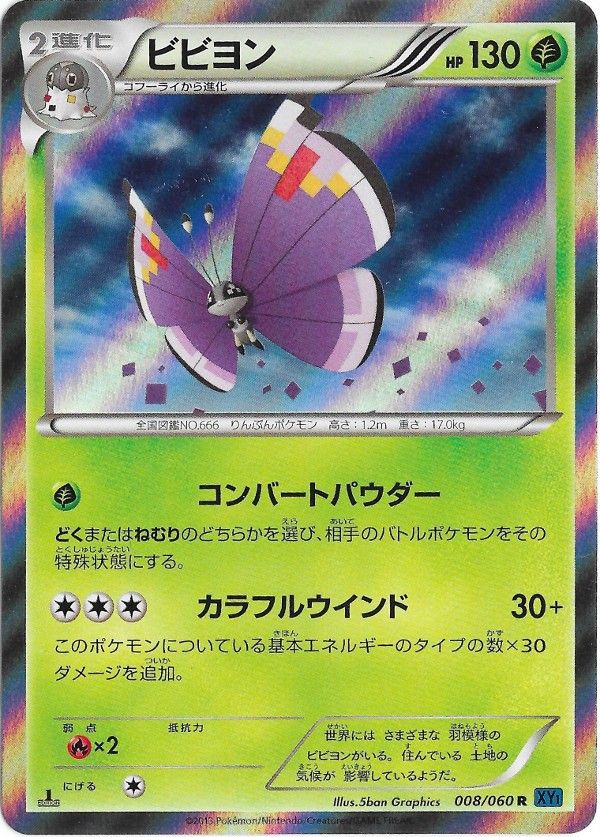 Japanese printVivillon, Collection X: the sheen runs bottom left to top right and covers the borders
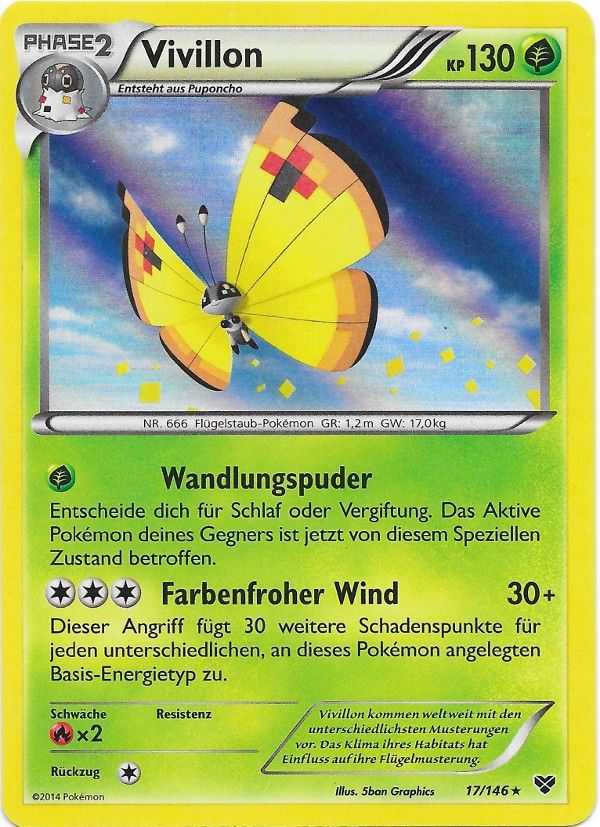 International printSame Vivillon, XY 17/146: the sweep runs the other way and stays inside the artwork
| Pattern | Japanese print | International print |
|---|---|---|
| Sheen | Refracts bottom left to top right | Refracts bottom right to top left, artwork only |
| Tinsel | Stripes on the artwork and the borders | Stripes on the artwork |
| Line | Vertical lines plus foil borders | Vertical lines, plain borders |
| Base Set holo rares, 1999 | Cosmos | Starlight |
Korean XY holos refract in the Japanese direction but, like international prints, only across the artwork. The 1999 split has a documented exception: the English Machamp from the two player CD-ROM starter set was printed with cosmos, while the rest of that English print run was starlight. Trainer Deck A Machamp and Trainer Deck B Blastoise were not holo at all.
FAQ
Is cosmos holo the same as galaxy holo?
Yes, galaxy is another name for cosmos, the dots and circles. CGC uses galaxy star for starlight, a different pattern, so describe the shapes to be sure.
Are cosmos holo cards rare?
Not because of the foil. Cosmos was the standard holo for eleven years and is still a common promo foil, so the card decides the value, not the pattern.
Is a reverse holo rarer than a holo?
Not by its rarity symbol: a reverse holo common is still a common, and most packs carry one or two reverse holos against a single rare slot. A given reverse can still be harder to find than a given holo rare, and the ball versions are scarcer still.
What is the reverse holo pattern on new Pokémon cards?
Plain holographic foil with no pattern, since Mega Evolution on September 26, 2025. Most Scarlet & Violet reverses of 2023 to 2025 carry tiles of type symbols, and 30th Celebration has no reverse holos.
What holo pattern do Scarlet & Violet cards use?
Mirage: a smooth horizontal sweep of light across the artwork, with silver foil borders on standard holo cards, from 2023. Black Bolt and White Flare (2025) used the older tinsel instead.
Did English 151 have Master Ball cards?
No. The Monster Ball and Master Ball mirrors of Pokémon Card 151 are Japanese only. The first English set with Master Ball versions was Prismatic Evolutions, in January 2025.
How do I tell a Master Ball mirror from a Monster Ball mirror?
By the ball. The Master Ball silhouette has rounder ears and carries an M mark, and in the Japanese 151 it only exists on common, uncommon and rare cards.
Can I pull a cracked ice card from a booster pack?
Not normally. Cracked ice was printed for products such as theme decks, blister packs and tins, so a cracked ice card sold as a pack pull deserves a second look.