
97 cards
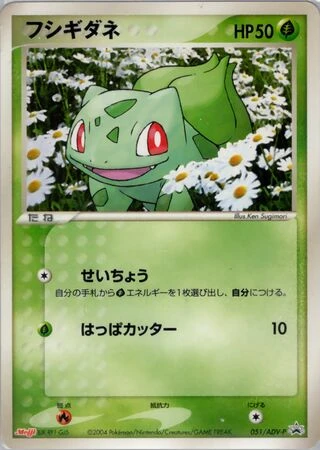
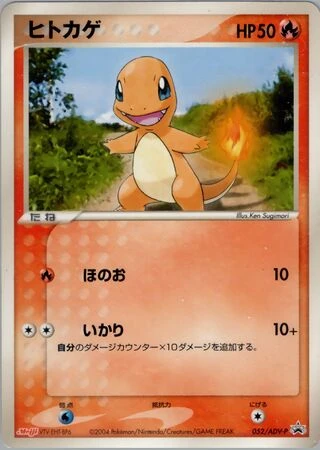
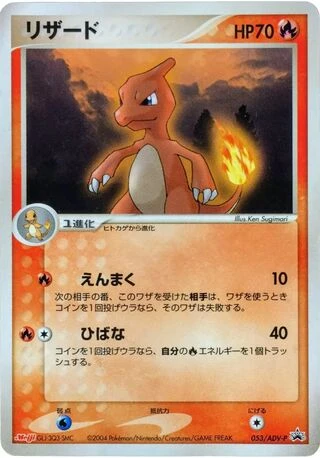
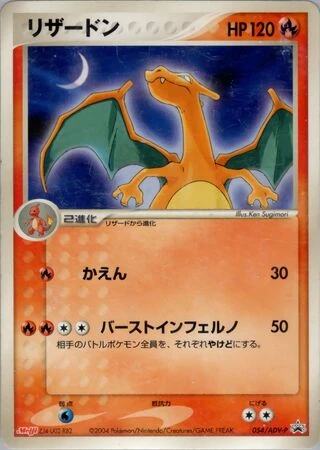
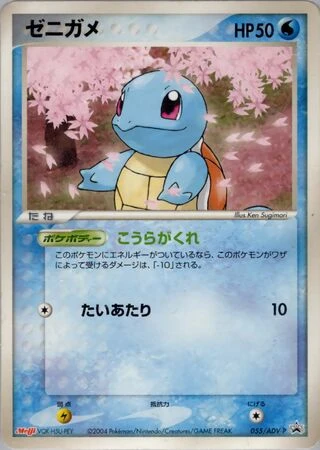
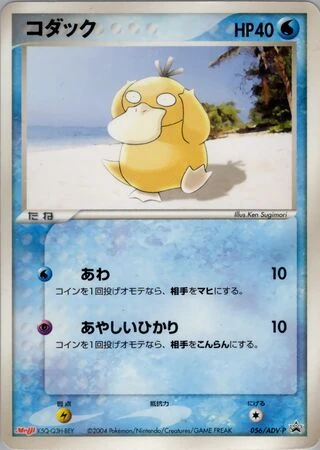
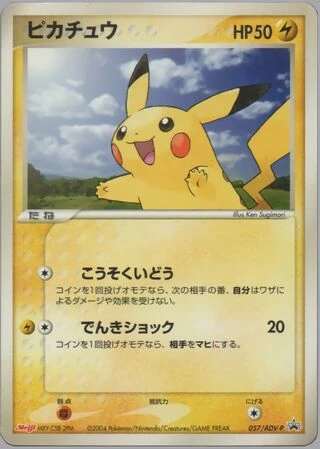
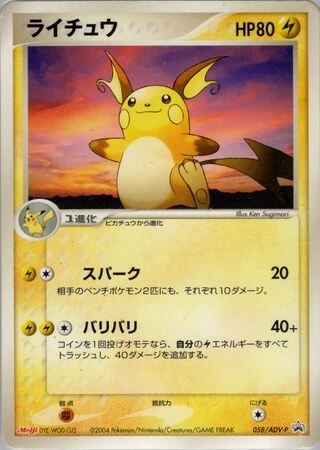
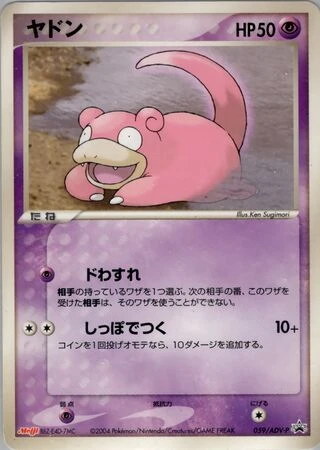
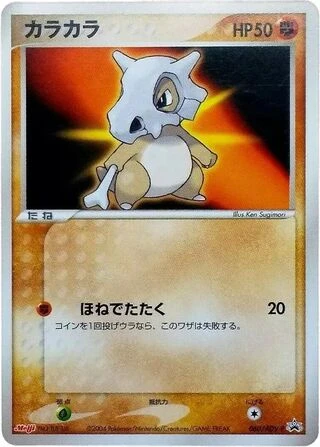
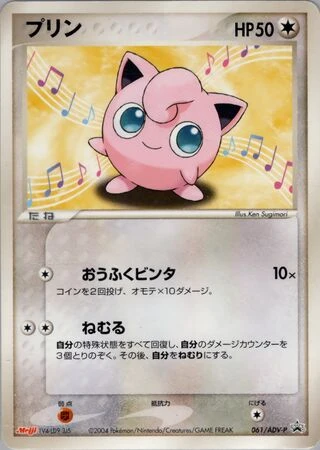
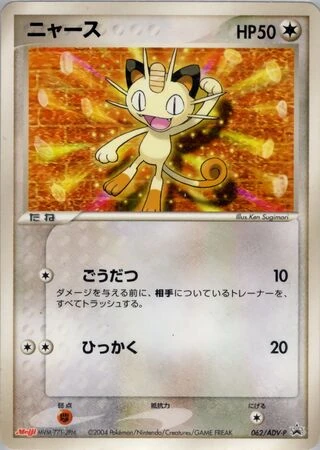
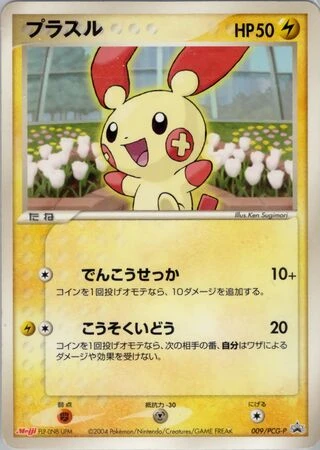
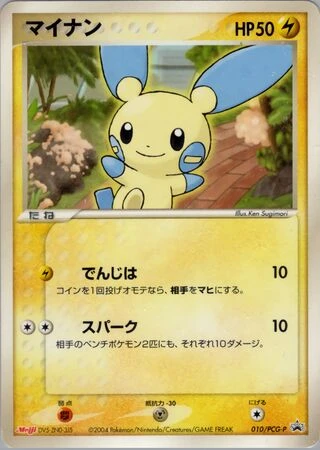
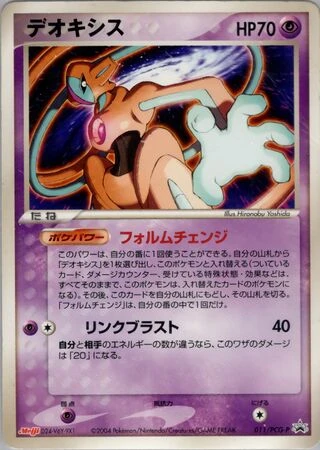
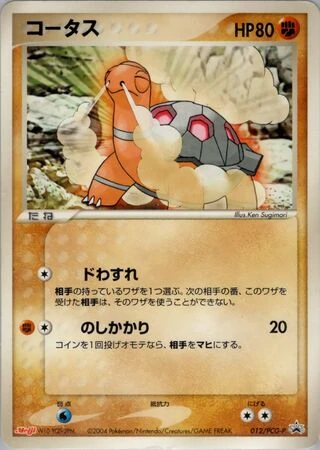
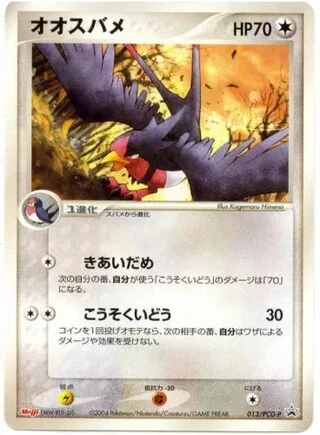
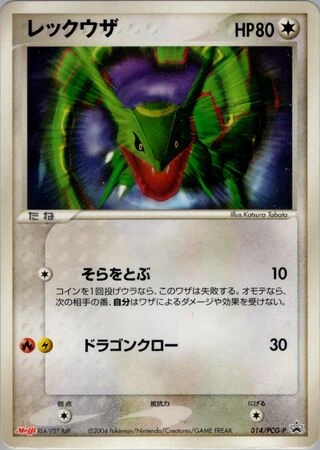
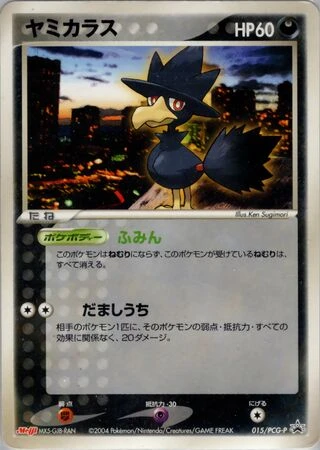
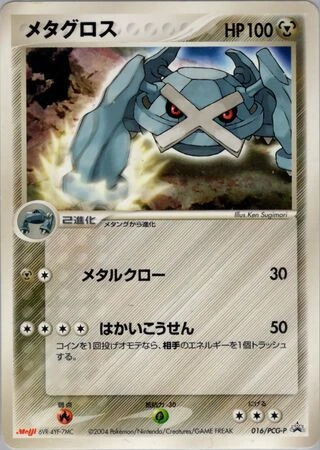
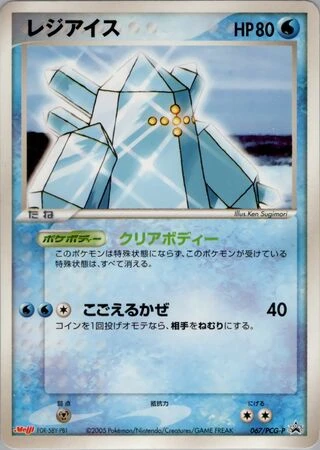
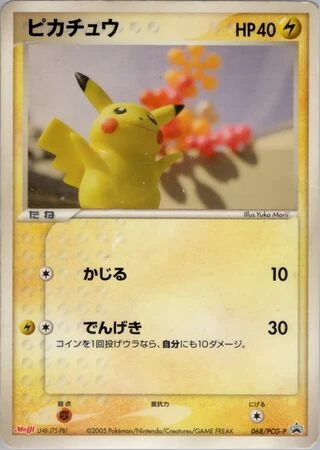
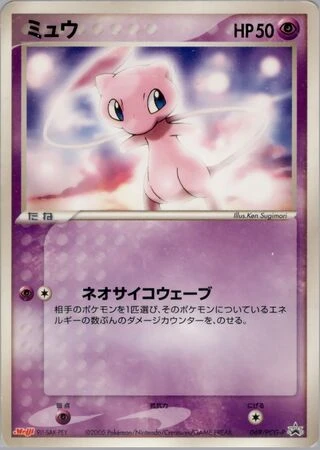
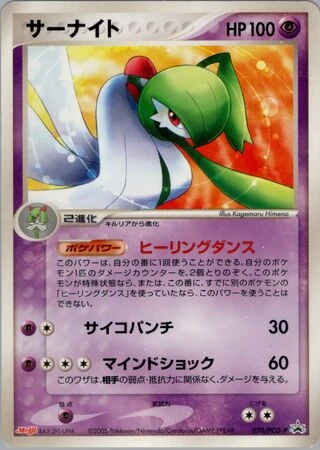
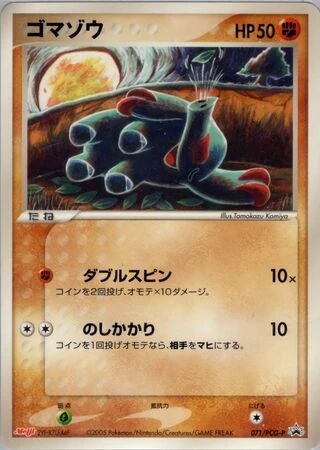
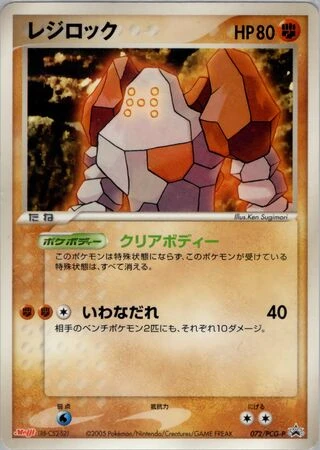
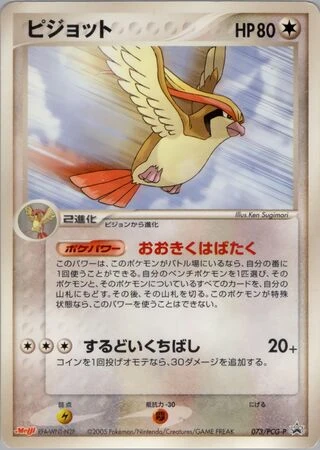
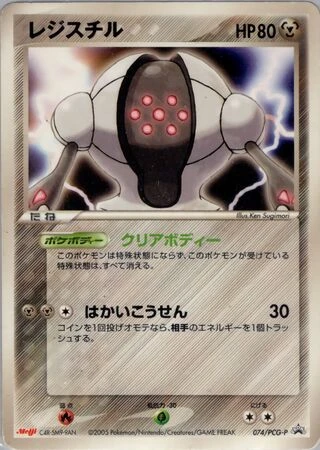
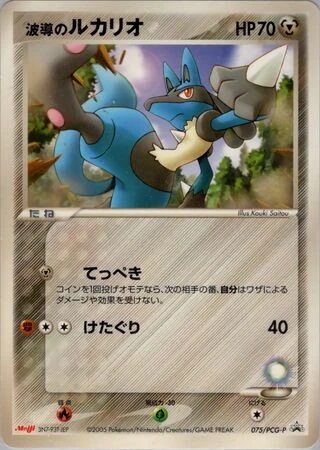
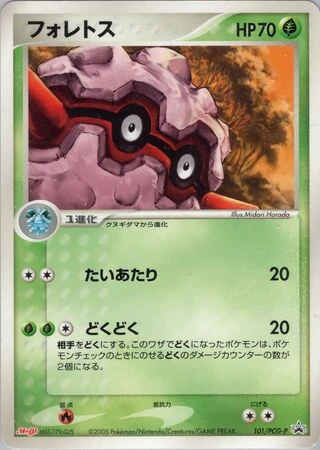
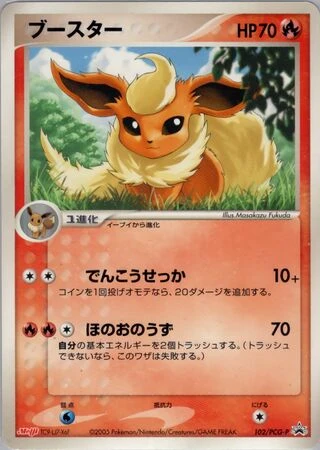
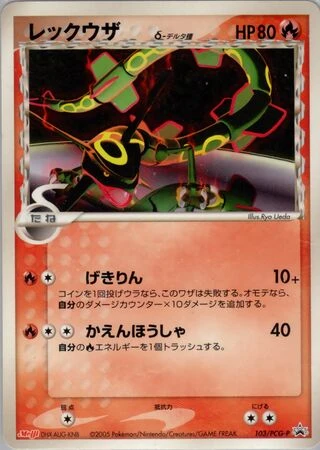
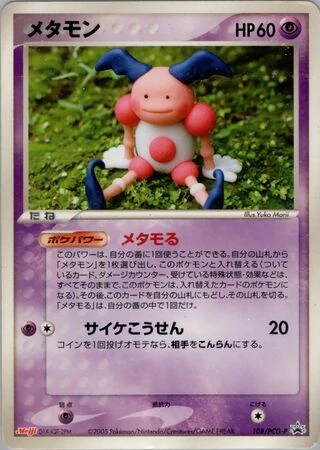
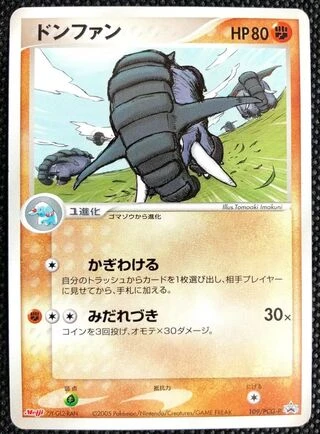
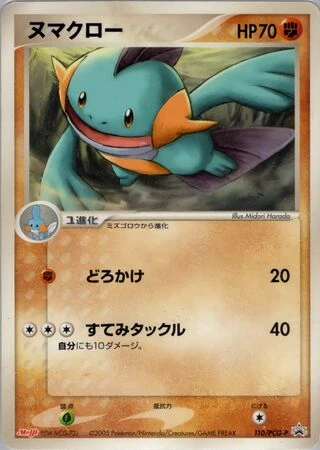
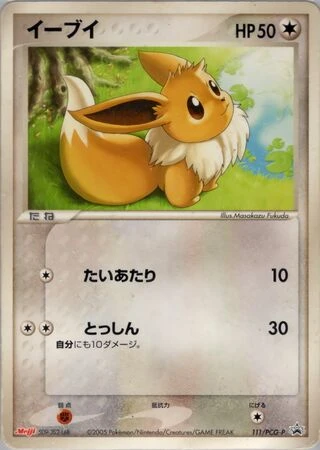
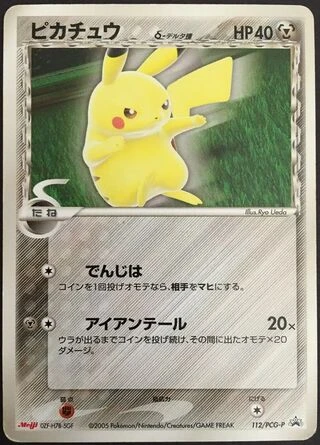
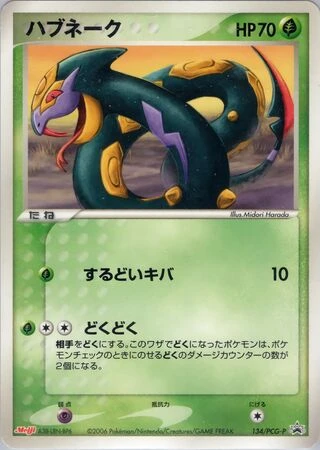
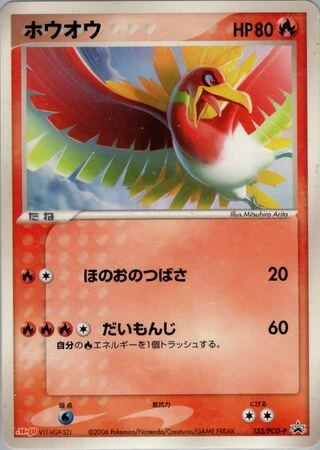
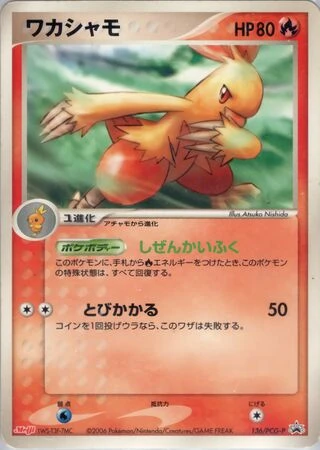
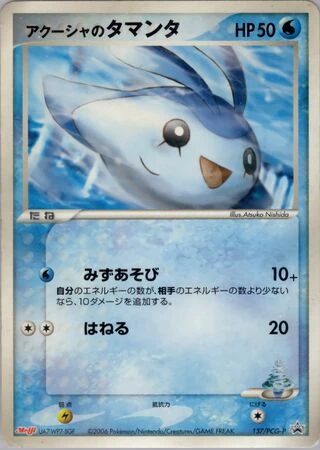
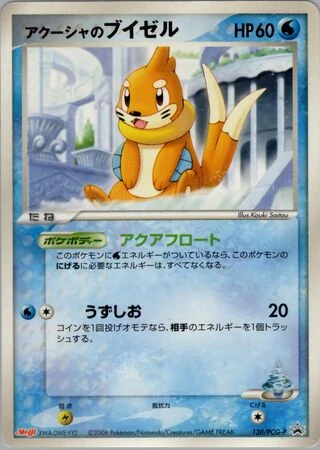
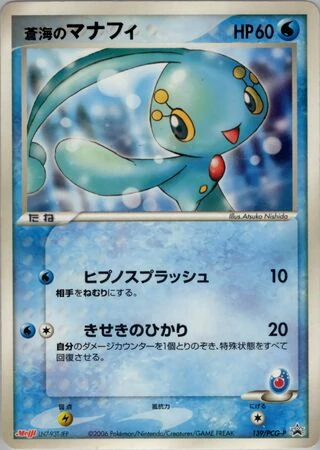
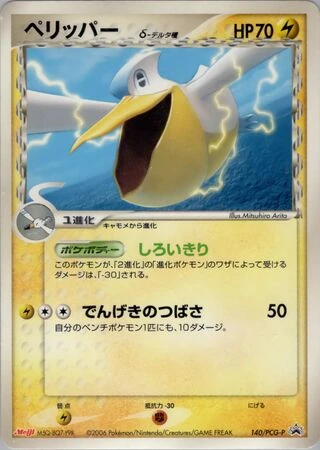
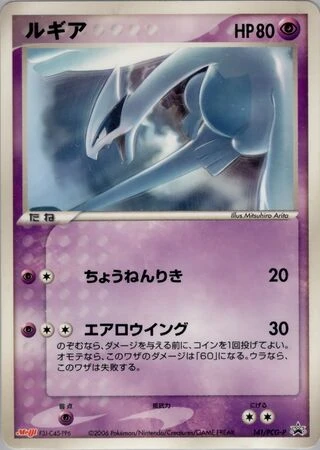
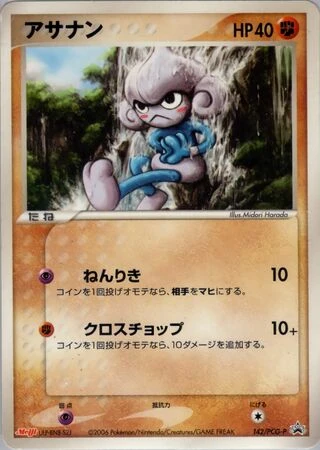
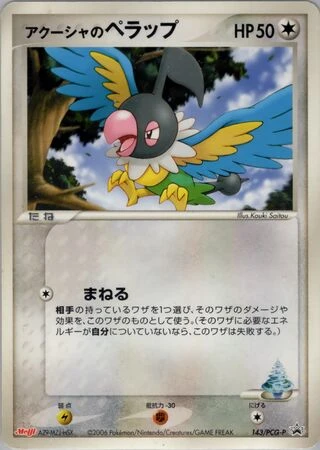
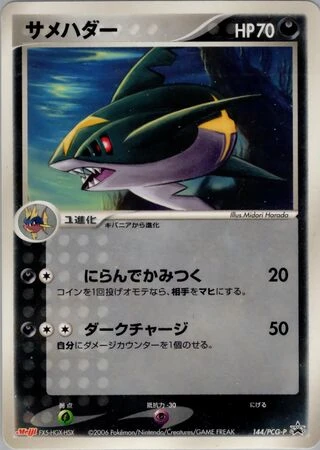
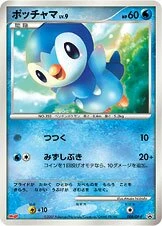
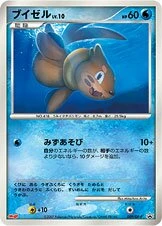
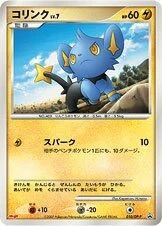
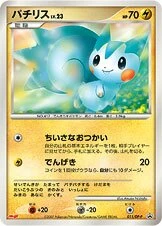
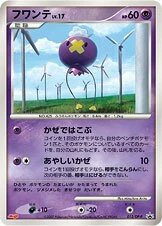
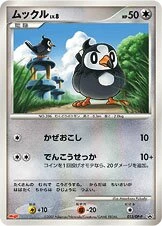
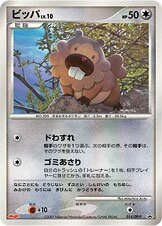
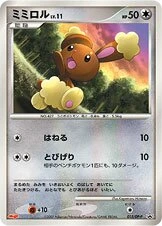
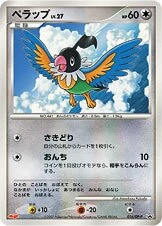
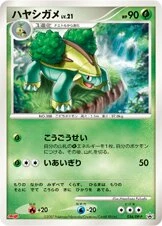
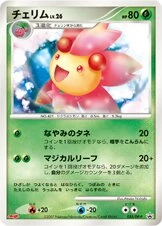
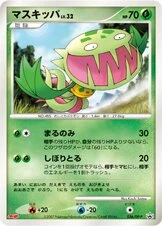
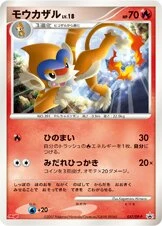
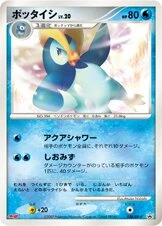
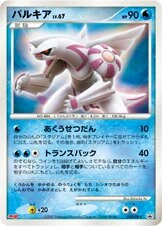
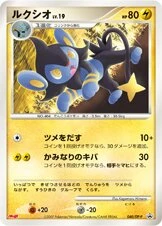
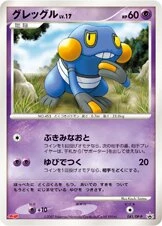
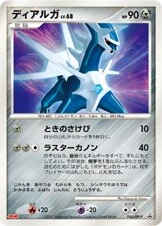
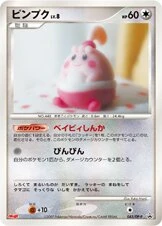
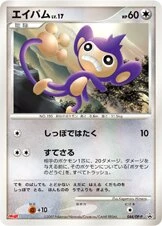
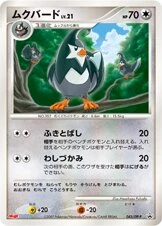
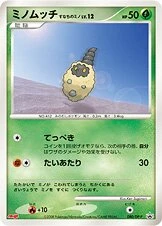
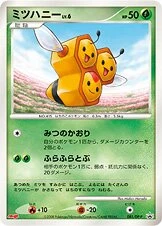
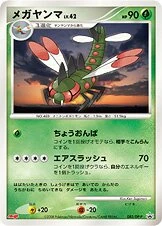
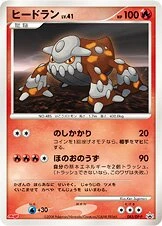
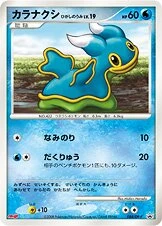
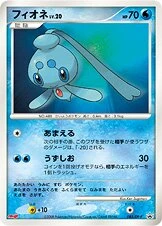
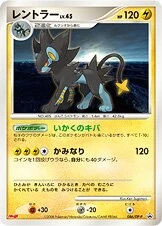
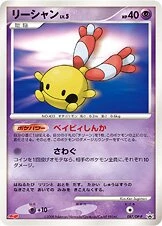
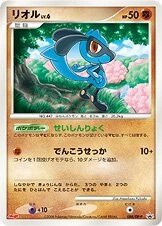
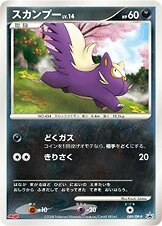
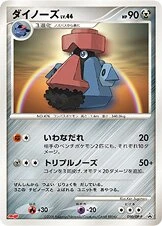
Meiji, the Japanese chocolate maker, put Pokémon cards in its snacks in two main programs. From 1997 to 2002 it made 324 Get Cards in eight series, its own cards, most of them with a rock-paper-scissors (janken) hand for a playground game; they cannot be played in the Trading Card Game. From 2004 to 2008 it gave 97 Pokémon TCG promos in eight waves, ordinary playable cards recognized by a small red Meiji logo at the bottom left. All 97 promos are pictured below; the Get Cards are counted and described by series.
The most valuable Meiji card in the site's data is Rayquaza δ 103/PCG-P of October 2005: $8,388 in PSA 10 over 5 real completed sales, and $59.78 raw over 20, as of September 24, 2026. Raw, the 97 promos sell for $1.14 to $94.73 (Mew 069/PCG-P), half of them for less than $8.
Meiji's Pokémon cards at a glance
| Program | Years | What came with the snack | Cards | Playable? |
|---|---|---|---|---|
| Get Cards | 1997 to 2002 | Meiji's own cards, in 8 series | 324 | No |
| TCG promos | 2004 to 2008 | Pokémon TCG promos with a red Meiji logo, in 8 waves | 97 (12 ADV-P, 49 PCG-P, 36 DP-P) | Yes |
| Metallic cards | 2013 | One of 10 metallic character cards | 10 | No |
How to recognize a Meiji promo
A Meiji TCG promo is an ordinary card with the regular back and a promo number (ADV-P, PCG-P or DP-P). What marks it is a small red "Meiji" logo in the bottom left corner, beside the copyright line and outside the illustration; the bottom right of the art carries the illustrator credit, as on any card. Each box of Pokémon Choco Snack held one card, and which one was a surprise until you opened it.
Three mix-ups to avoid when buying. Some of these numbers share a name with other food promos of the same years: Mew 069/PCG-P is Meiji's (June 2005) while Mew 085/PCG-P is McDonald's (July 2005), Aura's Lucario is 075 at Meiji and 090 at McDonald's, and Samiya's Chatot is 143/PCG-P at Meiji and 152/PCG-P at Pokémon Wonderland. Meiji cards are sometimes listed as Carddass, which is Bandai's line of vending-machine cards, a different company. And the stickers in Pokémon Snack corn puffs are Tohato's, not Meiji's.
What Meiji cards are worth
Prices of the TCG promos from real completed sales, as of September 24, 2026:
| Card | Wave | Raw | PSA 10 |
|---|---|---|---|
| Rayquaza δ 103/PCG-P | 4 (October 2005) | $59.78 (20 sales) | $8,388 (5 sales) |
| Mew 069/PCG-P | 3 (June 2005) | $94.73 (6 sales) | $5,806 est. (1 sale) |
| Mewtwo δ 107/PCG-P | 4 (October 2005) | $34.44 (7 sales) | $4,257 est. (1 sale) |
| Pikachu δ 112/PCG-P | 4 (October 2005) | $62.02 (7 sales) | $3,787 est. (1 sale) |
| Rayquaza 014/PCG-P | 2 (June 2004) | $20.03 (13 sales) | $3,099 est. (2 sales) |
| Squirtle 055/ADV-P | 1 (February 2004) | $44.33 (12 sales) | $2,821 est. (2 sales) |
| Bulbasaur 051/ADV-P | 1 (February 2004) | $28.22 (5 sales) | $2,168 est. (1 sale) |
| Charizard 054/ADV-P | 1 (February 2004) | $89.35 (5 sales) | $2,127 (5 sales) |
| Dialga 042/DP-P | 7 (July 2007) | $10.40 (5 sales) | $1,660 est. (1 sale) |
| Psyduck 056/ADV-P | 1 (February 2004) | $60.06 (9 sales) | $1,566 (5 sales) |
| Pikachu 068/PCG-P | 3 (June 2005) | $68.03 (5 sales) | No sale recorded |
| Ditto 108/PCG-P | 4 (October 2005) | $40.01 (19 sales) | No sale recorded |
| Munchlax 091/DP-P | 8 (March 2008) | $20.03 (5 sales) | No sale recorded |
"est." marks a price that rests on one or two sales.
Raw, a Meiji promo is rarely expensive: the Kanto cards of 2004 and the 2005 promos lead, and most of the Diamond and Pearl cards of 2007 and 2008 sell for under $10. The money is in top grades: 13 of the promos show a four-figure PSA 10 price, 11 of them from 2004 and 2005, led by Rayquaza δ 103/PCG-P and Mew 069/PCG-P. The site does not track Get Card prices.
The Meiji TCG checklist
| Wave | On sale | Numbers | Cards | Raw prices | Highlights |
|---|---|---|---|---|---|
| 1 | February 24, 2004 | 051 to 062/ADV-P | 12 | $9.89 to $89.35 | Kanto Pokémon, all by Ken Sugimori, Charizard |
| 2 | June 29, 2004 | 005 to 016/PCG-P | 12 | $1.14 to $20.03 | Deoxys movie, Rayquaza |
| 3 | June 28, 2005 | 063 to 075/PCG-P | 13 | $2.69 to $94.73 | 12 plus a secret card, Mew, Aura's Lucario |
| 4 | October 17, 2005 | 101 to 112/PCG-P | 12 | $1.14 to $62.02 | Delta species, Eevee and three evolutions |
| 5 | June 27, 2006 | 134 to 145/PCG-P | 12 | $4.28 to $32.09 | Manaphy movie, Ho-Oh, Lugia |
| 6 | February 20, 2007 | 005 to 016/DP-P | 12 | $2.56 to $19.88 | Sinnoh Pokémon |
| 7 | July 3, 2007 | 034 to 045/DP-P | 12 | $1.14 to $17.68 | Dialga, Palkia |
| 8 | March 18, 2008 | 080 to 091/DP-P | 12 | $1.14 to $20.03 | Heatran, Phione, Munchlax |
Raw prices as of September 24, 2026, lowest and highest of each wave.
Wave 1, February 24, 2004: twelve Kanto Pokémon drawn by Ken Sugimori, from Bulbasaur to Meowth, in a 100-yen box of Pokémon Choco Snack.
 Bulbasaur#51/ADV-P
 Charmander#52/ADV-P
 Charmeleon#53/ADV-P
 Charizard#54/ADV-P
 Squirtle#55/ADV-P
 Psyduck#56/ADV-P
 Pikachu#57/ADV-P
 Raichu#58/ADV-P
 Slowpoke#59/ADV-P
 Cubone#60/ADV-P
 Jigglypuff#61/ADV-P
 Meowth#62/ADV-P
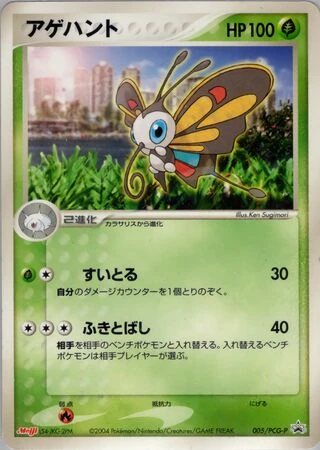
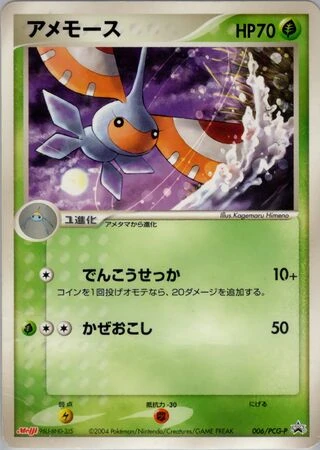
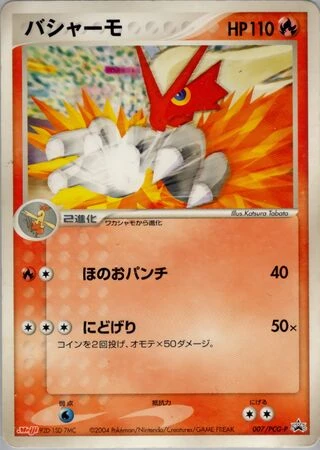
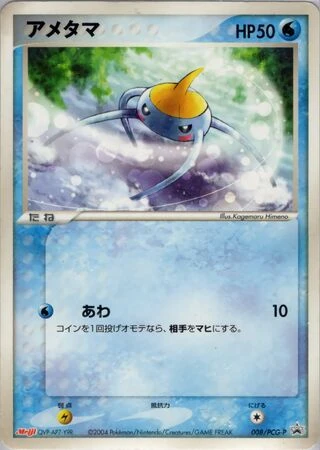
Wave 2, June 29, 2004: twelve cards timed for the Deoxys film, which opened on July 17, including Rayquaza and Deoxys.
 Beautifly#5/PCG-P
 Masquerain#6/PCG-P
 Blaziken#7/PCG-P
 Surskit#8/PCG-P
 Plusle#9/PCG-P
 Minun#10/PCG-P
 Deoxys#11/PCG-P
 Torkoal#12/PCG-P
 Swellow#13/PCG-P
 Rayquaza#14/PCG-P
 Murkrow#15/PCG-P
 Metagross#16/PCG-P
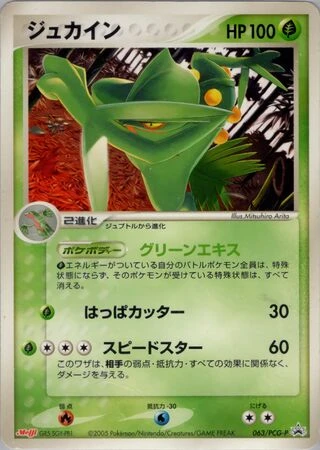
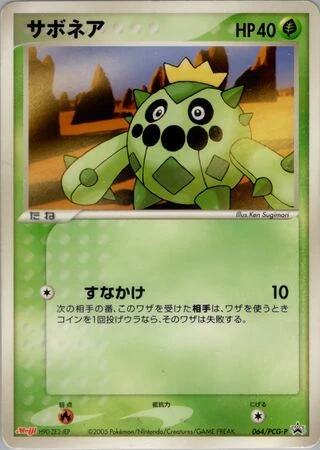
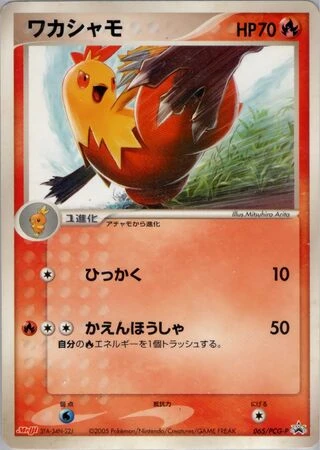
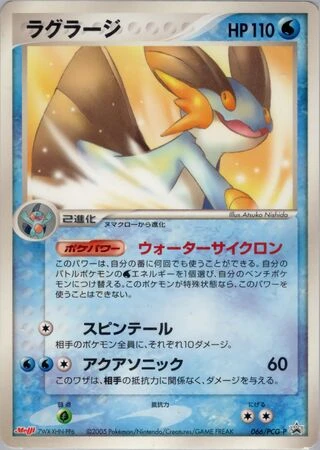
Wave 3, June 28, 2005: the only wave of 13, sold as twelve cards plus one secret, centered on the Pokémon of that summer's Lucario film.
 Sceptile#63/PCG-P
 Cacnea#64/PCG-P
 Combusken#65/PCG-P
 Swampert#66/PCG-P
 Regice#67/PCG-P
 Pikachu#68/PCG-P
 Mew#69/PCG-P
 Gardevoir#70/PCG-P
 Phanpy#71/PCG-P
 Regirock#72/PCG-P
 Pidgeot#73/PCG-P
 Registeel#74/PCG-P
 Aura's Lucario#75/PCG-P
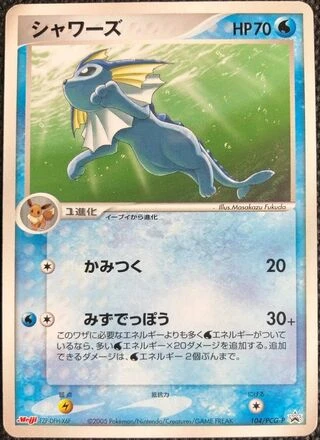
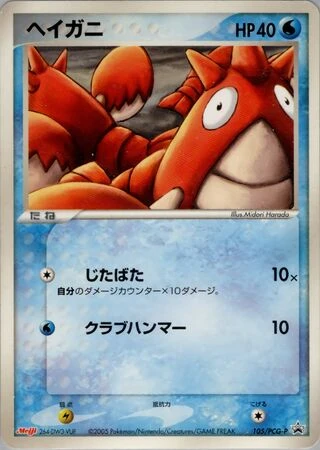
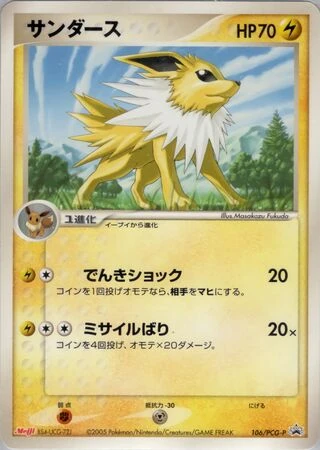
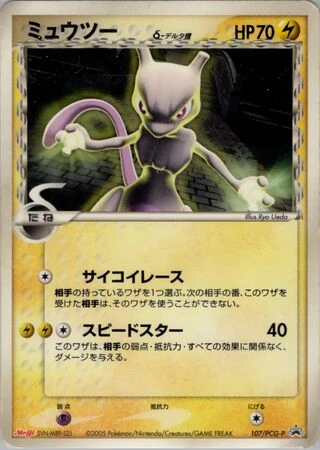
Wave 4, October 17, 2005: three of the twelve are delta species, Rayquaza 103, Mewtwo 107 and Pikachu 112, three of the four most valuable Meiji cards in PSA 10; the others include Eevee, Flareon, Vaporeon and Jolteon. Inside, the boxes printed the rules of the game in twelve parts, one per box.
 Forretress#101/PCG-P
 Flareon#102/PCG-P
 Rayquaza#103/PCG-P
 Vaporeon#104/PCG-P
 Corphish#105/PCG-P
 Jolteon#106/PCG-P
 Mewtwo#107/PCG-P
 Ditto#108/PCG-P
 Donphan#109/PCG-P
 Marshtomp#110/PCG-P
 Eevee#111/PCG-P
 Pikachu#112/PCG-P
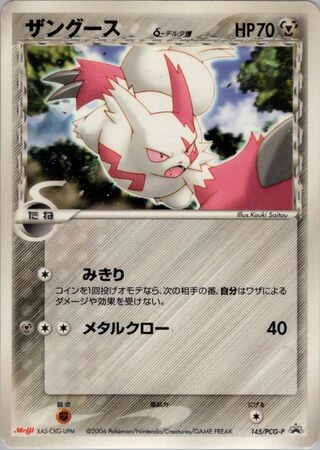
Wave 5, June 27, 2006: twelve cards for the Manaphy film, among them Sea's Manaphy and Samiya's Buizel, Mantyke and Chatot, plus Ho-Oh and Lugia; Pelipper 140 and Zangoose 145 are delta species.
 Seviper#134/PCG-P
 Ho-Oh#135/PCG-P
 Combusken#136/PCG-P
 Samiya's Mantyke#137/PCG-P
 Samiya's Buizel#138/PCG-P
 Sea's Manaphy#139/PCG-P
 Pelipper#140/PCG-P
 Lugia#141/PCG-P
 Meditite#142/PCG-P
 Samiya's Chatot#143/PCG-P
 Sharpedo#144/PCG-P
 Zangoose#145/PCG-P
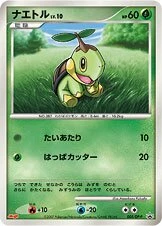
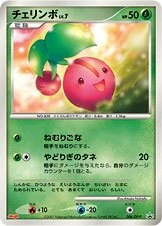
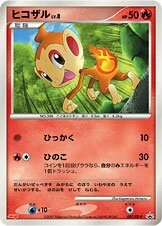
Wave 6, February 20, 2007: the Diamond and Pearl era begins with twelve Sinnoh Pokémon, the three first partners among them.
 Turtwig#5/DP-P
 Cherubi#6/DP-P
 Chimchar#7/DP-P
 Piplup#8/DP-P
 Buizel#9/DP-P
 Shinx#10/DP-P
 Pachirisu#11/DP-P
 Drifloon#12/DP-P
 Starly#13/DP-P
 Bidoof#14/DP-P
 Buneary#15/DP-P
 Chatot#16/DP-P
Wave 7, July 3, 2007: twelve cards headed by Dialga and Palkia, the legendary Pokémon of that summer's film.
 Grotle#34/DP-P
 Cherrim#35/DP-P
 Carnivine#36/DP-P
 Monferno#37/DP-P
 Prinplup#38/DP-P
 Palkia#39/DP-P
 Luxio#40/DP-P
 Croagunk#41/DP-P
 Dialga#42/DP-P
 Happiny#43/DP-P
 Aipom#44/DP-P
 Staravia#45/DP-P
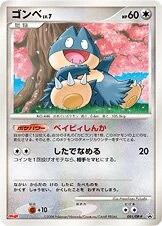
Wave 8, March 18, 2008: the last Meiji TCG promos, with Heatran, Phione and Munchlax, sold with a mail-in draw for a DP card collection file.
 Burmy Sandy Cloak#80/DP-P
 Combee#81/DP-P
 Yanmega#82/DP-P
 Heatran#83/DP-P
 Shellos East Sea#84/DP-P
 Phione#85/DP-P
 Luxray#86/DP-P
 Chingling#87/DP-P
 Riolu#88/DP-P
 Stunky#89/DP-P
 Probopass#90/DP-P
 Munchlax#91/DP-P
The Get Cards (1997 to 2002)
Before the TCG promos, Meiji printed its own Pokémon cards, one per box of Pokémon Choco Snack, 100 yen a box (120 for the movie set). They are licensed Pokémon cards but not game cards: the first six series show a hand playing rock, paper or scissors, so two children could play janken with them, and the backs carry game data such as the levels at which a Pokémon learns its moves. The last two series dropped the hand.
| Series | Year | Cards | What sets it apart |
|---|---|---|---|
| Get Cards | 1997 to 1998 | 170 | All 151 Kanto Pokémon, 3 gold cards (Pikachu 152, Mewtwo 153, Mew 154), 6 Team Rocket cards, 10 characters such as Ash, Misty and Brock; sold in red, blue, green and yellow boxes |
| Movie set | 1999 | 48 | Prism holofoil scenes from the first film (1998) and its Pikachu short, each design in more than one holo pattern |
| Embossed | 1999 | 24 | Raised metallic designs |
| Gold | April 2000 | 16 | Gold foil |
| Silver | 2000 | 16 | Silver foil |
| Blue | Late 2000 | 16 | Blue metallic foil |
| Rainbow Silver | 2001 | 18 | Streaked rainbow foil, the first series without the janken hand |
| VS series | 2002 | 16 | Two Pokémon battling, no janken hand; Lugia vs. Charizard exists with a red bar and a purple bar |
The three gold cards of 1997 (Pikachu, Mewtwo and Mew, numbered 152 to 154) are not the 16-card Gold series of April 2000, which has a Pikachu among mostly Johto Pokémon but no Mewtwo or Mew: check the number before paying for a "gold Meiji" card. The Get Cards are not in the site's card database, so none is pictured or priced here.
Stickers, and the last card snack of 2013
Meiji's Pokémon snacks carried stickers in some years even during the card era, such as a 2005 Pokémon Seal Choco with one of 30 battle stickers, and again after the last TCG wave, such as a Pokémon Seal Choco Snack of July 14, 2009 with a sheet of four metallic stickers. On July 2, 2013, a 12-gram Pokémon Card Choco Snack went on sale across Japan with one of ten metallic character cards. They are not TCG cards, and they are the last Meiji Pokémon cards found.
Buying Meiji cards today
Both eras trade second-hand, mostly in Japan through card shops and auction sites; from abroad, a proxy service can buy and forward them, as our guide to buying Japanese cards from abroad explains. For graded copies, PSA files the Get Cards in yearly sets named Pokemon Japanese Meiji Promo, and the 2004 to 2008 promos in its Pokemon Japanese Promo sets with "Meiji Chocolate" in the card name, so a search for one misses the other.
FAQ
What are Meiji Pokémon cards?
Cards given with Meiji chocolate snacks in Japan: 324 non-playable Get Cards from 1997 to 2002, then 97 playable Pokémon TCG promos from 2004 to 2008, and ten metallic cards in 2013.
How do you tell if a Pokémon card is a Meiji promo?
Look for a small red Meiji logo in the bottom left corner, beside the copyright line, and a number ending in ADV-P, PCG-P or DP-P that falls in one of the eight Meiji waves listed above.
What is the most valuable Meiji Pokémon card?
In the site's data, Rayquaza δ 103/PCG-P: $8,388 in PSA 10 over 5 real completed sales, as of September 24, 2026. Raw, Mew 069/PCG-P sells for the most, $94.73 over 6 sales.
Are Meiji Get Cards real Pokémon cards?
Yes, they are licensed Pokémon cards, but not Trading Card Game cards: they cannot be played in the TCG, and most were made for a rock-paper-scissors game.
Were Meiji cards the first Pokémon cards?
No. Bandai's Carddass cards went on sale in September 1996 and the first game cards in October 1996, as our guide to the first Pokémon card explains; Meiji's Get Cards followed in 1997.
More food-brand promo series: Marumiya, McDonald's, Domino's Pizza, Pizza Hut and, for convenience stores, 7-Eleven.


